Can arbitration awards be enforced internationally? For most commercial disputes the answer is a confident yes: an award made in one country can be recognised and enforced in any of the 172 states party to the New York Convention, and courts may refuse only on a short list of grounds. When the losing party is a state, however, the picture has changed sharply in 2026. Courts in London, Canberra, Singapore and Washington have drawn a bright line between awards made under the ICSID Convention, which states cannot resist by pleading immunity, and awards enforced under the New York Convention, where immunity survives. Late-August analysis, including a 25 August review of the US position and an 28 August survey of the year's immunity rulings, has confirmed the split, and on 30 August the Cyprus Mail reported on a €5m ICSID award that Cyprus has not paid. This analysis explains how cross-border enforcement works, where it fails, and what award holders should do now.
Can Arbitration Awards Be Enforced Internationally? Why States Are Different in 2026
By The Corporate INTL Newsroom · 3 September 2026

The short answer: yes, but the debtor and the treaty decide how
An international arbitral award can be enforced abroad because two treaties oblige national courts to treat it almost like a local judgment. The New York Convention of 1958 covers commercial awards between companies and, in many cases, awards against states. The ICSID Convention of 1965 covers investment disputes between a state and a foreign investor that are administered by the World Bank's International Centre for Settlement of Investment Disputes. Which treaty applies changes almost everything that follows: the grounds for resisting the award, the role of the courts at the seat of the arbitration, the time limits and, above all, how far a state can hide behind immunity.
For a commercial award against a private company, enforcement is usually a documentary exercise followed by the practical work of finding assets. The debtor can argue one of the limited refusal grounds, and it may try to have the award set aside where it was made, but the default is recognition. For an award against a state, there are two further hurdles. The first is immunity from the jurisdiction of the enforcing court, known as adjudicative immunity. The second is immunity from execution, which protects most state property from seizure even after the award has been recognised. The 2026 case law is about the first hurdle; the second remains the harder one in practice.
That distinction explains why the same award can be a strong asset in one country and nearly worthless in another, and why dispute resolution advisers now spend as much time on the choice of enforcement forum as on the arbitration itself.
How the New York Convention makes awards travel
The New York Convention works by requiring every contracting state to recognise foreign awards as binding and enforce them through its own courts. Article III of the Convention says each contracting state shall enforce awards "in accordance with the rules of procedure of the territory where the award is relied upon", under the conditions in the articles that follow. The applicant supplies the award and the arbitration agreement, with translations where needed, and the burden then shifts to the debtor to prove a ground for refusal.
Two reservations under Article I(3) can narrow the Convention's reach. A state may apply it only to awards made in another contracting state (the reciprocity reservation), and it may limit it to disputes arising from legal relationships considered commercial under its national law (the commercial reservation). India has made a commercial reservation, and that reservation featured in the Australian litigation discussed below, although the High Court of Australia in the end decided the case on other grounds.
With 172 parties, the Convention is close to universal, which is why an award seated in London, Paris, Singapore or Geneva can be taken to almost any country where the debtor holds assets. What the Convention does not do is create a single enforcement procedure. Each country applies its own rules on court applications, service on foreign parties, time limits and, crucially, state immunity. Those domestic rules are where most modern enforcement battles are fought, and they are why cross-border specialists map the debtor's assets and the local procedure before choosing where to file.
When may enforcement of a foreign arbitral award be refused?
Enforcement may be refused only on the grounds listed in Article V of the New York Convention, and courts in pro-arbitration jurisdictions read those grounds narrowly. Article V(1) sets out five grounds the debtor must prove. Article V(2) adds two that the court may raise itself. None of them allows a court to re-open the merits simply because it would have decided the dispute differently.
| Article | Ground for refusal | Who raises it |
|---|---|---|
| V(1)(a) | A party lacked capacity, or the arbitration agreement is invalid under the applicable law | Debtor must prove |
| V(1)(b) | No proper notice of the arbitrator's appointment or the proceedings, or a party was unable to present its case | Debtor must prove |
| V(1)(c) | The award deals with matters outside the submission to arbitration | Debtor must prove |
| V(1)(d) | The tribunal or procedure did not follow the parties' agreement or the law of the seat | Debtor must prove |
| V(1)(e) | The award is not yet binding, or has been set aside or suspended at the seat | Debtor must prove |
| V(2)(a) | The subject matter cannot be arbitrated under the enforcing state's law | Court of its own motion |
| V(2)(b) | Enforcement would be contrary to the enforcing state's public policy | Court of its own motion |

Public policy is the ground most often invoked and the one where national approaches differ most. A recent example comes from India. On 24 June 2026 a Division Bench of the Gujarat High Court upheld a refusal to enforce a US$109.95m foreign award against Adani Energy in favour of Asean LNG Trading, now Petronas LNG. The court held that imposing take-or-pay liability without a concluded contract conflicted with the fundamental policy of Indian law, and it described the tribunal's conclusion as perverse. English, Singaporean and Swiss courts would ordinarily be slower to reach that result, which is one reason award creditors weigh the enforcement jurisdiction as carefully as the seat.
Article VI also matters in practice. Where the debtor has applied to set the award aside at the seat, the enforcing court may adjourn its decision and may order the debtor to give security. Debtors use set-aside applications to buy time; creditors respond by asking for security as the price of any adjournment.
Set aside at the seat: can an annulled award still be enforced?
Usually not, but in some countries it can. Article V(1)(e) permits, but does not oblige, a court to refuse an award that has been set aside at the seat, and Article VII lets states apply rules more favourable to enforcement. According to a May 2026 survey of the major jurisdictions, France sits at one end: since the Norsolor, Hilmarton and Putrabali line of cases, annulment abroad is not in itself a ground for refusal in France. Italy sits at the other, treating annulment at the seat as fatal. England enforces an annulled award only in narrow cases, for example where the annulment judgment itself should not be recognised, and the United States decides case by case on comity and public policy, with a standard its courts describe as high and rarely met.
The most striking recent example involves the Netherlands. In the long-running dispute between Devas and Antrix, the commercial arm of India's space agency, the Hague Court of Appeal allowed enforcement of a US$562.5m ICC award on 17 December 2024 even though it had been annulled in India. The court refused to recognise the Indian annulment because of due process failings in related liquidation proceedings, and held that annulment at the seat is not automatically decisive. The Dutch Supreme Court dismissed Antrix's challenge on 6 March 2026.
For award holders the lesson is that a set-aside at the seat is a serious blow but not always the end. For award debtors, it is that winning at the seat does not guarantee safety elsewhere.
ICSID award enforcement: a closed system
ICSID awards bypass national courts at the challenge stage entirely, which makes them the strongest awards to hold against a state. The ICSID Convention provides in Article 53 that the award "shall not be subject to any appeal or to any other remedy" except those in the Convention itself, and that each party shall abide by and comply with it. The only route to undo an ICSID award is annulment by an ad hoc committee under Article 52, on five grounds such as a manifest excess of powers or a failure to state reasons, and the application must normally be made within 120 days.
Article 54 requires every contracting state to recognise an ICSID award as binding and enforce its pecuniary obligations "as if it were a final judgment" of its own courts. There is no public policy defence and no review of the tribunal's jurisdiction by the enforcing court. The Convention has been ratified by 159 contracting states. That breadth is why energy investors who brought Energy Charter Treaty claims over Spain's withdrawal of renewable subsidies have pursued ICSID awards across several continents.
There is one important limit. Article 55 states that nothing in Article 54 derogates from the law of any contracting state relating to immunity from execution. So an ICSID award gives the holder a judgment that the state cannot resist at the door of the court, but it does not by itself unlock the state's bank accounts, buildings or central bank reserves. Execution remains a matter for local law.
Why states are different: two layers of state immunity in arbitration
State immunity in arbitration has two layers, and a creditor must get through both. In the United Kingdom, section 1 of the State Immunity Act 1978 starts from the position that a state is immune from the jurisdiction of UK courts unless an exception applies. Section 2 removes immunity where the state has submitted to the jurisdiction, including by prior written agreement. Section 9 removes immunity in proceedings relating to an arbitration where the state has agreed in writing to submit a dispute to arbitration.
Clearing adjudicative immunity only gets the creditor a recognised award. Section 13 then imposes separate protection: relief generally cannot be given against a state's property by way of enforcement, save with the state's written consent or, under section 13(4), in respect of property in use or intended for use for commercial purposes. A submission to jurisdiction does not count as consent to execution.
Most developed legal systems follow the same two-stage structure, although the details differ, which is why public international law specialists are routinely involved in sovereign enforcement. Procedural steps also matter: permission to serve a foreign state or foreign defendant, and the risk that service is later set aside, can derail enforcement before the merits are reached, as the English court's decision to set aside a service order in Emirates NBD's claim against Al Kuwari illustrated in June.
England: ICSID waives immunity, the New York Convention does not
English law now gives two different answers depending on the treaty. On 4 March 2026 the UK Supreme Court decided the joined appeals of Spain and Zimbabwe, holding that a state which has ratified the ICSID Convention cannot rely on immunity to resist registration of an ICSID award. The lead judgment of Lord Lloyd-Jones and Lady Simler found that Article 54 amounts to a prior written submission to jurisdiction under section 2 of the 1978 Act. The awards concerned were worth €101m plus interest against Spain and US$124m against Zimbabwe, the Law Society Gazette reported, and the court observed that once there is a binding award, adjudication "has already taken place".
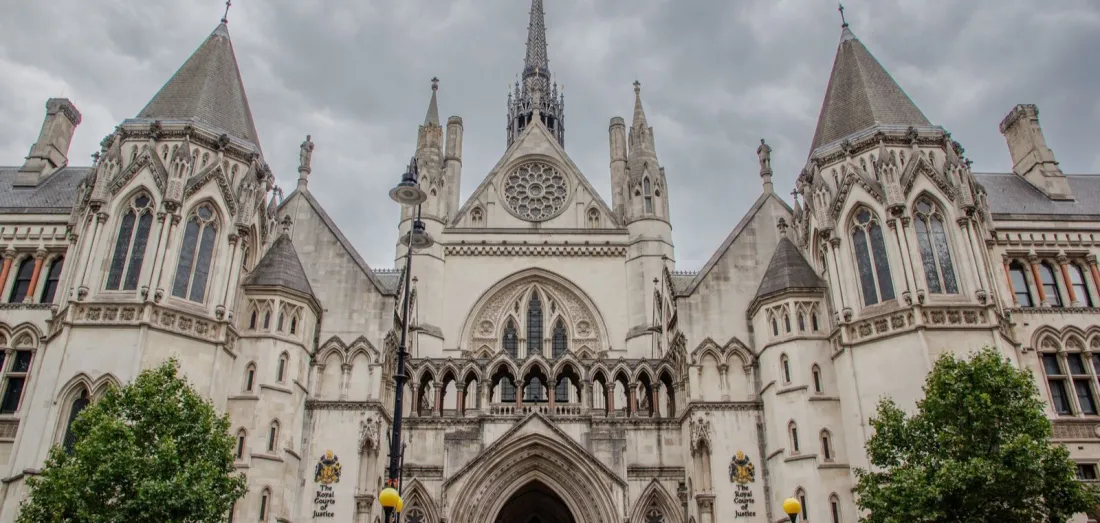
In June 2026 the Court of Appeal reached the opposite result for New York Convention awards in CC/Devas (Mauritius) Ltd v Republic of India [2026] EWCA Civ 797. The awards arose under the Mauritius and India investment treaty after India reserved S-band spectrum for national purposes and Antrix terminated its agreement with Devas. The court held that the words "rules of procedure" in Article III include the rules on state immunity, so the Convention preserves immunity rather than waiving it. Phillips LJ gave the judgment, and the claimants' separate argument under section 9 was not decided at that stage, CMS noted in its 31 July review.
Section 9 is now the key open question. The Supreme Court in the Spain case found it unnecessary to decide whether section 9 applies to enforcement of treaty awards, as a 27 August analysis on the Kluwer Arbitration Blog points out, leaving creditors holding non-ICSID treaty awards to argue that a treaty offer to arbitrate, accepted by the investor, is an agreement in writing for section 9 purposes. England also remains a demanding forum for debtors on the merits: in March the High Court allowed former Yukos shareholders to enforce awards now worth about US$65bn with interest against Russia, rejecting Russia's attempts to re-argue issues already decided. Creditors pursuing Spain or other states in England therefore start with a clear ICSID route and a contested New York one.
Australia, Singapore and Canada: the wider split on New York Convention awards
England is not alone. On 8 April 2026 the High Court of Australia unanimously held in CCDM Holdings LLC v Republic of India [2026] HCA 9 that India's ratification of the New York Convention did not waive its immunity from enforcement of awards worth about US$111m. According to Clifford Chance's summary, the court required a waiver to be clear and unmistakeable, found none in the Convention, and distinguished its 2023 decision against Spain on the basis that the ICSID Convention expressly deals with states. It left India's commercial reservation argument undecided.
Singapore lines up on the ICSID side. On 24 February 2026, in NextEra Energy Global Holdings BV v Kingdom of Spain [2026] SGHC 43, the High Court held that Spain's accession to the ICSID Convention was a submission to the jurisdiction of the Singapore courts and rejected Spain's argument that EU law prevented a valid arbitration agreement with an investor from another member state, Norton Rose Fulbright reported. Canada is the outlier on the New York side: the Quebec Court of Appeal held in 2024 that India had waived immunity through the combination of its treaty, its ratification of the Convention and its participation in the arbitration, and the Supreme Court of Canada refused leave to appeal in September 2025, as the 28 August Kluwer survey records.
| Court and date | Case | Treaty | Immunity outcome |
|---|---|---|---|
| Singapore High Court, 24 Feb 2026 | NextEra v Spain [2026] SGHC 43 | ICSID | No immunity: accession is a submission to jurisdiction |
| UK Supreme Court, 4 Mar 2026 | Spain v Infrastructure Services Luxembourg; Zimbabwe v Border Timbers | ICSID | No immunity: Article 54 is a prior written submission |
| High Court of Australia, 8 Apr 2026 | CCDM Holdings v India [2026] HCA 9 | New York | Immunity preserved: ratification is not a waiver |
| English Court of Appeal, June 2026 | CC/Devas v India [2026] EWCA Civ 797 | New York | Immunity preserved: Article III keeps local procedure, including immunity |
| US Supreme Court, 29 June 2026 | Spain v Blasket; Russia v Stabil (cert denied) | ICSID and New York | D.C. Circuit rulings rejecting immunity left standing |
| Quebec Court of Appeal, 2024 (leave refused 2025) | CC/Devas v India | New York | Immunity waived by treaty, ratification and participation combined |
The practical conclusion drawn in the late-August commentary is that ICSID enforcement is now "relatively uniform and predictable", while New York Convention enforcement against states depends on each country's immunity law.
The United States: the FSIA arbitration exception and the D.C. Circuit route
The United States remains the most creditor-friendly major forum for awards against states, largely because of how the Washington courts read the Foreign Sovereign Immunities Act. Section 1605(a)(6) of the FSIA removes immunity in actions to enforce a state's agreement to arbitrate or to confirm an award made under it, where the award is governed by a treaty such as the New York Convention. The U.S. Court of Appeals for the D.C. Circuit treats a state's objection that a dispute falls outside the arbitration agreement as a question of scope for the merits, not of jurisdiction, which makes early dismissal on immunity grounds much harder.
On 29 June 2026 the Supreme Court declined to hear Spain's and Russia's challenges to that approach, in Kingdom of Spain v Blasket Renewable Investments and Russian Federation v Stabil LLC. Troutman's 25 August analysis describes the Washington DC courts as a creditor-friendly path, notes that the Crimea-related awards in Stabil total about US$242m, and warns that a circuit split persists, so filings outside the District of Columbia may still face threshold immunity fights. It also advises that consent clauses should separately waive immunity from execution under section 1610 of the FSIA.
Time limits favour ICSID holders too. In Titan Consortium 1 v Argentine Republic, decided in July 2026 on a US$320m ICSID award, the D.C. Circuit adopted a 12-year limitation period for enforcing ICSID awards, borrowed from the District of Columbia's rule for executing judgments, and rejected the three-year period that applies to New York Convention awards under the Federal Arbitration Act. Holders of New York Convention awards seeking enforcement in the United States therefore need to move quickly; ICSID holders have more room to wait out annulment proceedings.
What happens if you don't pay an arbitration award? The Cyprus example
If a private company does not pay, the creditor enforces against its assets like any judgment debt. If a state does not pay, the creditor has a binding award, a treaty obligation of compliance, and a long road to actual recovery. The Adamakopoulos case shows the tension. According to the Cyprus Mail's 30 August report, an ICSID tribunal ruled in March 2026 that Cyprus breached the fair and equitable treatment standard of the Greece and Cyprus investment treaty by denying a Greek family the humanitarian relief from the 2013 bank bail-in that it had granted to charities. The award, about €5m including €2.8m in lost deposits plus interest, was the only compensation ordered in a case brought by many depositors.
Cyprus has not paid. In July 2026 it applied for partial annulment, arguing that the 1990s investment treaty was inoperative, and the newspaper reported that the family has publicly urged the president and attorney-general to settle. Under Article 53 of the ICSID Convention a state must comply with an award except to the extent enforcement has been stayed under the Convention, and Article 52 allows an annulment committee to stay enforcement while it decides. Whatever happens on annulment, the case illustrates the gap between winning an award and being paid: even a small award against a state can take years to collect if the state chooses to resist.
Execution: finding state assets a court will let you touch
Execution immunity is the real obstacle to recovery against states, because most state property abroad is used for sovereign purposes and is therefore protected. Embassies, diplomatic bank accounts, military property and central bank reserves are usually beyond reach. Creditors look instead for property used or intended for use for commercial purposes, such as receivables owed to state trading entities, commercial real estate or shares, and must usually show that commercial use to the court's satisfaction.

This is where award enforcement starts to resemble asset recovery and insolvency work. Creditors trace assets across jurisdictions, seek disclosure where local law allows it, and sometimes pursue state-owned entities on the argument that they are the state's alter ego. The work often involves the same asset recovery and insolvency specialists who chase private judgment debtors. Even an unimpeachable judgment only turns into money when there are identifiable funds to reach, as the long road to the release of the Carroll judgment funds showed in a very different context. Against a state, a settlement negotiated with that leverage in view is often the realistic end point.
A practical checklist for award holders and debtors
The right strategy depends on the treaty, the debtor and where its assets sit. The table below sets out the main steps, in order, for a creditor holding an award against a state.
| Step | What to check | Why it matters in 2026 |
|---|---|---|
| 1. Identify the regime | Is it an ICSID award or a New York Convention award? | ICSID awards now defeat adjudicative immunity in England, Singapore and Australia; New York awards may not |
| 2. Map the assets | Where does the debtor hold commercial property, receivables or shares? | Execution immunity protects sovereign property everywhere |
| 3. Check the waiver | Does the contract or treaty expressly waive immunity from jurisdiction and execution? | Courts demand clear, express waivers |
| 4. Watch the clock | Which limitation period applies in each forum? | Three years for New York awards in the US; 12 years for ICSID awards in the D.C. Circuit |
| 5. Anticipate set-aside or annulment | Is a challenge pending at the seat or before an ICSID committee? | Courts may adjourn and order security; some enforce annulled awards |
| 6. Consider funding and sale | Can the award be funded or assigned? | The English High Court held in Operafund v Spain [2025] EWHC 2874 (Comm) that ICSID awards are not assignable, so check before selling |
Funding is increasingly part of the picture, as it is in large collective claims: the High Court's decision on the funder's return in the Merricks case shows how closely courts now scrutinise what third-party financiers receive. For debtors, the same list works in reverse: identify which regime applies, keep sovereign assets clearly segregated from commercial ones, and bring any set-aside or annulment application promptly.
When to bring in specialist advisers
Can arbitration awards be enforced internationally? Yes, and for most commercial awards the New York Convention makes that realistic across 172 countries. Against states, the 2026 rulings mean the treaty behind the award now largely determines whether immunity can be pleaded at all, and execution immunity still decides whether anything is recovered. Any creditor holding a significant award against a state, and any state entity facing one, should take advice early on forum, limitation, security and assets, ideally before the award is even rendered. Corporate INTL's directory lists advisers with an international practice across more than 150 jurisdictions.
Frequently asked questions
Can arbitration awards be enforced internationally?
Yes. Under the New York Convention, 172 states must recognise and enforce foreign arbitral awards, subject only to the limited refusal grounds in Article V. ICSID awards are enforced in 159 contracting states as if they were final local judgments. Against states, immunity rules and execution immunity can still limit what is actually recovered.
When may enforcement of a foreign arbitral award be refused?
Only on the Article V grounds: incapacity or an invalid arbitration agreement, lack of notice or inability to present a case, an award beyond the submission, an irregular tribunal or procedure, an award not yet binding or set aside at the seat, non-arbitrable subject matter, or conflict with the enforcing state's public policy.
What are the requirements for enforcing a foreign award under the New York Convention?
The applicant supplies the authenticated original award or a certified copy, and the original arbitration agreement or a certified copy, with a translation if they are not in an official language of the enforcing country. The court then applies its own procedural rules, including time limits and state immunity, before granting recognition and enforcement.
How long do you have to enforce an arbitration award?
It depends on the forum. In the United States, New York Convention awards must be confirmed within three years under the Federal Arbitration Act, while the D.C. Circuit held in July 2026 that ICSID awards can be enforced within 12 years. Other countries apply their own limitation rules, so check each forum early.
What happens if you don't pay an arbitration award?
A private debtor faces enforcement against its assets like any judgment debtor. A state that does not pay breaches its treaty obligations, but creditors must still overcome immunity from execution to seize assets. The Adamakopoulos award against Cyprus, unpaid while an annulment application is pending, shows how long collection can take.
Does ratifying the New York Convention waive state immunity?
Not in England or Australia. The English Court of Appeal in CC/Devas v India and the High Court of Australia in CCDM v India both held in 2026 that Article III preserves local procedural rules, including immunity. Courts in Canada have taken a different view where ratification was combined with a treaty and participation.
Can a state claim immunity against an ICSID award?
Not from recognition in England, Singapore or Australia. The UK Supreme Court held on 4 March 2026 that ratifying the ICSID Convention is a prior written submission to jurisdiction. But Article 55 preserves immunity from execution, so creditors must still find commercial assets that local law allows them to seize.
Can an award that has been set aside still be enforced?
Sometimes. France generally ignores annulment at the seat, the Netherlands enforced a US$562.5m award annulled in India in the Devas v Antrix dispute, and England and the United States do so only in exceptional cases. Italy treats annulment at the seat as a bar to enforcement.
Is there a way around sovereign immunity?
The most reliable route is an express written waiver of immunity from both jurisdiction and execution in the contract or treaty. Otherwise creditors rely on statutory exceptions, such as submission to arbitration or ICSID ratification, and target property used for commercial purposes, since sovereign assets remain protected almost everywhere.
Sources
- UNCITRAL: Status of the Convention on the Recognition and Enforcement of Foreign Arbitral Awards
- New York Convention: text of the Convention (1958)
- ICSID Convention, Regulations and Rules
- ICSID: Convention overview
- State Immunity Act 1978
- Law Society Gazette: Supreme Court dismisses state immunity arguments on arbitration awards (4 March 2026)
- Clifford Chance: Court of Appeal confirms mere ratification of New York Convention does not waive state immunity (July 2026)
- CMS: English Court of Appeal clarifies the limits of state immunity under the New York Convention (31 July 2026)
- Clifford Chance: Australian High Court confirms ratification of New York Convention insufficient to waive sovereign immunity (April 2026)
- Norton Rose Fulbright: Singapore High Court enforces ECT award under ICSID Convention
- Kluwer Arbitration Blog: Developments in sovereign immunity as a defence to the enforcement of investor-state arbitral awards (28 August 2026)
- Kluwer Arbitration Blog: Infrastructure Services Luxembourg and the State Immunity Act section 9 question (27 August 2026)
- Troutman Pepper Locke: After twin cert denials, D.C. courts cement path for enforcing arbitral awards against sovereign states (25 August 2026)
- Transnational Litigation Blog: D.C. Circuit adopts twelve-year statute of limitations for enforcing ICSID awards (6 August 2026)
- 28 U.S. Code § 1605: General exceptions to the jurisdictional immunity of a foreign state
- 28 U.S. Code § 1610: Exceptions to the immunity from attachment or execution
- Cyprus Mail: The €5m award Cyprus won't pay (30 August 2026)
- Reuters via Yahoo Finance: Ex-Yukos investors can enforce $65 billion arbitration award against Russia in UK, court rules (2 March 2026)
- McDermott Will and Schulte: Can annulled arbitral awards still be enforced? (6 May 2026)
- Aceris Law: Devas v Antrix, Dutch enforcement and the limits of seat-based annulment (28 March 2026)
- Hill Dickinson: Court finds rights in ICSID arbitration award non-assignable (12 November 2025)
- LiveLaw: Gujarat High Court upholds refusal to enforce $109.95 million foreign arbitral award against Adani Energy
About this article
This analysis was researched and written by The Corporate INTL Newsroom, which covers cross-border legal, regulatory and business developments for lawyers, professional advisers and financiers in over 150 jurisdictions. It has been checked against the text of the New York and ICSID Conventions, the State Immunity Act 1978, the US Foreign Sovereign Immunities Act and published reports of the judgments discussed. The full text of some of the 2026 judgments and the Adamakopoulos award had not been reviewed in full at the time of writing. This article is general information, not legal advice; for advice on a specific matter, consult a qualified adviser. Last reviewed 3 September 2026. For more analysis like this, visit the Corporate INTL newsroom or subscribe to Corporate INTL.
Looking for legal or business advice?
Tell us what you need and the Corporate INTL team will help you find the right lawyer or adviser from our members in 150+ jurisdictions.
Related stories

How to Enforce a Foreign Judgment: UK, EU and US Routes, Costs and Timelines

Is MTN Being Sued? What the US Anti-Terrorism Act Ruling Means for Multinationals