How are EU cartel fines calculated? The European Commission starts from the value of each company's cartelised sales, takes a percentage of up to 30% for gravity, multiplies it by the years of participation, adds an "entry fee", adjusts for aggravating and mitigating factors, applies a legal cap of 10% of worldwide turnover and then deducts leniency and settlement discounts. The method is not academic. On 1 September 2026 it was reported that Rombat, the Romanian battery maker owned by Johannesburg-listed Metair, had made the first payment towards its €20.218 million fine after the EU General Court refused to suspend enforcement while its appeal runs. That fine is one slice of the Commission's €72 million starter battery cartel decision, a case that shows every lever in the fining method at work. This analysis walks through the calculation step by step, explains leniency, settlement, instalments and appeals, and sets out the damages and UK exposure that follow a cartel finding.
How Are EU Cartel Fines Calculated? Inside the €72m Battery Cartel Decision
By The Corporate INTL Newsroom · 13 September 2026
What the Commission decided in the starter battery cartel
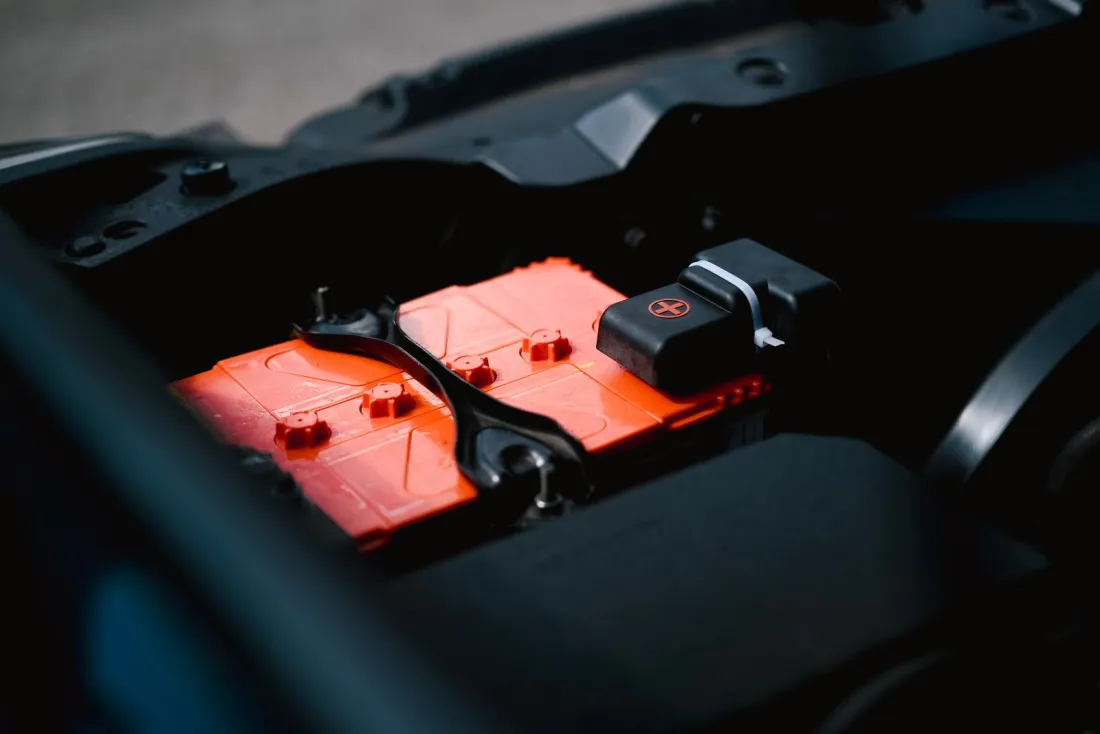
On 15 December 2025 the Commission fined Exide, FET (including its predecessor Elettra), Rombat and the trade association EUROBAT a total of around €72 million for a cartel in automotive starter batteries sold to car and truck manufacturers in the European Economic Area. The Commission found that, for more than 12 years, the manufacturers agreed to create and publish premiums based on their purchase price of lead, the key input, in the industry publication Metal Bulletin, and then used those "EUROBAT premiums" in negotiations with vehicle makers so that the resulting surcharge stayed higher than it otherwise would have been.
The Commission was careful to say that a raw-material surcharge is a legitimate commercial tool in itself. What is illegal is for competitors to coordinate secretly on introducing and applying such a surcharge as an industry standard. The conduct ran from 1 July 2005 to 31 December 2017 for most participants and was treated as a single and continuous infringement by object under Article 101 of the Treaty on the Functioning of the European Union.
The investigation began on 26 September 2017 after a leniency application by Johnson Controls and its subsidiary Clarios. A Statement of Objections followed on 30 November 2023. Proceedings against Banner and the service provider Kellen were closed. Rombat's position has an obvious cross-border dimension: its conduct in Romania and across the EEA produced a liability shared with a parent listed in South Africa.
| Party | Fine | Key feature |
|---|---|---|
| Clarios | €0 | Full immunity as first leniency applicant |
| Exide | €30 million | Largest single fine |
| Rombat | €20.218 million | 30% leniency reduction; €11.557 million jointly and severally with Metair |
| Elettra (FET's predecessor) | €15.594 million | Former parent Dofin capped at €0 as it has no turnover |
| FET | €6.11 million | 50% leniency reduction; €5.366 million jointly with Resonac |
| EUROBAT | €125,000 | Lump sum for facilitating the cartel |
How are EU cartel fines calculated: the six steps
EU cartel fines are calculated under the Commission's 2006 Guidelines on the method of setting fines, which apply to fines imposed under Article 23(2)(a) of Regulation 1/2003. The battery decision states expressly that the fines were set on that basis. The Guidelines set out a two-stage structure: first a basic amount, then adjustments, followed by the statutory cap and the cooperation discounts.
| Step | What happens | Source in the Guidelines |
|---|---|---|
| 1. Value of sales | Sales of the cartelised goods or services in the EEA, normally in the last full business year of participation | Point 13 |
| 2. Gravity percentage | A proportion of up to 30% of the value of sales; hardcore cartels sit at the higher end | Points 21 and 23 |
| 3. Duration | The gravity amount is multiplied by the number of years of participation | Point 24 |
| 4. Entry fee | An additional 15% to 25% of the value of sales for cartels, whatever the duration | Point 25 |
| 5. Adjustments | Increases for aggravating circumstances and deterrence; decreases for mitigating circumstances | Points 28 to 31 |
| 6. Cap and discounts | 10% of total turnover cap, then leniency and settlement reductions, and in rare cases inability to pay | Points 32 to 35 |

The logic is proportionality plus deterrence. Tying the starting point to the sales affected means a bigger cartel in a bigger market attracts a bigger fine. Multiplying by years means a cartel that ran for twelve and a half years, as the battery cartel did, faces a basic amount many times larger than one that lasted a few months. The entry fee ensures that even a short-lived hardcore cartel is expensive.
Value of sales, gravity and duration in practice
The value of sales is the single most important number in any cartel fine, and it is often the most contested. In the battery case the Commission said it took into account the average of each manufacturer's EEA annual value of sales of starter batteries to vehicle manufacturers and their authorised repairer networks, together with the duration, the serious nature of the infringement, its geographic scope and the parties' market shares. That wording shows the Commission departing, as the Guidelines permit, from a single-year figure to an average where a single year would not be representative.
The gravity percentage reflects the nature of the conduct, combined market share, geographic scope and whether the infringement was implemented. Price fixing, market sharing and output limitation are singled out in point 23 of the Guidelines as among the most harmful restrictions, so they are set "at the higher end of the scale". A surcharge cartel like the battery case falls squarely into that category because the Commission characterised the surcharge coordination as price fixing. Teresa Ribera, the Commission's Executive Vice-President, put it bluntly in the announcement: "In other words, they fixed the price."
Duration is measured precisely: the battery decision records participation of 12.23 years for Clarios and 12.5 years for the other manufacturers and EUROBAT. That arithmetic explains why long-running cartels generate such large totals. In the end-of-life vehicle recycling cartel, which the Commission found ran from 29 May 2002 to 4 September 2017, fifteen years of participation produced fines of around €458 million on 15 car manufacturers and their trade association, even though the conduct concerned payments to dismantlers and recyclability marketing rather than new-car prices.
The entry fee, aggravating and mitigating factors, and deterrence
Once the basic amount is set, the Commission adds an entry fee of between 15% and 25% of the value of sales for hardcore cartels, then looks at the individual conduct of each company. Point 28 of the Guidelines lists the aggravating circumstances. The best known is recidivism: where a company continues or repeats the same or a similar infringement after a previous finding, the basic amount may be increased by up to 100% for each earlier infringement. Obstructing the investigation, and acting as leader or instigator of the cartel, also lead to increases.
Point 29 lists the mitigating circumstances, including negligent rather than intentional conduct, substantially limited involvement, effective cooperation outside the scope of the Leniency Notice, and conduct authorised or encouraged by public authorities or legislation. The end-of-life vehicles decision illustrates how these adjustments work: the Commission took into account the lesser involvement of Honda, Mazda, Mitsubishi and Suzuki, and granted Renault a reduction because evidence showed it had explicitly asked to be exempted from the agreement not to advertise the use of recycled material.
Finally, point 30 allows a specific increase for deterrence where a company has a particularly large turnover beyond the sales to which the infringement relates. The purpose is to make sure a fine that is modest relative to a group's overall size still hurts. For multinational groups this can be a significant uplift, and it is one reason why two companies with similar cartelised sales can receive very different fines.
The 10% cap: what "turnover" means and who pays
The maximum fine for a cartel under EU law is 10% of the undertaking's total worldwide turnover in the preceding business year. That ceiling is set by Article 23(2) of Regulation 1/2003 and repeated at point 32 of the Guidelines. It is a cap, not a target: the calculated amount is cut back to 10% only if the earlier steps produce something higher. Article 23(5) states that these fines are not of a criminal law nature, which is why the EU system relies on administrative penalties for companies and leaves individual sanctions to national law.
The crucial word is "undertaking". Under EU competition law the undertaking is the economic unit, which can include a parent company that exercised decisive influence over the subsidiary that took part. That is why the battery decision holds Metair jointly and severally liable with Rombat for €11.557 million, FET's parent Resonac liable for €5.366 million of FET's fine, and why the former Elettra parent, Dofin, appears in the decision at all, even though its fine was capped at €0 because it is no longer economically active. For a group, the cap is measured against group turnover, and a parent can be pursued for the jointly liable portion if the subsidiary does not pay.
For acquirers, this is the practical lesson. Historic cartel conduct inside a target can crystallise years later as a liability for the new parent group. Buyers and their corporate and M&A advisers increasingly treat competition due diligence, including sector-wide investigations and trade association exposure, as a core workstream rather than an afterthought.
Leniency: how immunity and reductions work
The EU leniency programme offers full immunity from fines to the first cartel member that reports the cartel and provides evidence allowing the Commission to carry out a targeted inspection or find an infringement, and reduced fines to later applicants that add significant value. The rules are in the 2006 Leniency Notice. Immunity is not available to a company that coerced others to join or stay in the cartel, and every applicant must cooperate genuinely, fully, continuously and expeditiously.
For companies that are not first, the Notice sets fixed bands. According to the Commission's leniency guidance, the first company to provide evidence of significant added value receives a reduction of 30% to 50%, the second 20% to 30%, and subsequent companies up to 20%. The Commission also offers a marker system to hold a place in the queue, and is willing to discuss potential applications on a "no-names" basis.
The battery case shows the bands at work. Clarios, which reported the cartel, paid nothing. FET received a 50% reduction and Rombat 30%, both having applied after the Commission had already sent requests for information. In the end-of-life vehicles case, Mercedes-Benz avoided a fine of around €35 million through immunity, and Stellantis, Mitsubishi and Ford received reductions. Timing is everything: the gap between first and second in the queue can be worth tens of millions of euros. Companies that discover a potential problem through an audit typically move quickly to instruct internal investigations specialists and competition and antitrust advisers before deciding whether to apply.
Settlement: the 10% discount for admitting the cartel
A company that admits its participation and liability can settle with the Commission and receive a 10% reduction in its fine. Under point 32 of the 2008 Settlement Notice, that reduction is applied after the 10% turnover cap, and point 33 makes it cumulative with any leniency reward. In exchange, the settling party must acknowledge its liability, its role and the duration of its participation, indicate the maximum fine it would accept, and agree to a streamlined procedure without full access to the file or an oral hearing.
Settlement has become common. Every party to the end-of-life vehicles cartel settled and received the standard 10% cut. So did the parties to the online food delivery cartel, where the Commission fined Delivery Hero €223.285 million and Glovo €105.732 million in what it described as its first decision finding a cartel in the labour market and the first sanctioning the anticompetitive use of a minority shareholding in a competitor. The battery case, by contrast, was not settled, and more than eight years passed between the first leniency application in September 2017 and the decision in December 2025.
Inability to pay, instalments and interest
The Commission will reduce a fine for inability to pay only in exceptional cases, where the fine would irretrievably jeopardise the company's economic viability and cause its assets to lose all their value. That test is set out at point 35 of the Guidelines. The battery decision is a rare recent example: several companies made such claims, and the Commission says it assessed each applicant's recent financial statements, projections and ratios measuring financial strength, profitability, solvency and liquidity before granting a reduction to one of them.
More common is flexibility on timing. In the battery case the Commission, in its discretion, allowed several companies to pay in pre-set annual instalments. According to the Business Insider Africa report, Rombat was allowed to pay over 51 months, with a first instalment of approximately €4.2 million and later payments carrying interest linked to the European Central Bank's rate plus 1.5 percentage points. Instalments ease cash flow, but they do not reduce the principal, and interest makes delay costly. Fines, once collected, are paid into the general EU budget and reduce Member States' contributions for the following year.
Appealing a cartel fine: why the money is usually due anyway
A company can challenge a Commission cartel decision before the EU General Court in Luxembourg and then appeal on points of law to the Court of Justice, but bringing an action does not stop the fine falling due. Suspension requires a separate application for interim measures, and the applicant must show urgency and a risk of serious and irreparable harm. Rombat and Metair made such an application and, as reported on 1 September 2026, the General Court found the conditions were not met. The underlying challenge continues, and Metair has indicated it could take up to two years, but in the meantime the payment schedule stands.

The courts' powers over fines are unusually broad. Article 31 of Regulation 1/2003 gives the Court of Justice of the European Union unlimited jurisdiction to cancel, reduce or increase a fine. That power cuts both ways, and it also creates its own disputes. In March 2026 Advocate General Nicholas Emiliou advised the Court of Justice that the General Court had not adequately explained how it arrived at the same €337 million figure for JPMorgan in the euro interest rate derivatives case after finding flaws in the Commission's reasoning.
Cartel appeals can last a very long time. On 26 February 2026 the Court of Justice dismissed the appeals of 12 airlines in the air freight cartel, a case concerning conduct between December 1999 and February 2006, in which the Commission first imposed fines in 2010 and re-adopted a decision imposing €776 million in 2017. The Court confirmed that the Commission can penalise conduct outside the EU where it is foreseeable that it will have immediate and substantial effects in the EEA, and reduced only SAS Cargo Group's fine. For companies weighing a challenge, the General Court's recent approach in other high-profile Commission cases and the cost of years of litigation in Brussels and Luxembourg are both part of the calculation.
After the fine: cartel damages claims
A Commission fine is often only the first bill. Customers who paid inflated prices can sue for compensation in national courts, and the fine does not reduce the damages. The battery announcement says so directly, noting that a Commission decision constitutes binding proof in national courts that the behaviour took place and was illegal. That follows from Article 16 of Regulation 1/2003, which prevents national courts from taking decisions that run counter to a Commission decision.
The Antitrust Damages Directive 2014/104/EU, which the Commission says all Member States had implemented by 2018, strengthens claimants' hands in several ways:
- Presumption of harm. Article 17(2) provides that it "shall be presumed that cartel infringements cause harm", although the infringer can rebut that presumption.
- Limitation periods. Article 10 requires limitation periods of at least five years, which do not start to run until the infringement has ended and the claimant knows, or can reasonably be expected to know, of it, and which are suspended or interrupted while a competition authority investigates.
- National decisions. Under Article 9, a final infringement decision of a national authority is irrefutable in that Member State's courts and at least prima facie evidence in other Member States.
- Joint liability. Cartel members are jointly and severally liable, but under Article 11(4) an immunity recipient is generally liable only to its own direct and indirect purchasers or providers.
- Protected documents. Article 6(6) means national courts can never order disclosure of leniency statements or settlement submissions.
These rules explain why large claims are often filed in jurisdictions known for competition litigation, such as Germany and the Netherlands, and why follow-on claims can run for years, as shown by the Moy Park interchange-fee claim against Visa and Mastercard in the UK. Defendants and claimants alike typically need dispute resolution and litigation counsel alongside economists to quantify overcharge and pass-on.
How UK cartel fines compare, and the CMA's bid-rigging push
Since Brexit, cartel conduct affecting the UK is investigated separately by the Competition and Markets Authority. UK fines follow a similar structure and ceiling: GOV.UK guidance states that a business can be fined up to 10% of its worldwide turnover and sued for damages. The UK goes further than the EU on individuals: a person found guilty of the criminal cartel offence can be fined or imprisoned for up to five years, and company directors can be disqualified for up to 15 years. That makes criminal and white-collar specialists part of any serious UK cartel response.

The end-of-life vehicles case shows the two systems running in parallel. On the same day as the Commission's decision, the CMA fined 10 manufacturers and 2 trade bodies £77,688,917, with 20% settlement reductions for all settling parties and leniency reductions of 45% for Stellantis brands, 35% for the Society of Motor Manufacturers and Traders and 25% for Mitsubishi. Mercedes-Benz again received immunity. Under the CMA's leniency policy, being first to apply before an investigation starts is the only way to secure guaranteed immunity from penalties, director disqualification, criminal prosecution and public contract exclusion, and informants who are not involved can receive a reward of up to £250,000.
The latest UK development came on 8 September 2026, when the CMA published "Rigged bids, real costs". The paper notes that around £400 billion a year is spent on UK public procurement, that OECD data show the share of cartel decisions involving bid rigging rising from 34% to 47% between 2021 and 2024, and that on a conservative assumption that 2% of procurement is affected, taxpayers could be overpaying by £1 billion a year, potentially rising to £3.5 billion. In her remarks launching the paper, CMA chief executive Sarah Cardell said the CMA had completed seven bid-rigging cases since 2014, imposing more than £129 million in fines, and called for better access to procurement data, including losing bids, to power its Bid Rigging Intelligence Tool. Suppliers active in public contracts in the United Kingdom should expect data screening to generate more cases, and many are reviewing bid processes with tendering specialists.
What the 2025 to 2026 cases show about cartel enforcement
Recent decisions and open cases show that EU and UK cartel enforcement has moved well beyond classic price fixing between manufacturers. Labour markets, sustainability-related information, recycling services and trade association activity have all featured, and the Commission's pipeline remains active.
| Case | Date | Outcome | What it shows |
|---|---|---|---|
| End-of-life vehicle recycling (EU) | 1 April 2025 | Around €458 million, all parties settled | Long duration drives fines; trade association fined |
| End-of-life vehicle recycling (UK) | 1 April 2025 | £77,688,917 | Parallel EU and UK enforcement |
| Delivery Hero and Glovo (EU) | 2 June 2025 | €329 million, settled | First EU labour-market cartel; minority stakes |
| Starter batteries (EU) | 15 December 2025 | Around €72 million | Surcharge coordination; inability to pay; instalments |
| Air freight (Court of Justice) | 26 February 2026 | 12 airlines' appeals dismissed | Reach over conduct outside the EU |
| Synthetic turf (EU) | 22 May 2026 | Statements of Objections | Jointly owned recycler allegedly used to avoid competition |
| Construction chemicals (EU) | 20 July 2026 | Statements of Objections | Suspected price coordination around trade association press releases |
The two open cases carry particular warnings for trade associations. In construction chemicals, the Commission's preliminary concern is that manufacturers in France, Germany and Spain coordinated price increases in 2021 and 2022 while preparing trade association press releases that justified those increases by pointing to rising raw material costs. In synthetic turf, the concern is that a jointly owned recycling company in the Netherlands was used to avoid competition and exclude rivals. Statements of Objections do not prejudge the outcome of an investigation. Read alongside the US RealPage rent-setting settlement and the scrutiny of large deals such as the Paramount Skydance and Warner Bros. Discovery review, the direction is clear: authorities are looking at how competitors share information, whatever the channel.
When to bring in a competition adviser
The moment a company suspects that its people have exchanged pricing or strategy information with a competitor, or receives a request for information or an unannounced inspection, the cartel fine calculation described above starts to matter in real money. Decisions taken in the first days, such as whether to seek a leniency marker in Brussels and London at the same time, how to preserve evidence and how to handle employees, can change the outcome by tens of millions. Companies usually engage specialist competition and antitrust advisers in every affected jurisdiction and coordinate them centrally.
The battery case is a reminder that how EU cartel fines are calculated is only half of the story. The fine is followed by payment schedules that run whether or not an appeal is pending, parent-company liability that reaches groups on other continents, and damages claims backed by a legal presumption of harm. For groups with operations across Europe, understanding the arithmetic is the first step to managing the exposure.
Frequently asked questions
How are EU cartel fines calculated?
The Commission applies its 2006 Guidelines on fines. It takes a percentage of up to 30% of the company's cartelised EEA sales, multiplies it by the years of participation, adds an entry fee of 15% to 25% of those sales, adjusts for aggravating and mitigating factors and deterrence, applies the 10% turnover cap, then deducts leniency and settlement reductions.
What is the maximum fine for a cartel in the EU?
Article 23(2) of Regulation 1/2003 caps fines at 10% of the undertaking's total worldwide turnover in the preceding business year. The undertaking can include the parent group, so the cap is measured against group turnover where a parent exercised decisive influence. The cap limits the final figure; it is not the starting point of the calculation.
How much can you be fined for breaching competition law in the UK?
A business can be fined up to 10% of its worldwide turnover by the Competition and Markets Authority and can also be sued for damages. Individuals found guilty of the criminal cartel offence face fines or up to five years in prison, and company directors can be disqualified for up to 15 years.
How does the EU leniency programme work?
The first cartel member to report the cartel and provide sufficient evidence receives full immunity, unless it coerced others. Later applicants that provide evidence of significant added value receive reductions of 30% to 50% for the first, 20% to 30% for the second and up to 20% for others, provided they cooperate fully throughout.
What is the settlement reduction in EU cartel cases?
Companies that acknowledge their participation and liability, and accept a streamlined procedure, receive a 10% reduction under the 2008 Settlement Notice. The reduction is applied after the 10% cap and is added to any leniency reward. All parties to the €458 million end-of-life vehicles cartel settled on that basis.
Do you have to pay an EU cartel fine while appealing?
Generally yes. Bringing an action before the General Court does not suspend the decision. A company must apply separately for interim measures and show urgency and a risk of serious and irreparable harm. Rombat's application was refused, and it began paying its €20.218 million fine in instalments while its appeal continues.
Can a parent company be liable for a subsidiary's cartel fine?
Yes. EU competition law treats the parent and subsidiary as one undertaking where the parent exercised decisive influence. In the battery cartel, Johannesburg-listed Metair is jointly and severally liable for €11.557 million of Rombat's fine, and Resonac for €5.366 million of FET's fine, so the Commission can recover those sums from either company.
Can cartel victims claim damages after a Commission fine?
Yes. A Commission decision is binding proof of the infringement in national courts, and damages are not reduced because a fine was paid. The Damages Directive presumes that cartels cause harm, requires limitation periods of at least five years and makes cartel members jointly and severally liable, with limited protection for immunity recipients.
Can the EU courts increase a cartel fine?
Yes. Article 31 of Regulation 1/2003 gives the Court of Justice of the European Union unlimited jurisdiction to cancel, reduce or increase fines. In practice the courts more often reduce fines or confirm them, as in the 2026 air freight judgments, but the power means an appeal carries risk as well as potential reward.
Sources
- European Commission: Commission fines automotive starter battery manufacturers and association €72 million for participating in a cartel (15 December 2025)
- Business Insider Africa: South African auto-parts group starts paying $24 million European battery-cartel fine after court setback (1 September 2026)
- Guidelines on the method of setting fines imposed pursuant to Article 23(2)(a) of Regulation No 1/2003 (2006/C 210/02), EUR-Lex
- Commission Notice on Immunity from fines and reduction of fines in cartel cases (2006/C 298/11), EUR-Lex
- Commission Notice on the conduct of settlement procedures in cartel cases (2008/C 167/01), EUR-Lex
- Council Regulation (EC) No 1/2003, EUR-Lex
- European Commission, DG Competition: Leniency
- Directive 2014/104/EU on antitrust damages actions (original text as adopted), legislation.gov.uk
- European Commission, DG Competition: Antitrust damages actions in Europe
- European Commission: Commission fines car manufacturers and association €458 million over end-of-life vehicles recycling cartel (1 April 2025)
- European Commission: Commission fines Delivery Hero and Glovo €329 million for participation in online food delivery cartel
- Court of Justice of the European Union: Press Release No 21/26, Airfreight cartel (26 February 2026)
- ICLG: EU adviser faults reasoning behind JPMorgan derivatives cartel fine (13 March 2026)
- European Commission: Statements of Objections in suspected construction chemicals cartel (20 July 2026)
- The European Sting (with the European Commission): Statements of Objections concerning synthetic turf cartels (22 May 2026)
- Competition and Markets Authority: Car industry settles competition law case (1 April 2025)
- Competition and Markets Authority: Cartels, come forward and apply for leniency
- GOV.UK: Avoid and report anti-competitive activity
- Competition and Markets Authority: Rigged bids, real costs (8 September 2026)
- Sarah Cardell: Public procurement in the national interest, reflections from the CMA (8 September 2026)
About this article
This analysis was researched and written by The Corporate INTL Newsroom, which covers cross-border legal, regulatory and business developments for lawyers, professional advisers and financiers in over 150 jurisdictions. It has been checked against the European Commission's decisions and announcements, the Commission's fining, leniency and settlement notices, Regulation 1/2003, the Antitrust Damages Directive, Court of Justice press material, CMA publications and primary reporting. The full non-confidential version of the starter battery decision (case AT.40545) had not been published at the time of writing, and the details of Rombat's payment schedule are as reported. This article is general information, not legal advice; for advice on a specific matter, consult a qualified adviser. Last reviewed 13 September 2026. For more analysis like this, visit the Corporate INTL newsroom or subscribe to Corporate INTL.
Looking for an expert?
Tell us what you need and the Corporate INTL team will help you find the right lawyer or adviser from our members in 150+ jurisdictions.
Related stories

Wayfair Fined: Why the CMA Imposed £4.8m Over False Time-Limited Deals

What Is the Status of the Google Play Store Class Action Lawsuit? Inside the £1.2bn UK Trial