What does war risk insurance cover? In short, it pays for loss of or damage to a ship, and the liabilities that follow, when the cause is war, hostile acts, capture or seizure, mines, terrorism or confiscation, the very perils that ordinary marine policies exclude. That question has moved from the broker's desk to the boardroom this year. The war between Iran and the United States and Israel that began on 28 February 2026 has kept the Strait of Hormuz at a fraction of its normal traffic for more than six months, the Houthis declared an embargo on Saudi shipping in July, and this week the London market's Joint War Committee extended its Black Sea reporting area to the whole of the Black Sea. This analysis explains what the standard war clauses actually say, how listed areas and seven-day cancellation notices drive the price, where protection and indemnity (P&I) cover stops, and how the cost is shared between owners, charterers and cargo interests.
What Does War Risk Insurance Cover? Hormuz, the Red Sea and the Black Sea in 2026
By The Corporate INTL Newsroom · 19 September 2026
What does war risk insurance cover? The short answer
War risk insurance is a separate policy, placed in the specialist war market, that picks up the perils excluded from a ship's ordinary hull and machinery cover. The benchmark wording in the London market is the Institute War and Strikes Clauses (Hulls, Time) 1/10/83, which is expressly subject to English law and practice. Its perils clause covers loss of or damage to the vessel caused by:
- War and hostile acts. War, civil war, revolution, rebellion, insurrection, civil strife arising from them, or any hostile act by or against a belligerent power.
- Capture and seizure. Capture, seizure, arrest, restraint or detainment, and the consequences of them or any attempt at them.
- Weapons of war. Derelict mines, torpedoes, bombs or other derelict weapons of war.
- Strikes and civil commotion. Strikers, locked-out workmen and persons taking part in labour disturbances, riots or civil commotions.
- Terrorism and malicious acts. Any terrorist or any person acting maliciously or from a political motive.
- Confiscation. Confiscation or expropriation.
A drone strike on a tanker off Oman, a missile hit in the Black Sea or a boarding by a state's forces therefore falls within the war policy rather than the marine policy. The clauses incorporate much of the ordinary hull wording, including the collision liability clause, so the war underwriter also responds to collision liabilities where the collision is caused by a war peril. In practice a shipowner's war programme is layered, and each layer answers a different part of the question. Owners and charterers reviewing their programme will usually do so with maritime and shipping advisers and their broker together.
| Layer of war cover | What it pays for | Where it is usually placed |
|---|---|---|
| Hull war (Institute War and Strikes Clauses) | Physical loss of or damage to the ship from war perils; constructive total loss after 12 months' detainment | The war hull market, where London sets the benchmark wording |
| Primary war P&I | Third-party liabilities (crew, pollution, wreck removal) caused by a war peril, below the excess layer | Usually placed in the war hull and machinery market |
| Excess war P&I (International Group clubs) | War liabilities above the primary layer, up to US$500 million per vessel | Arranged by the International Group P&I clubs |
| Charterers' war liability cover | Charterers' own liabilities caused by war events | Club charterers' insurances, with separate buy-back in excluded areas |
| Cargo war cover | Loss of or damage to cargo from war perils in transit | Cargo market, with cover ending 15 days after arrival |
| Kidnap and ransom | Ransom and related costs after a seizure of crew | Specialist market; cost now recoverable under BIMCO war clauses |
What war risk insurance does not cover
The exclusions matter as much as the perils. The 1983 hull war clauses exclude loss, damage, liability or expense arising from any detonation of a nuclear weapon of war, and from the outbreak of war, declared or not, between any of the United Kingdom, the United States, France, Russia (the clause still names the Soviet Union) and China. That second exclusion, known as the five powers clause, is why every war policy in the market would fall away automatically if the current conflicts escalated into war between the permanent members of the UN Security Council.
The clauses also exclude:
- Own-government action. Capture, seizure, arrest, restraint, detainment, confiscation or expropriation by or under the order of the government or any public authority of the country in which the vessel is owned or registered.
- Customs and quarantine. Arrest or detainment under quarantine regulations or for infringing customs or trading regulations.
- Ordinary legal process. The operation of ordinary judicial process, failure to provide security, or failure to pay any fine or penalty, or any financial cause.
- Requisition. Requisition or pre-emption.
- Delay. Claims for expenses arising from delay, except those recoverable in principle under the York-Antwerp Rules.
- Double recovery. Anything covered by the ordinary hull policy or any other insurance.
Two consequences follow. First, a detention by a port state for alleged sanctions breaches or document irregularities is generally an uninsured commercial risk, not a war loss, which is one reason sanctions compliance and war cover have to be read together. Second, loss of time is not covered by the hull war policy at all: delay, missed laycans and lost hire need separate loss of hire cover or a contractual allocation in the charterparty. Insurance specialists reviewing a programme this year will usually start with these gaps rather than the headline perils.
Why the Joint War Committee's listed areas drive the price
The Joint War Committee (JWC) decides where war cover stops being routine. According to Reuters, the committee comprises syndicate members from the Lloyd's Market Association and representatives from the London insurance company market. It publishes a list of areas regarded as enhanced risk. Outside those areas a ship's war cover runs on its existing terms; a voyage into a listed area requires the owner to notify underwriters, who then quote an additional premium for that call, commonly priced per seven-day period.
This is why a change to the list moves freight markets within days. Each listing converts a sea area from a flat annual cost into a transactional, per-voyage charge that must be quoted, agreed and paid before the ship enters. The 2026 listings so far are summarised below.
| Date | JWC action | Trigger |
|---|---|---|
| 3 March 2026 | Circular JWLA-033 adds Bahrain, Djibouti, Kuwait, Oman and Qatar and extends the Gulf of Oman area | Outbreak of the US and Israel war with Iran on 28 February |
| 29 July 2026 | Red Sea notification line moved north, reaching close to the Saudi port of Jizan | Houthi embargo on Saudi shipping declared on 20 July, and attacks on Saudi-linked vessels |
| 18 September 2026 | Black Sea reporting requirements extended to the whole of the Black Sea | Escalating Russian and Ukrainian attacks on commercial shipping |
The listings run alongside the seafarers' framework. On 2 March 2026 the International Bargaining Forum designated the Strait of Hormuz and the Persian Gulf a high risk area, which, as Gard explains, gives covered seafarers the right to refuse to sail, with repatriation at the company's cost and additional wages and compensation. Those crew costs are a separate item from the insurance premium, but the charterparty war clauses discussed below treat both the same way.
The Black Sea: the 18 September extension
The newest change is also the widest. Until this week, only the coastal waters of Russia and Ukraine were listed in the Black Sea. Neil Roberts, head of marine and aviation at the Lloyd's Market Association and secretary to the JWC, said that "the JWC has expanded the Black Sea reporting requirements to the whole of the Black Sea area". The territorial waters of Bulgaria, Georgia, Romania and Turkey still do not require notification.
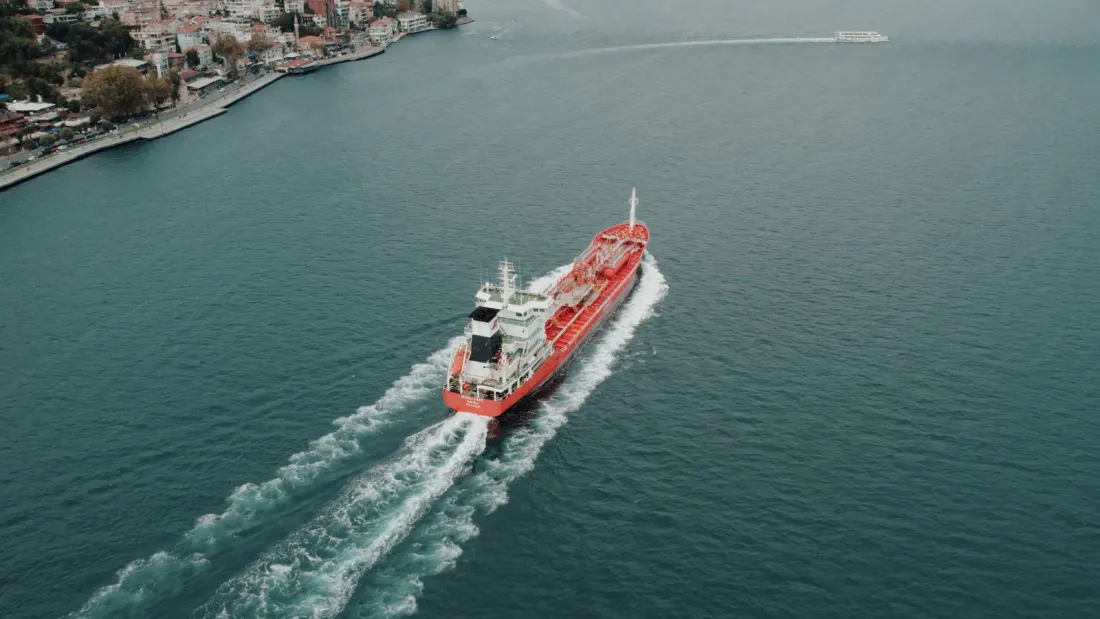
Reuters reported that Russia and Ukraine have stepped up attacks on each other's commercial shipping over the past two months, that dozens of ships have been attacked, and that war risk premiums are adding hundreds of thousands of dollars in extra cost for every seven-day voyage. For grain, crude and product traders, the practical effect is that a call at a Romanian or Bulgarian port that stays within those countries' territorial waters is treated differently from a transit across open water to the same port. Owners fixing Black Sea business and cargo interests dealing with advisers in Ukraine or in Greece will need to check whether the route, not just the port, triggers a notification.
What does war risk insurance cover in the Strait of Hormuz, and at what price?
Cover for Hormuz is available, but it is expensive, quoted voyage by voyage and hedged with conditions. Before the war, about 125 vessels a day transited the strait; Gulf News, citing Reuters data, reported that four commodity vessels left the Gulf and ten entered on 14 September, with a ten-day average of about 14 a day.
The price has climbed in stages. Stephenson Harwood reported on 3 March that additional premiums had risen from 0.05% to 0.15% of hull value per transit to 0.30% to more than 0.7%. By mid-September, Al Jazeera reported a range of 3% to 10% of hull value, against about 0.25% before the war, meaning a US$100 million tanker could face a premium of US$3 million to US$10 million for a single transit. Lloyd's List reported on 15 September that hull war underwriters were reassessing pricing after the latest attacks. Those followed an incident on the evening of 10 September in which four projectiles struck two vessels about four nautical miles west of Khasab, according to a UKMTO warning reported by Gulf News.
| Route (2026) | Before escalation | After escalation | Source |
|---|---|---|---|
| Strait of Hormuz, early March | 0.05% to 0.15% of hull value per transit | 0.30% to 0.7%+ per transit | Stephenson Harwood, 3 March |
| Strait of Hormuz, mid-September | About 0.25% of hull value | 3% to 10% of hull value per transit | Al Jazeera, 14 September |
| Southern Red Sea, late July | 0.3% of ship value | 1% to 2% | Reuters, 30 July |
| Jeddah and Yanbu, late July | 0.25% | 1% | Reuters, 30 July |
| Black Sea, September | Coastal waters of Russia and Ukraine listed | Whole sea listed; hundreds of thousands of dollars per seven-day voyage | Reuters, 18 September |
Some cargo is moving around the problem rather than through it. Al Jazeera reported on 18 September that ship-to-ship transfers near Sohar in Oman and Fujairah in the UAE have grown sharply, and quoted Oscar Seikaly, chief executive of NSI Insurance Group, as saying that during wartime insurers are unlikely to provide broad cover for such transfers. Traders using those hubs should expect pollution, collision and war exposures to sit largely outside commercial insurance, and should take advice from advisers in the UAE or Oman before relying on them.
The Red Sea: embargo, extension and a partial return to Suez
The Red Sea shows how quickly a listing can move in both directions of the market. After the Houthis announced a maritime embargo against Saudi Arabia on 20 July, the JWC issued guidance on 29 July moving the notification line north. Reuters reported that premiums for southern Red Sea voyages jumped to 1% to 2% of a ship's value from 0.3%, and that indicative rates for Jeddah and Yanbu rose to 1% from 0.25%. Neil Roberts said the decision "reflects the recent escalation by the Houthis and their attacks on Saudi vessels in the Red Sea".
Yet container lines are starting to come back. Caixin reported on 16 September that Maersk, Cosco, OOCL, MSC and CMA CGM have announced a return of some services to the Suez Canal, with Cape of Good Hope diversions at a two-year low of 4.6% on 14 September, even as the Houthis took Mokha and the Hanish Islands on 10 September and Dhubab port and Perim Island a day later. For shippers into Saudi Arabia, the lesson is that the insurance position has to be checked voyage by voyage: a carrier's decision to resume a route does not mean the war premium has fallen.
The seven-day notice of cancellation: how war cover can vanish
War cover is unusual because either side can cancel it at short notice. Clause 5.1 of the 1983 hull clauses provides that the insurance may be cancelled by underwriters or the assured on seven days' notice, effective at the expiry of seven days from midnight on the day the notice is issued. Underwriters agree to reinstate the cover if, before the notice expires, the parties agree a new premium, conditions or warranties. In practice, this is the mechanism underwriters use to reprice war cover in a crisis: a notice of cancellation is issued for the affected area, followed by an offer to reinstate at a higher rate.
Clause 5.2 goes further. Whether or not notice has been given, the insurance terminates automatically on any hostile detonation of a nuclear weapon of war, on the outbreak of war between any of the five powers, and if the vessel is requisitioned. That is a hard stop with no reinstatement mechanism, and it applies wherever the ship is.
For boards, the seven-day notice is the reason war cover behaves more like a short-term price than a fixed annual cost, a volatility that other specialty lines, such as the cyber insurance market, have also had to confront. Stephenson Harwood noted in March that notices of cancellation and amendments to existing cover were being issued, and that owners may decline or delay a transit when war cover lapses. Any charterparty that obliges an owner to proceed must therefore be read with the owner's right to keep the ship insured.
P&I and war: where club cover stops
Mutual P&I cover excludes war risks, but the International Group clubs arrange an excess war layer for their members. The clearest recent statement is Britannia's war risks explanatory note of 17 March 2026. It explains that its Rule 25 excludes liabilities caused by war, civil war, revolution, rebellion, insurrection, civil strife or any hostile act by or against a belligerent power, and that the excess war P&I insurance pays claims above the amounts recoverable under the ship's primary war P&I policy, which is usually placed in the war hull market.
- Limit. Up to US$500 million, sub-limited to US$125 million for vessels transiting or calling within defined Russian waters.
- No drop-down. Where no primary war P&I cover has been bought, the excess layer attaches above the ship's proper value, not from the ground up.
- Weapons exclusion. Chemical, biological, bio-chemical and electromagnetic weapons and computer viruses are excluded, although crew claims from such weapons are covered up to US$30 million.
- Cancellation. The cover can be cancelled, or areas excluded, on seven days' notice, and terminates automatically under the five powers clause, although Britannia expects it to remain unchanged for the 2026/27 policy year.
- Certificated liabilities. Under blue cards for pollution, wreck removal and crew claims, the club in effect becomes the primary war insurer, subject to the member indemnifying it for sums recoverable under a standard war P&I policy.
Charterers are in a different position. Britannia's reinsurers issued a notice of cancellation removing war cover for its charterers' insurances within the Arabian and Persian Gulf from 00:00 UTC on 5 March 2026. A buy-back is available for voyages of seven to ten days, up to US$500 million, but it excludes blocking and trapping absolutely, excludes Iranian port calls and US, UK or Israeli owned, flagged or affiliated vessels unless agreed, and carries warranties that the vessel is not in breach of UN, EU, UK or US sanctions. As Lloyd's List reported on 4 March, the clubs had not cancelled war cover generally; charterers' extensions expired and were replaced by buy-back products. Members facing a claim in the Gulf will want claims handling support early, because the warranties are strict.
Detention, blocking and trapping: the 12-month rule
A ship stuck in a war zone is not automatically a loss. Clause 3 of the hull war clauses provides that where the vessel has been captured, seized, arrested, restrained, detained, confiscated or expropriated, and the assured has lost its free use and disposal for a continuous period of 12 months, the owner is deemed to have been deprived of the vessel without likelihood of recovery, so that a constructive total loss can be claimed. Blocking and trapping language, which The Loadstar dates to 1984, addresses the related problem of a ship that cannot leave because the waterway itself is closed.
Writing in The Loadstar on 5 May, Patrizia Kern-Ferretti of Breeze pointed out that the market is relying on wordings from 2009, 1983 and even 1906, and that the 12-month detainment threshold and blocking language were themselves reactions to earlier crises. She identified three gaps on the cargo side: war cover on cargo ends 15 days after arrival at port, cargo policies exclude frustration of the voyage, and there is no cargo equivalent of the hull detainment clause for declaring a constructive total loss. For a cargo owner with goods on a ship trapped inside the Gulf since March, those gaps are the difference between an insured and an uninsured loss.
Who pays the additional premium? CONWARTIME and VOYWAR 2025
Under standard charterparty terms, the charterer usually pays. BIMCO's war risks clauses are the market standard, and BIMCO approved revised 2025 editions on 9 April 2025, the first update since 2013. Nicholas Fell, chair of BIMCO's Documentary Committee, said at the time that the revisions were "essential to accurately reflect the dynamics of conflicts today, not least the war in Ukraine and recent attacks on shipping in the Red Sea", according to BIMCO's announcement.
Under the time charter version, CONWARTIME 2025:
- Right to refuse. Owners need not proceed to, and may leave, an area where in the reasonable judgement of the master or owners the vessel, cargo or crew may be exposed to war risks, whether those risks existed at fixture or arose later.
- No deviation. Anything done under the clause is treated as due fulfilment of the charter, not a deviation.
- Insurance costs. Charterers reimburse additional war risk premiums and the cost of kidnap and ransom insurance, plus crew bonuses and wages paid because of the war risks, within 15 days of supporting documents.
- Notice. Owners must notify charterers of the insurance costs as soon as practicable and, if possible, before the vessel enters the area.
The voyage version, VOYWAR 2025, gives charterers 72 hours to nominate a safe alternative port, after which owners may discharge at any safe port of their choice, with freight adjusted for time and expense and a lien on the cargo for the adjusted freight. Stephenson Harwood also flagged the older tools: the safe port warranty where a port cannot be reached without abnormal danger, force majeure clauses where hostilities prevent performance, and off-hire or laytime clauses where naval restrictions delay the ship. Parties on older 2013 or bespoke terms should check the wording before assuming the 2025 allocation applies, ideally with specialists in carriage of goods by sea.
The Polar: why war insurance does not replace general average
Paying for war cover does not buy the charterer or cargo an exemption from other liabilities. In Herculito Maritime v Gunvor International (The Polar) [2024] UKSC 2, decided on 17 January 2024, Somali pirates had seized the tanker Polar in the Gulf of Aden in October 2010 and the owner paid a ransom of US$7.7 million. The owner declared general average and claimed US$5,914,560 from cargo. Cargo argued that, because the charterer had paid for additional war risk cover, the parties had agreed that insurance was the owner's only source of recovery.
The Supreme Court dismissed the appeal. It held that there was no insurance code or fund agreed in the charter, stressing that English commercial law recognises the importance of certainty. The practical lesson for 2026 is that allocating the premium is not the same as allocating the loss: if a vessel is seized in the Gulf, cargo can still face a general average contribution unless the contract clearly says otherwise. The same tension between contract terms and statutory carriage regimes runs back a century, as our piece on the Hague Rules centenary describes.
Shadow fleet tankers, sanctions warranties and uninsured tonnage
The mainstream war market insures only ships it can underwrite, and a large part of the tanker fleet now sits outside it. The Parliament Magazine reported on 9 September that Russia's shadow fleet numbers more than 1,000 old, uninsured tankers, that more than 670 ships linked to the Russian oil trade are sanctioned, and that UK and French forces have detained six tankers. It noted that Article 110 of the UN Convention on the Law of the Sea permits the boarding of ships without nationality or sailing under a false flag, and that more than 70 tankers have moved to the Russian registry within 14 months, which limits that route to enforcement.
For legitimate operators the point is contractual. War buy-backs of the kind Britannia offers are warranted not in breach of UN, EU, UK or US sanctions, and a breach can void the cover exactly when it is needed. A charterer who takes a ship with an opaque ownership chain or a recent change of flag may find that neither the owner's war policy nor its own buy-back responds. Screening of vessels, owners and cargo is now part of insurance hygiene, and is work for export control and OFAC sanctions advisers as much as for brokers.
New capacity, and when to take advice
Governments are starting to build their own capacity. On 16 September Saudi Re was appointed to lead a new Saudi marine war risk pool, covering cargo and hull through participating insurers, and Finance Minister Mohammed Al-Jadaan said the pool "represents a specialised national mechanism that enhances the insurance market's ability to deal with the risks of maritime warfare". The stated aim is to reduce reliance on volatile international reinsurance markets during geopolitical crises; the likely effect, if the pool proves workable, is more local capacity for Gulf voyages, although its size has not been disclosed.
For owners, charterers and traders, the practical checklist is short but unforgiving:
- Map the route against the current JWC listings, not the port alone, and diarise the seven-day notice windows.
- Confirm who pays additional premiums, kidnap and ransom cost and crew bonuses under the actual charter wording.
- Check the P&I position, including whether primary war P&I has been bought and whether a charterers' buy-back is needed.
- Read the warranties on sanctions, flag, ownership and prior port calls before fixing.
- Address delay separately, through loss of hire cover or charterparty terms, because the war policy does not pay for lost time.
Where a claim, a refusal to proceed or a general average demand is already in play, early advice from shipping dispute resolution specialists and commodities trading lawyers is the difference between a negotiated outcome and an arbitration. Building that response in advance is part of the wider operational resilience agenda. So, what does war risk insurance cover in September 2026? The physical and liability consequences of war at sea, on terms that can change within seven days, at a price set area by area in London, with the bill usually passed to the charterer.
Frequently asked questions
What does war risk insurance cover?
Hull war cover pays for loss of or damage to a ship caused by war, hostile acts, capture, seizure, arrest or detainment, derelict mines and weapons, strikes and civil commotion, terrorism and confiscation. Separate war P&I cover responds to crew, pollution and wreck liabilities caused by those perils, and cargo war cover protects goods in transit.
What is not covered by war risk insurance?
The standard 1983 hull war clauses exclude nuclear weapons, war between the UK, US, France, Russia and China, seizure by the ship's own flag or owning state, detention for customs or quarantine breaches, ordinary legal process and unpaid fines, requisition, and delay. Lost time and hire need separate loss of hire cover or charterparty protection.
Who insures ships in the Strait of Hormuz?
Hull war cover for Hormuz is written in the specialist war market, led by London, voyage by voyage, after the owner notifies underwriters of a call in a Joint War Committee listed area. Excess war P&I is arranged by the International Group clubs, and charterers can buy back war cover for seven to ten day voyages.
How much does war risk insurance cost for Hormuz?
Al Jazeera reported on 14 September 2026 that additional premiums had reached 3% to 10% of hull value per transit, against about 0.25% before the war. On that basis a US$100 million tanker could pay US$3 million to US$10 million for one transit. Rates are quoted per voyage and change quickly.
What are the Joint War Committee listed areas?
They are sea areas that the London market's Joint War Committee regards as enhanced risk. Entering one normally requires notice to hull war underwriters and payment of an additional premium. In 2026 the committee listed more of the Gulf in March, moved the Red Sea line in July and extended the Black Sea area to the whole sea in September.
Can war risk cover be cancelled mid-voyage?
Yes. Under clause 5.1 of the Institute War and Strikes Clauses either party can cancel on seven days' notice, and underwriters usually offer to reinstate at a new premium or on new conditions. Cover also terminates automatically on a hostile nuclear detonation, war between the five powers, or requisition of the vessel.
Who pays the additional war risk premium under a charterparty?
Under BIMCO's CONWARTIME 2025 and VOYWAR 2025 clauses, charterers reimburse owners for additional war risk premiums, kidnap and ransom insurance and crew war bonuses, against documents. Owners must notify the costs as soon as practicable. Older or bespoke clauses may allocate the cost differently, so the actual wording must be checked.
Does P&I insurance cover war risks?
Not within mutual cover. Club rules exclude war risks, but International Group clubs arrange an excess war P&I layer of up to US$500 million that sits above the primary war P&I policy or, if none exists, above the ship's value. It can be cancelled on seven days' notice and ends automatically under the five powers clause.
If a charterer pays for war cover, is cargo protected from general average?
Not automatically. In The Polar, decided in January 2024, the UK Supreme Court held that cargo interests still had to contribute US$5,914,560 in general average after a ransom was paid, even though the charterer had paid for additional war risk cover, because the charter created no agreed insurance fund.
Sources
- gCaptain (Reuters): London's marine insurers widen Black Sea high risk zone as shipping attacks surge (18 September 2026)
- Institute War and Strikes Clauses (Hulls, Time) 1/10/83, clause text
- Insurance Journal (Reuters): Houthis' Red Sea attacks prompt London insurers to widen high-risk zone (30 July 2026)
- Gard: Escalating conflict in Middle East threatens Gulf shipping (updated 12 March 2026)
- Stephenson Harwood: Strait of Hormuz update, heightened war risks and implications for shipping (3 March 2026)
- Al Jazeera: US says it's clearing Hormuz traffic. Why are oil futures beyond $100? (14 September 2026)
- Gulf News: Hormuz tanker traffic shows signs of recovery, but Gulf oil flows remain far below normal (15 September 2026)
- Gulf News: Two vessels hit near Oman's Khasab as Gulf shipping risks rise (11 September 2026)
- Lloyd's List: Hull war underwriters reassess pricing after latest attacks on shipping in Middle East Gulf (15 September 2026)
- Al Jazeera: Oman oil escape route, how ship-to-ship transfers work despite big risks (18 September 2026)
- Caixin: Major shipping lines resume Suez transit despite Red Sea risks (16 September 2026)
- Britannia P&I: War Risks Explanatory Note (17 March 2026)
- Lloyd's List: No, P&I clubs have not cancelled war risk cover (4 March 2026)
- The Loadstar: Marine insurance, can new conflicts be covered by old clauses? (5 May 2026)
- BIMCO: BIMCO adopts reviews of War Risk Clauses (9 April 2025)
- BIMCO: War Risks Clause for Time Chartering 2025 (CONWARTIME 2025)
- BIMCO: War Risks Clause for Voyage Charter Parties 2025 (VOYWAR 2025)
- UK Supreme Court: Herculito Maritime Ltd v Gunvor International BV (The Polar) [2024] UKSC 2, press summary
- The Parliament Magazine: Russia's shadow fleet flag dilemma explained (9 September 2026)
- Global Reinsurance: Saudi Re to lead new Saudi marine war risk pool (16 September 2026)
About this article
This analysis was researched and written by The Corporate INTL Newsroom, which covers cross-border legal, regulatory and business developments for lawyers, professional advisers and financiers in over 150 jurisdictions. It has been checked against the text of the Institute War and Strikes Clauses, BIMCO's published war risks clauses, the UK Supreme Court's summary in The Polar, P&I club guidance and primary reporting on the Joint War Committee's 2026 listings. Premium figures are market indications reported at the dates shown and will differ for individual vessels and voyages. This article is general information, not legal or insurance advice; for advice on a specific matter, consult a qualified adviser or broker. Last reviewed 19 September 2026. For more analysis like this, visit the Corporate INTL newsroom or subscribe to Corporate INTL.
Looking for legal or business advice?
Tell us what you need and the Corporate INTL team will help you find the right lawyer or adviser from our members in 150+ jurisdictions.
Related stories

One Man Who is Celebrating the 100-Year Anniversary of Hague Rules 1924 on 25th August 2024

Agility: Logistics Execs See 2023 Recession as "Likely" or "Certain"