What is UPC patent litigation? It is patent enforcement before the Unified Patent Court, a single court shared by 18 EU states whose judgments can stop sales across many of them at once, and this week streaming subscribers in two of those countries saw what that means in practice. On 2 September 2026 the court's Düsseldorf local division found that Disney+ infringed an InterDigital patent on moving media between devices and granted an injunction covering Germany and the Netherlands, InterDigital's third UPC injunction against Disney. Within days, Disney+ users in both countries were told that casting to their televisions was no longer available. This analysis explains how the Unified Patent Court works, why its orders reach some countries and not others, how far its "long-arm" jurisdiction now extends after the Court of Justice's ruling in BSH v Electrolux, where FRAND licensing defences fit, and what businesses selling technology into Europe should do about it.
What Is UPC Patent Litigation? Lessons From InterDigital v Disney
By The Corporate INTL Newsroom · 6 September 2026
What is UPC patent litigation?
UPC patent litigation is the bringing of infringement and revocation actions over European patents and unitary patents before one international court instead of a string of national courts. According to the European Patent Office, twenty-five EU member states signed the Agreement on a Unified Patent Court, 18 are currently bound by it, and the agreement entered into force on 1 June 2023. The ratifying states include Germany, France and Italy, the three countries in which the largest number of European patents had effect when the agreement was signed in 2013.
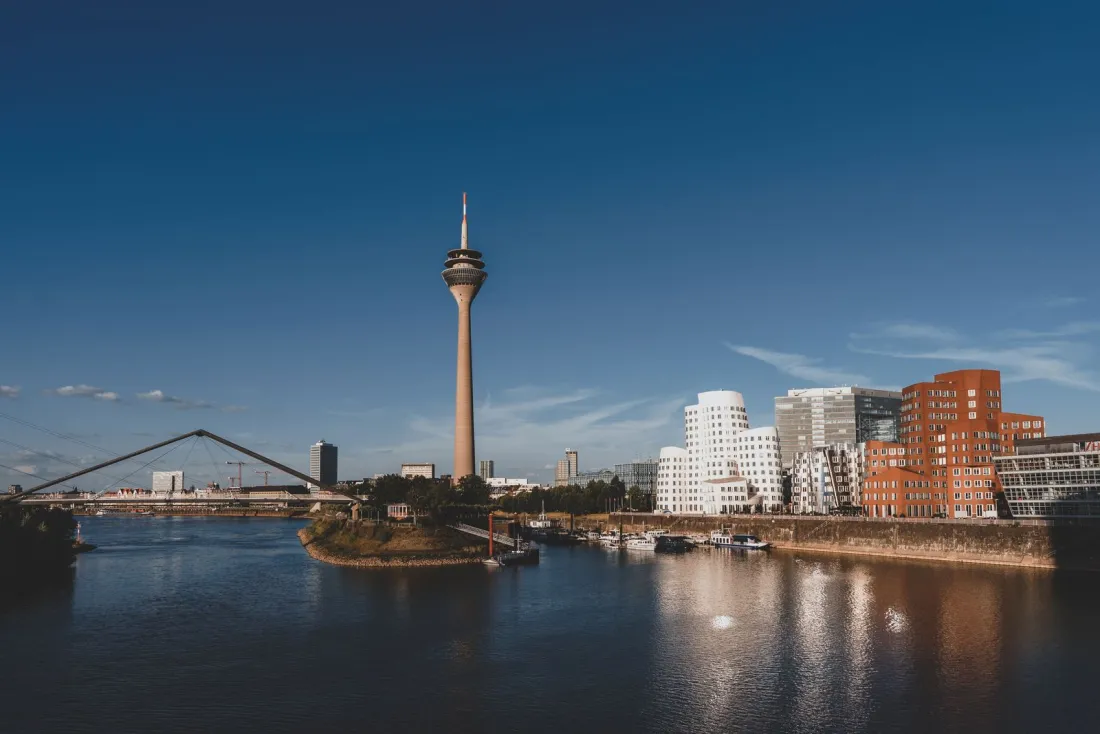
The court has two tiers. The Court of First Instance is made up of a central division, with its seat in Paris and a section in Munich, and a network of local and regional divisions hosted by the participating states. Düsseldorf, Mannheim, Munich and The Hague are among the local divisions that have become household names in patent circles. The Court of Appeal sits in Luxembourg. Parties litigate once, in one procedure, and receive one decision.
That single decision is the point. Before June 2023, a patent owner facing a pan-European infringer usually had to sue separately in each country where its European patent had been validated, paying for parallel proceedings and risking inconsistent outcomes. The EPO describes the UPC as removing that duplication: a successful claimant obtains injunctions and damages effective in every ratifying state where the patent is in force, while defendants gain a central revocation action available at any time during the patent's life. For in-house teams and their intellectual property advisers, the practical consequence is that one hearing in one German city can now decide whether a product can be sold across much of the single market.
What the Düsseldorf court decided on 2 September 2026
The Düsseldorf local division held that Disney+ infringed European patent EP 2 080 349, which covers a technique for viewing or transferring media between devices, and ordered Disney to stop using it in two countries. Reporting by teltarif identifies the proceedings as UPC_CFI_297/2025 and UPC_CFI_651/2025 and confirms that the order applies in Germany and the Netherlands. InterDigital said the court also confirmed the validity of the patent, and that Disney can appeal.
The effect on consumers was immediate and visible. Disney+ blocked the Google Cast function, which sends playback from a phone, tablet or computer to a compatible television, and users in the two countries began seeing a message that streaming via Chromecast was not available in their country. Native Disney+ apps on smart televisions continued to work. Disney had not said publicly how long the restriction would last.
InterDigital's chief legal officer, Josh Schmidt, said the patent was "another excellent example of how InterDigital shapes so much of the streaming experience". The company, founded in 1972 and listed on Nasdaq, licenses wireless, video and AI technologies to device makers, consumer electronics companies, carmakers and streaming services. The ruling was the eighth injunction it has obtained against Disney since the dispute began in February 2025, according to reporting on the decision, and it arrived only weeks after InterDigital opened a further front over Disney's change of video format (discussed below).
For a streaming service whose product is identical in every country, the lesson is stark: a patent claimant no longer needs to win country by country to force a product change across a region.

Eight injunctions in 18 months: the InterDigital v Disney timeline
The Disney dispute shows how a patent owner can combine the UPC with national courts on several continents to build pressure. InterDigital's own quarterly report to the US Securities and Exchange Commission sets out the proceedings in detail. It filed in February 2025 in Rio de Janeiro, the Central District of California, the Munich Regional Court and at the UPC, adding further German and UPC actions in April 2025. Disney responded with counterclaims in California, a failed request there for an anti-suit injunction against the Brazilian relief, and, in August 2025, an antitrust complaint by a Disney subsidiary in Delaware alleging monopolistic conduct in licensing video coding and streaming patents.
| Date | Forum | Development |
|---|---|---|
| February 2025 | Brazil, US, Germany, UPC | InterDigital files infringement actions over video coding and streaming patents |
| April 2025 | California | Disney seeks an anti-suit injunction against enforcement of Brazilian relief; the court denies it |
| August 2025 | Delaware | Disney subsidiary files antitrust complaint against InterDigital and Technicolor |
| September 2025 | Rio de Janeiro | Preliminary injunction granted to InterDigital (affirmed on appeal in May 2026) |
| October 2025, November 2025, February 2026 | Munich Regional Court | Three findings of infringement, each with an injunction |
| June 2026 | UPC Mannheim local division | First UPC injunction (EP 2 465 265, HEVC intra chroma coding), 11 countries |
| July 2026 | UPC Düsseldorf local division | Second UPC injunction (EP 2 449 782, HEVC intra prediction signalling), 11 countries |
| 2 September 2026 | UPC Düsseldorf local division | Third UPC injunction (EP 2 080 349, media transfer between devices), Germany and the Netherlands |
The US front has moved more slowly. The California court held some asserted claims invalid for indefiniteness in March 2026 and stayed the case in June 2026 pending an ex parte reexamination and a declaratory judgment action brought by Dolby. In Delaware, the US Department of Justice's Antitrust Division filed a statement of interest in October 2025. Brazil has been quicker: after the September 2025 preliminary injunction, InterDigital filed a second claim in Brazil in October 2025. The contrast matters for anyone planning a global campaign. European courts, and the UPC in particular, have shown they will decide infringement and grant injunctions within about 16 months of filing, while US courts can take far longer to reach a merits ruling.
Why a UPC injunction covers some countries and not others
A UPC decision on a classic European patent reaches only the participating states where that patent actually has effect. Article 34 of the Agreement on a Unified Patent Court provides that decisions "shall cover, in the case of a European patent, the territory of those Contracting Member States for which the European patent has effect". A European patent granted by the EPO is a bundle of national rights, and the owner chooses where to validate it. If the patent was never validated or has lapsed in a country, the UPC has nothing to enforce there.
That is why the two HEVC injunctions against Disney each covered 11 states while the casting injunction covered only two. According to JUVE Patent, the July Düsseldorf order applied in Austria, Belgium, Germany, Denmark, Finland, France, Italy, the Netherlands, Portugal, Romania and Sweden. InterDigital's announcement on 23 July described the order as spanning 11 EU countries.
| Where the patent is in force | Can a UPC action reach it? | Legal basis |
|---|---|---|
| UPC state, European patent validated and not opted out | Yes, in one proceeding | UPCA Articles 32 and 34 |
| UPC state, unitary patent | Yes, across all participating states covered by the unitary patent | UPCA and Regulation (EU) 1257/2012 |
| EU state outside the UPC (for example Spain or Poland) | Sometimes, if the defendant is domiciled in a UPC state; validity stays with that state's courts | Brussels I bis Article 4(1), BSH v Electrolux |
| Non-EU state such as the UK, Switzerland or Türkiye | Sometimes, on the same domicile basis; validity may be assessed only between the parties | BSH v Electrolux, UPC Court of Appeal June 2026 |
| Patent validated nowhere in the region | No | Nothing to enforce |
For defendants, the first question in any UPC claim is therefore a mapping exercise: where is the patent in force, is it opted out, and where is each defendant entity domiciled. For claimants, validation choices made years earlier at grant can decide the value of a UPC action today.
Injunctions, penalties and security: the UPC's remedies
The UPC can grant both provisional and permanent injunctions, backed by recurring penalty payments, and can require the claimant to provide security before enforcing. Article 63 of the agreement allows the court, on finding infringement, to grant an injunction "aimed at prohibiting the continuation of the infringement", including against intermediaries whose services are used to infringe. Article 62 allows provisional measures against an alleged infringer to prevent imminent infringement, with the court weighing the potential harm to each side. Under Article 82, UPC decisions are enforceable in any contracting state, enforcement follows local procedure, and non-compliance can attract a recurring penalty payment.
Security is the counterweight. Article 82(2) allows enforcement to be made conditional on security or an equivalent assurance, "in particular in the case of injunctions". In the July Düsseldorf ruling against Disney, JUVE Patent reports that InterDigital was required to provide €8 million in security before enforcing. That figure gives a sense of the stakes the court perceived: if the injunction is later overturned, the security stands behind Disney's claim for compensation.
National courts show what happens when an order is not respected. InterDigital's SEC filing records that the Munich Regional Court imposed €550,000 in fines on Disney in January 2026 for violating an injunction, reduced to €50,000 on appeal, and a further €150,000 in July 2026. Those sums are modest for a company of Disney's size, but the reputational and product consequences, from missing Dolby Vision and 3D content to disabled casting, are what push parties towards a licence.
Long-arm jurisdiction after BSH v Electrolux
Long-arm jurisdiction is the power of a European court to rule on infringement of patents granted for other countries, including countries outside the EU, when it has jurisdiction over the defendant. The turning point was the judgment of the Court of Justice's Grand Chamber on 25 February 2025 in BSH Hausgeräte v Electrolux (C-339/22). BSH had sued Electrolux in Sweden over a vacuum cleaner patent validated in several member states and in Türkiye, and the Swedish courts had declined jurisdiction over the foreign parts once Electrolux argued they were invalid.
The Court of Justice gave two answers. First, a court of the member state where the defendant is domiciled, seised under Article 4(1) of the Brussels I bis Regulation, "does still have jurisdiction" to hear an infringement action over a patent granted in another member state even when the defendant challenges validity, although the courts of the granting state keep exclusive jurisdiction over validity itself. Second, the exclusive jurisdiction rule in Article 24(4) does not apply to courts of third states, so a member state court can rule on a validity defence concerning, for example, a Turkish patent, with effect only between the parties and without changing that country's register.
The UPC has used that opening. In HL Display v Black Sheep Retail Products, The Hague local division granted a permanent injunction reaching the UK, Switzerland, Norway and Liechtenstein. In 2026 the Court of Appeal set out the rules. In Kodak v Fujifilm (UPC_CoA_312/2025), decided on 2 June 2026, it confirmed that the UPC has international jurisdiction over non-UPC designations, including the UK, where the defendant is domiciled in a UPC state, and set out a two-step framework for accepting and then exercising that jurisdiction, with validity of non-EU designations considered only inter partes. The same decision overturned an earlier injunction covering the UK market because, as Pinsent Masons explains, Fujifilm could not establish joint liability under UK law. On 13 July 2026 the Court of Appeal granted Fujifilm an injunction on a different patent for Germany but again found UK infringement unproven.
The limits are still being tested. On 6 March 2026 the Court of Appeal made its first ever reference to the Court of Justice, in Dyson v Dreame, asking whether the UPC can reach infringement in a non-UPC EU state through an EU-based intermediary acting for a non-EU manufacturer. The answer will decide how far claimants can pull foreign sellers into the court.
Where FRAND fits: standard essential patents and unwilling licensees
FRAND stands for fair, reasonable and non-discriminatory, the licensing commitment that owners of standard essential patents (SEPs) give to standards bodies, and in Europe it shapes whether an injunction is available. The framework comes from the Court of Justice's 2015 ruling in Huawei v ZTE (C-170/13): before seeking an injunction, a SEP owner must alert the alleged infringer and make a written licence offer on FRAND terms, and the implementer must respond diligently, in good faith and without delaying tactics, including by making a prompt written counter-offer if it rejects the offer. An implementer that fails those steps is treated as an unwilling licensee and cannot use FRAND to block an injunction.
Disney argued FRAND at the UPC and lost twice. In the July Düsseldorf ruling, JUVE Patent reports that the panel found the HEVC encoding patent was not standard-essential at all, because the HEVC standard "does not cover the encoding process", and rejected the idea that it was essential in practice. The court then went further and treated Disney as an unwilling licensee in any event, pointing to "blanket criticism" of InterDigital's offer without specific objections and a counter-offer made only in February 2026, a year after litigation began. InterDigital says the Mannheim panel reached the same conclusion on willingness.
The lesson for implementers is procedural. In German courts and at the UPC, a FRAND defence depends on conduct during negotiations as much as on the price. A business that receives a licence demand should engage specifically and promptly, make a counter-offer it can justify and keep a careful record, ideally with licensing specialists involved from the first letter. The same standards apply well beyond streaming: on 26 August 2026 Huawei and HP announced a multi-year global patent cross-licence that includes Huawei Wi-Fi patents, a reminder that most SEP disputes end in a licence rather than a final judgment.

Workarounds and the VP9 escalation
Designing around a patent is the classic response to an injunction, but at the UPC it can simply trigger new proceedings. After the HEVC rulings, Disney adopted the VP9 video format as a workaround, and it removed premium features, including Dolby Vision, HDR10+ and 3D content, later deactivating 4K UHD and HDR in Germany and offering premium subscribers early termination rights. JUVE Patent reported on 25 August 2026 that InterDigital had responded with a preliminary injunction application at the Mannheim local division (UPC_CFI_3044/2026) and a main action in Düsseldorf (UPC_CFI_3043/2026), asserting EP 2 465 265 against VP9 and a patent covering the "Up-Next" feature that presents the next episode automatically.
Two points follow. First, a workaround needs to be tested against the full portfolio, not only the patent already litigated, because a claimant with hundreds of patents can move to the next one. Second, the court is sceptical of workarounds that exist only on paper: in the July ruling, JUVE Patent reports, Disney said it had implemented workarounds without showing any commercially significant impact. A redesign that is real, documented and technically reviewed is far more persuasive than an assertion.
Anti-suit fights and the London alternative
When one side prefers the UPC and the other prefers the English courts, the result can be a contest of injunctions about injunctions. InterDigital's dispute with Amazon showed how far that can go. On 30 September 2025 the Mannheim local division granted an anti-interim-licence injunction prohibiting Amazon from seeking interim licences, anti-suit injunctions or equivalent measures that might stop InterDigital's UPC case, with penalties of up to €250,000 a day. On 20 October 2025 the English Patents Court granted Amazon an anti-anti-suit injunction protecting its RAND proceedings in London. The Munich Regional Court had made a parallel order for InterDigital on 26 September 2025. The standoff ended commercially: InterDigital's SEC filing records that in June 2026 the parties agreed to suspend or withdraw their litigation and go to binding arbitration on licence terms.
London remains a serious alternative forum for implementers because English courts will set global FRAND terms. On 27 July 2026 the UK Supreme Court held unanimously in Tesla v InterDigital and Avanci that the English courts can determine FRAND terms for a patent pool licence, remitting the case to the High Court. That followed the fight over Optis's $502m FRAND claim against Apple. For litigation counsel, the strategic choice is increasingly between a fast, injunction-focused UPC action and a slower, rate-setting English action, with each side racing to file first. Similar clashes between courts are playing out beyond patents too, as the Wingtech and Nexperia litigation in China shows.
| Feature | National court (e.g. Munich) | UPC | English Patents Court |
|---|---|---|---|
| Territorial reach of an injunction | One country, plus long-arm claims where the defendant is domiciled | All UPC states where the patent has effect, plus long-arm claims | UK only for injunctions |
| Anti-suit tools seen in 2025 | Parallel order for InterDigital against Amazon (26 September 2025) | Anti-interim-licence injunction against Amazon (30 September 2025) | Anti-anti-suit injunction for Amazon (20 October 2025) |
| Setting global FRAND terms | Not its role | Weighs FRAND as a defence to injunctions | Yes, including for pool licences |
| Validity | Separate Federal Patent Court proceedings in Germany | Counterclaim for revocation within the same court (Article 33) | Decided alongside infringement |
| Recent example | Three injunctions against Disney, fines for breach | Three injunctions against Disney, 2025 to 2026 | Tesla v Avanci remitted for FRAND trial |
What UPC litigation costs
The UPC charges fixed court fees plus value-based fees for larger actions, and those fees rose on 1 January 2026. Pinsent Masons reports that fixed court fees for infringement actions and related proceedings increased by almost 33%, to reflect inflation since the fee proposals were prepared in 2016, while Court of Appeal value-based fees went up by 10%. Fixed fees now apply to provisional measures, such as preliminary injunctions and evidence preservation, where the value of the action exceeds €500,000. The refund on withdrawal fell from 60% to 50% for actions filed after 31 December 2025, a settlement through the court's Patent Mediation and Arbitration Centre earns a 65% reimbursement, and small and medium-sized enterprises pay reduced fees. The next review is due in 2028.
Court fees are only part of the bill. Parties also face lawyers' and technical experts' fees, the cost of translations where proceedings are not in English, and the risk of an adverse costs order, since Article 69 of the agreement provides that the unsuccessful party will, as a general rule, bear the successful party's reasonable and proportionate legal costs up to a ceiling set in the Rules of Procedure. Defendants can also ask the court to order a claimant to provide security for those costs. Security for enforcement, as the €8 million in the Disney case shows, can add a significant cash requirement for claimants.
Even so, one UPC action covering 11 countries will usually cost far less than 11 national actions, which is the court's central commercial appeal.
The opt-out and the transitional period
Owners of classic European patents can still keep them out of the UPC during a transitional period. Article 83 of the agreement provides that, for seven years after entry into force, infringement and revocation actions over European patents may still be brought before national courts, and owners may opt out of the UPC's exclusive competence by notifying the registry no later than one month before the period ends. An opt-out can be withdrawn at any time unless a national action has already been brought, and the transitional period can be extended by up to seven more years after a review.
The opt-out is a double-edged tool. It protects a valuable patent from a single central revocation action, but it also gives up the chance to obtain a multi-state injunction like InterDigital's. The Disney cases suggest that, for owners of patents covering widely distributed products, the enforcement advantage is now hard to ignore. Opt-out decisions should be revisited as the case law settles, preferably portfolio by portfolio, not once and for all.
Practical steps for businesses selling technology into Europe
Any business that sells products or digital services across the EU should now assume it can be sued once and stopped in many countries. Useful steps include:
- Map your exposure. Identify which of your products and features use standardised or widely licensed technology, and which competitors or licensing companies hold European patents over them.
- Check entity structure. After BSH v Electrolux, a group company domiciled in a UPC state can be the anchor that brings claims over the UK, Switzerland or Spain into one action.
- Answer licence demands properly. Engage with specifics, make a reasoned counter-offer and keep records, because willingness is judged on conduct.
- Test design-arounds early. Have changes reviewed against the claimant's whole portfolio, and document their commercial effect.
- Plan the forum. Decide in advance whether you would seek FRAND terms in London, arbitration, or a fast UPC resolution, and who will file first.
- Protect the brand as well as the technology. Patent fights often run alongside trade mark and design disputes, as the Swatch v Samsung watch-face ruling shows.
Streaming and media businesses face a particular mix of patent and regulatory pressure in Europe, from codec licensing to local content rules such as France's revised streaming investment obligations. Teams working in technology, media and telecoms should build UPC risk into product launch planning, not treat it as a litigation afterthought.
Patent practice itself is also shifting. On 3 September 2026 the EPO's Enlarged Board of Appeal ruled in G 1/25 that the European Patent Convention "does not require purely formal concordance between the claims and the description", so descriptions need adapting only where an inconsistency causes a specific breach of the convention. Because claim interpretation is central to infringement at the UPC, how patents are drafted and amended at the EPO will feed directly into future UPC outcomes.
When to get specialist advice on UPC patent litigation
Specialist advice is worth taking as soon as a licence demand, a warning letter or a UPC statement of claim arrives, because the early months decide much of what follows. Preliminary injunctions can be sought quickly under Article 62, validity attacks need to be prepared alongside the defence, and a FRAND defence depends on how the first exchanges were handled. Businesses with operations in several jurisdictions will usually need cross-border advisers who can coordinate UPC, national and US proceedings and assess where to seek a licence determination. The Corporate INTL Find an Expert directory lists intellectual property practitioners across Europe and beyond.
Frequently asked questions
What is UPC patent litigation?
UPC patent litigation means bringing patent infringement or revocation actions before the Unified Patent Court, a court shared by 18 EU states that came into operation on 1 June 2023. One action can produce an injunction or a revocation effective in every participating state where the European patent or unitary patent has effect.
Which countries does the Unified Patent Court cover?
The UPC Agreement is in force for 18 EU member states, including Germany, France, Italy, the Netherlands, Belgium, Austria, Sweden and Denmark. A decision on a European patent covers only those participating states where that patent was validated and is in force, which is why injunctions against Disney covered 11 countries in one case and two in another.
Can the UPC grant an injunction covering the UK?
Yes, in principle. Following BSH v Electrolux, the UPC Court of Appeal confirmed in June 2026 that it has jurisdiction over UK designations where the defendant is domiciled in a UPC state. The patentee must still prove infringement under UK law, and validity is assessed only between the parties.
What did the court decide against Disney on 2 September 2026?
The UPC's Düsseldorf local division found that Disney+ infringed InterDigital's patent EP 2 080 349, which covers viewing or transferring media between devices, confirmed its validity and granted an injunction for Germany and the Netherlands. Disney+ then disabled Google Cast in both countries. Disney can appeal.
What is a FRAND licence?
A FRAND licence is a licence on fair, reasonable and non-discriminatory terms, which owners of standard essential patents promise to offer when their technology is written into a standard. Under Huawei v ZTE, an implementer that negotiates diligently and in good faith can resist an injunction, but an unwilling licensee cannot.
What makes a company an unwilling licensee?
Courts look at conduct. In the July 2026 Düsseldorf ruling against Disney, the UPC pointed to blanket criticism of InterDigital's offer without specific objections and a counter-offer made only in February 2026, a year into the litigation. Delay, vague objections and no concrete counter-offer all point towards unwillingness.
How much does UPC patent litigation cost?
The UPC charges fixed fees plus value-based fees for larger claims. Fixed fees rose by almost 33% on 1 January 2026, and Court of Appeal value-based fees by 10%. Lawyers' and experts' fees, translations, adverse costs and any security for enforcement come on top, although one action usually costs less than several national cases.
How long does a UPC patent case take?
It varies, but the Disney dispute gives a benchmark. InterDigital filed its UPC actions in February and April 2025 and obtained injunctions in June and July 2026 and on 2 September 2026, roughly 16 to 19 months after filing. Preliminary injunctions under Article 62 can be sought much faster where the claimant shows urgency.
Can patent owners opt out of the UPC?
Yes. During a seven-year transitional period from June 2023, owners of classic European patents can opt out of the UPC's exclusive competence and keep litigating in national courts. The opt-out must be filed at least one month before the period ends and can be withdrawn unless a national action has already started.
Sources
- InterDigital (GlobeNewswire via The Manila Times): InterDigital wins third injunction against Disney from Unified Patent Court (2 September 2026)
- InterDigital: InterDigital awarded another injunction against Disney by Pan-European Court (23 July 2026)
- InterDigital: InterDigital awarded injunction against Disney by Unified Patent Court (16 June 2026)
- InterDigital, Inc.: Form 10-Q for the quarter ended 30 June 2026 (US SEC)
- 9to5Google: Disney+ loses Google Cast support in some countries (4 September 2026)
- teltarif: Patent dispute hits Disney+, Google Cast locked in Germany (6 September 2026)
- JUVE Patent: InterDigital wins another UPC injunction in streaming dispute with Disney (July 2026)
- JUVE Patent: InterDigital escalates UPC campaign against Disney over VP9 workaround (25 August 2026)
- Agreement on a Unified Patent Court (EUR-Lex)
- European Patent Office: Unified Patent Court (UPC)
- Court of Justice of the EU: BSH Hausgeräte v Electrolux, C-339/22, judgment of 25 February 2025 (EUR-Lex)
- Court of Justice of the EU: Huawei Technologies v ZTE, C-170/13, judgment of 16 July 2015 (EUR-Lex)
- A&O Shearman: UPC Court of Appeal provides further guidance on its long-arm jurisdiction over non-UPC designations (19 August 2026)
- Pinsent Masons: UPC ruling overturning UK patent injunction offers guidance on the court's reach (June 2026)
- JUVE Patent: Court of Appeal grants FujiFilm an injunction against Kodak after all (14 July 2026)
- JUVE Patent: UPC Court of Appeal refers long-arm jurisdiction issue to the CJEU (6 March 2026)
- Osborne Clarke: UPC flexes long-arm jurisdiction again (24 October 2025)
- Osborne Clarke: UPC grants first anti-interim-licence injunction in SEP dispute; English court responds (28 October 2025)
- JUVE Patent: UK Supreme Court hands Tesla landmark win in Avanci 5G pool licence dispute (27 July 2026)
- Pinsent Masons: UPC rule changes accompany fees hike (January 2026)
- Huawei: Huawei and HP Inc. sign global patent cross-licensing agreement (26 August 2026)
- JUVE Patent: G 1/25, patent holders must amend patent specifications, but not in every case (3 September 2026)
About this article
This analysis was researched and written by The Corporate INTL Newsroom, which covers cross-border legal, regulatory and business developments for lawyers, professional advisers and financiers in over 150 jurisdictions. It has been checked against the text of the Agreement on a Unified Patent Court, the Court of Justice's judgments in BSH v Electrolux and Huawei v ZTE, InterDigital's announcements and SEC filing, and specialist legal reporting. The UPC's reasoned decision of 2 September 2026 had not been published in full at the time of writing, and Disney had not commented publicly on it. This article is general information, not legal advice; for advice on a specific matter, consult a qualified adviser. Last reviewed 6 September 2026. For more analysis like this, visit the Corporate INTL newsroom or subscribe to Corporate INTL.
Looking for an expert?
Tell us what you need and the Corporate INTL team will help you find the right lawyer or adviser from our members in 150+ jurisdictions.
Related stories

How to Register a Trademark Internationally: Madrid, EU and UK Routes, Fees and China Risks

Is Training AI Models Fair Use? What the Third Circuit's Thomson Reuters v Ross Ruling Decides