Which countries have implemented the EU Pay Transparency Directive? Three months after the 7 June 2026 deadline, the answer is still only five: Slovakia, Lithuania, Italy, Malta and Greece have fully transposed Directive (EU) 2023/970, while the other 22 member states are somewhere between a partial law, a draft and no public text at all. The last fortnight of August brought fresh movement, with Spain and Portugal closing consultations on their draft laws on 24 and 25 August while Czechia's January 2027 target for full transposition was confirmed in practitioner reporting. For multinational employers the result is a patchwork: pay-range disclosure and a ban on pay-history questions already bite in some countries, first gender pay gap reports fall due in June 2027, and the European Commission has signalled that infringement proceedings will follow for states that are late. This analysis sets out where every member state stands, what applies even where no national law exists, and what the position means for groups headquartered outside the EU, including in the UK.
Which Countries Have Implemented the EU Pay Transparency Directive? The Picture Three Months After the Deadline
By The Corporate INTL Newsroom · 4 September 2026

Which countries have implemented the EU Pay Transparency Directive: the short answer
Five member states have fully transposed the directive, four have partial measures in force, and the remainder have drafts, bills or nothing public. According to the August 2026 transposition update published by Trusaic, the five full transposers are Slovakia, Lithuania, Italy, Malta and Greece, with Greece becoming the fifth when its law was published on 6 July 2026. The same tracker lists six states with advanced drafts aimed at entry into force on 1 January 2027 (Denmark, Finland, Latvia, the Netherlands, Spain and Czechia) and nine at an early stage, a group that includes Germany.
The picture below combines those trackers with national reporting up to the start of September 2026. It is a snapshot: several drafts are moving through parliaments, and dates in draft laws can change before adoption.
| Status (early September 2026) | Member states | What it means for employers |
|---|---|---|
| Fully transposed | Slovakia, Lithuania, Italy, Malta, Greece | National rules in force or with fixed start dates; Greece's main obligations start on 1 November 2026 |
| Partial measures in force | Poland, Estonia, Czechia, Belgium (public sector) | Recruitment or pay-secrecy rules already apply; reporting and information rights still to come |
| Draft or bill in progress | Netherlands, Finland, Denmark, Latvia, Spain, Czechia (full law), Portugal | Most target 1 January 2027; Portugal has no confirmed date; watch for national gold-plating |
| Delayed, phased plans announced | Germany, France, Ireland | Germany and France expect phased entry into force between late 2026 and 2028; Ireland has no indicative timeline |
| Halted or seeking postponement | Sweden (and Estonia for its remaining obligations) | Existing national equal pay law applies; EU rules still bind the state |
| Early stage, no final text | Austria, Bulgaria, Croatia, Hungary, Luxembourg, Romania, Slovenia | No national date yet; the treaty right to equal pay applies regardless |
What the directive requires of employers
The directive turns the long-standing principle of equal pay for the same work or work of equal value into a set of concrete, checkable obligations. It applies to employers in the public and private sectors, and to all workers with an employment contract or employment relationship as defined in each member state. The core duties, taken from the text of Directive (EU) 2023/970, are these:
- Pay transparency before hiring (Article 5). Applicants must be told the initial pay or its range, based on objective, gender-neutral criteria, before the interview or otherwise. Employers may not ask applicants about their pay history.
- Pay-setting criteria (Article 6). Workers must have easy access to the criteria used to set pay, pay levels and pay progression. Member states may exempt employers with fewer than 50 workers from the pay-progression element.
- Right to information (Article 7). Workers can ask for their own pay level and the average pay levels, broken down by sex, for colleagues doing the same work or work of equal value. Employers must reply within two months, and contractual terms cannot stop workers disclosing their pay to enforce equal pay.
- Gender pay gap reporting (Article 9). Employers with 100 or more workers must report seven indicators, including the mean and median gap, gaps in variable pay and the proportion of women and men in each pay quartile.
- Joint pay assessment (Article 10). Where reporting shows a gap of at least 5% in any category of workers that is not justified by objective, gender-neutral criteria and is not remedied within six months, the employer must carry out a joint pay assessment with workers' representatives.

The right to information is the obligation most likely to generate early disputes, because it can be triggered by a single employee and it overlaps with data protection rights. Employers that already handle subject access requests will recognise the pattern, and our earlier explainer on the GDPR right of access is a useful companion. The difference is that a pay information request requires comparator data that many HR systems were never built to produce.
The five early movers and how they differ
The five full transposers have all followed the directive's framework, but each has made choices that matter for a group running a single policy across Europe. None of them has simply copied the text.
Slovakia moved first. Its Equal Pay Act was adopted on 15 April 2026 and took effect on 7 June 2026, according to Lewis Silkin's analysis of the Slovak law. It extends equal pay protection beyond the male and female comparison, and its first reports cover only August to December 2026 rather than a full year.
Lithuania adopted Law No. XV-969 on 21 May 2026. Most requirements applied from 7 June 2026, but the right to information was deferred to 1 January 2027 because answering requests depends on pay data that employers will only begin submitting to Sodra, the social insurance fund, from that date.
Italy transposed through Legislative Decree No. 96 of 7 May 2026, published in the Official Gazette on 1 June and in force from 7 June 2026. As Littler's guide to the Italian decree explains, Italy anchors the "same work or work of equal value" comparison to national collective bargaining agreements, and the right to information applies to all employers with no grace period. Groups with staff in Italy should expect their sector agreement to shape how comparator categories are drawn.
Malta transposed at the last minute through the Equal Pay (Transparency and Reporting) Regulations 2026, Legal Notice 173/2026, effective 5 June 2026. Lewis Silkin notes that Malta gives employers just eight calendar days to answer an information request, against the directive's two months, adds criminal liability for failing to respond within 45 days, and requires pay data to be kept for five years. Employers in Malta therefore face the tightest response clock in the Union.
Greece enacted Law 5316/2026 on 2 July 2026. The law took effect on publication on 6 July, but its main pay transparency obligations start on 1 November 2026, and the Greek Ombudsperson has been designated as the equality and monitoring body. Employers in Greece have a short window to prepare before November.
Partial transposers: Poland, Estonia, Czechia and Belgium
Four member states have put part of the directive into force while the rest waits, and they have not chosen the same parts. That is the practical problem for a regional HR team: the obligation that applies in one capital may be the one still missing in the next.
Poland started early. An Act of 4 June 2025, in force since 24 December 2025, introduced the pre-employment rules: mandatory disclosure of pay information to applicants and a ban on requiring salary history. A second bill, published on 16 December 2025, covers job evaluation, employee information rights and gender pay gap reporting for employers with 100 or more employees, and remained in the legislative process after the deadline. Recruiters in Poland should already be advertising pay.
Estonia brought three requirements into force on 13 July 2026: written pay or pay-range disclosure before interview, a pay-history ban and a prohibition on pay secrecy. It is not transposing the right to information, reporting or joint pay assessments on the original timetable and is instead pursuing renegotiation or postponement of those obligations.
Czechia took a narrower first step. Its Labour Code "Flexibility Amendment", in force since 1 June 2025, prevents employers from restricting employees from disclosing their own pay, with administrative fines of up to CZK 400,000. Jackson Lewis reported on 24 August that full transposition is targeted for 1 January 2027, with some obligations phased in between 2028 and 2031.
Belgium has implemented the directive for the public sector only, according to Lewis Silkin's July review, leaving private employers without national rules for now.
The August drafts: Spain and Portugal
The most recent movement came from the Iberian peninsula, and both drafts show how national law can go further than the directive. Spain already had a pay register and equality plan regime; its draft Royal Decree amends Royal Decree 902/2020, and the consultation closed on 24 August 2026. Trusaic's analysis of the Spanish draft highlights three points that exceed the directive: gender pay gap reporting from 50 employees rather than 100, joint pay assessments for every employer with 50 or more employees regardless of the size of any gap, and remuneration data kept available for the previous four years.
Ogletree adds that the Spanish draft does not yet deal with starting pay or pay-range disclosure at recruitment, requires mandatory pay audits for employers with 50 or more workers, and sends reports to a new Commission for Monitoring Pay Transparency. Employers in Spain should read the draft alongside their existing equality plans rather than treat it as a fresh start.
Portugal published its draft on 5 August 2026 and closed consultation on 25 August. It requires applicants to receive pay or a pay range before the employment contract is signed, keeps the directive's 5% trigger, exempts employers with fewer than 50 employees from pay-progression disclosure, and gives the labour inspectorate an active role in notifying employers of unjustified gaps of 5% or more. Neither draft has a confirmed implementation date, and both still need parliamentary approval.
The large economies still behind: Germany, France, the Netherlands, Ireland and Sweden
Most of the EU's biggest employment markets missed the deadline, and their plans run into 2027 and beyond. For many multinational groups these are the jurisdictions with the largest headcount, so their timetables drive the compliance programme.
- Germany. A revised Entgelttransparenzgesetz is expected to come into force in early 2027, according to Noerr, and Trusaic reports that the right to information may be delayed to 2028. Practitioners advising employers in Germany warn that courts may apply the directive's standards before then, as explained below.
- France. The government circulated a revised draft on 5 June 2026. Littler reported that the law is expected to enter into force progressively between late 2026 and 1 January 2028, that companies with at least 50 employees would publish annual indicators, and that the current gender equality index would be replaced. Employers in France face one of the widest scopes in the Union.
- The Netherlands. A bill went to the House of Representatives on 21 May 2026 with a target of 1 January 2027, and reporting would start in 2028. Groups with Dutch entities should track the draft decree consultation, which Trusaic says runs to 11 September. For local support, see advisers in the Netherlands.
- Ireland. The minister, Norma Foley, confirmed that Ireland would miss the deadline and that implementation would be phased, with no indicative timeline and pre-employment measures likely to come first. Ireland already requires gender pay gap reporting from employers with 50 or more employees, a threshold reached in 2025 according to Lockton, so employers in Ireland start from a stronger base.
- Sweden. On 26 March 2026 the government announced that it was halting transposition and would seek postponement and renegotiation. The equality minister, Nina Larsson, said the purpose of the directive was good but that the implementation challenges had become increasingly clear. Sweden already requires annual wage surveys.
What applies where the deadline has been missed
A missed transposition deadline does not mean that nothing applies. It changes the route by which the rules reach employers, and it creates legal uncertainty that tends to favour claimants.
First, the right to equal pay for equal work or work of equal value is in the EU treaties themselves. As Noerr explains, Article 157 of the Treaty on the Functioning of the European Union can be relied on directly between private employers and workers, whether or not a member state has passed implementing legislation. Pay equality disputes have been litigated at scale for years without the new directive, as the Tesco equal pay litigation in the UK shows.
Second, national courts must interpret existing national law, as far as possible, in line with the directive once the deadline has passed. Noerr identifies transparent pay structures under Article 6 and the right to information under Article 7 as the provisions where the risk is highest, because of their close link to Article 157. In practice, a German employee asking for comparator pay data today may find a court reading the existing law in the light of the directive's two-month response standard.
Third, directives do not as a rule impose obligations directly on private employers in the absence of national law. That is why most advisers describe the post-deadline position as one of risk rather than of automatic liability. It is also why employers in late states cannot safely treat the national delay as a holiday.
Will Brussels act against late member states?
The Commission has repeatedly refused to move the deadline, and has said that infringement proceedings may follow. In a written answer to a parliamentary question in December 2025 it said that it expects all member states to implement the directive by the deadline of June 2026. On 22 May 2026, Commissioner Hadja Lahbib warned that late states may face infringement proceedings, starting with a letter of formal notice under Article 258 of the Treaty. Lewis Silkin summarised the Commission's position as no pause, no extension and no carve-out through a future simplification package.
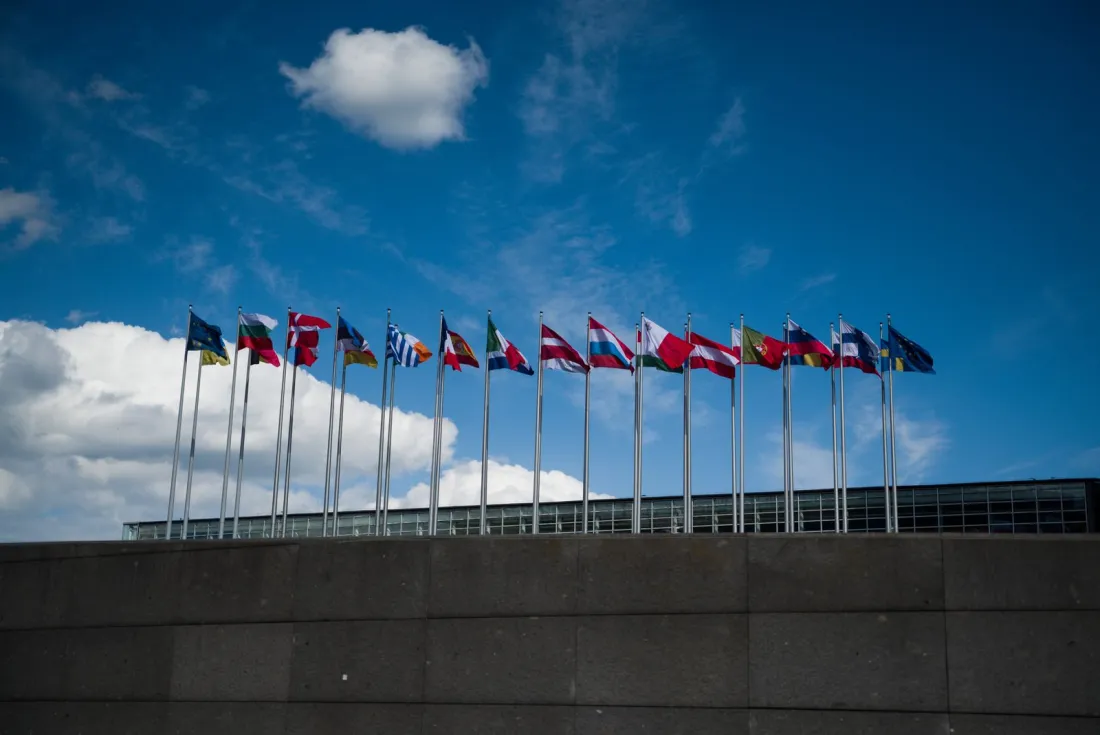
The procedure itself is well established. Under the Commission's infringement procedure, a letter of formal notice is followed, if necessary, by a reasoned opinion, each usually with two months to respond, and then by referral to the Court of Justice, which can impose lump sums or daily penalty payments where a state has failed to notify transposition measures.
The Commission's handling of a sister directive shows how this can unfold. In its 8 July 2026 infringement package it sent letters of formal notice to eight member states over Directive (EU) 2019/1152 on transparent and predictable working conditions, whose deadline passed in August 2022, with replies due in early September. Infringement action puts pressure on governments, but it does not change what an individual employer owes its workers in the meantime.
Pay transparency directive penalties, compensation and the reversed burden of proof
The directive leaves the level of fines to national law, but it fixes the remedies that make pay claims expensive. Article 23 requires effective, proportionate and dissuasive penalties that include fines, with specific penalties for repeated infringements. The national fines chosen so far are modest, as a review by DCI Consulting published on 20 August 2026 shows.
| Member state | Administrative fines reported |
|---|---|
| Italy | €250 to €1,500 for general breaches; €5,000 to €10,000 where discrimination is established |
| Malta | €2,500 to €5,000 for breaches; €5,000 to €7,000 for discrimination offences |
| Lithuania | €500 to €1,450 for equal pay breaches; €2,700 to €6,000 for intentional breaches |
| Slovakia | €4,000 to €8,000 depending on severity |
| Poland | PLN 2,000 to PLN 60,000 (about €470 to €14,100) |
| Greece | €300 to €50,000 per violation |

The fines are not where the real exposure lies. Article 16 gives workers a right to full compensation, including back pay, related bonuses and payments in kind, lost opportunities and non-material damage, with no prior upper limit. Article 18 shifts the burden of proof to the employer once a worker establishes facts from which discrimination may be presumed, and goes further where the employer has failed to meet the transparency obligations in Articles 5, 6, 7, 9 and 10: the employer must then prove that there was no discrimination. Article 21 requires limitation periods of at least three years, running only from when the claimant knew or could reasonably be expected to know of the breach.
Taken together, these rules mean that a failure to publish pay criteria or answer an information request can weaken an employer's defence in a later claim, whatever the size of the administrative fine.
When the first gender pay gap reports fall due
The reporting timetable is fixed in the directive itself, which is why the June 2027 date matters even in states that are late. The thresholds count workers per employer.
| Employer size | First report under the directive | Frequency | Notable national variations |
|---|---|---|---|
| 250 or more workers | By 7 June 2027 | Every year | Italy follows the directive dates |
| 150 to 249 workers | By 7 June 2027 | Every three years | Malta starts reporting in 2027 for 150 or more |
| 100 to 149 workers | By 7 June 2031 | Every three years | Spain's draft extends reporting to 50 to 149 workers from 2031 |
| Fewer than 100 workers | No obligation under the directive | Not applicable | France's draft covers companies with 50 or more employees |
Because the first reports due in 2027 are expected to draw on 2026 pay data (Slovakia's first reports, for instance, cover August to December 2026), employers with 150 or more workers in any member state are already inside the reporting period. A report that reveals an unexplained gap of 5% or more in a category of workers starts the six-month clock towards a joint pay assessment.
Will the EU Pay Transparency Directive apply to the UK?
As a general rule the directive does not apply to employers in respect of their UK workforce, because it was adopted after the UK left the EU. It does apply to UK-headquartered groups for the people they employ in EU member states. People Management's analysis for UK employers notes that British firms with subsidiaries or staff in the EU face the added difficulty of fragmented national implementation, and that many are adopting a hybrid approach: central minimum standards with local adaptation.
At home, UK law is moving in a related direction but by a different route. Employers with 250 or more employees must already publish gender pay gap data within a year of their snapshot date under the UK gender pay gap reporting rules. The Employment Rights Act 2025 adds equality action plans, which are voluntary for now and are due to become mandatory from spring 2027, subject to secondary legislation, according to the government's guidance for employers. Plans must cover steps to address the gender pay gap and support for employees experiencing the menopause.
The UK regime has no equivalent of the right to information, the pay-range disclosure duty or the joint pay assessment. A UK group reporting in London and in, say, Dublin and Milan will therefore be working to three sets of rules. Advisers in the UK and cross-border specialists increasingly treat EU pay transparency as a group-level programme rather than a local HR task.
What multinational employers should do now
The safest working assumption is that the directive's standards will apply everywhere by 2027, with national variations layered on top. Lewis Silkin's July review points to four priorities: pay data quality, mapping of job categories, recruitment and salary-history practices, and reporting and remediation processes across jurisdictions. Translated into a practical plan, that means:
- Map where the rules already apply. Recruitment rules are live in Poland, Estonia, Slovakia, Lithuania, Italy and Malta, and apply in Greece from 1 November 2026; pay-secrecy clauses are already unenforceable in Czechia.
- Remove pay-history questions and publish ranges. This is the cheapest change and the one most visible to candidates and regulators.
- Build defensible job categories. Comparisons turn on "work of equal value"; Italy ties this to collective agreements and Spain's draft names specific job-evaluation factors.
- Test response times. Malta allows eight calendar days; the directive allows two months. Design the process for the shortest clock.
- Run a shadow gender pay gap report on 2026 data for every entity with 150 or more workers, and plan remediation for any category above 5%.
- Review pay-secrecy terms in contracts and policies so they do not stop workers disclosing pay to enforce equal pay.
When to bring in local employment counsel
Employers can do much of the preparation centrally, but the national detail is where the risk sits: Malta's criminal liability, Spain's 50-employee threshold, Italy's collective-agreement comparators and Greece's November start date are all local rules that a group policy will not capture. Specialist employment and labour advisers in each jurisdiction can confirm which obligations are live, how works councils and unions must be involved, and how existing national equal pay law will be read in the light of the directive while transposition is pending. For now, the answer to which countries have implemented the EU Pay Transparency Directive is five, but the obligations that matter are already arriving in many more.
Frequently asked questions
Which countries have implemented the EU Pay Transparency Directive?
As of early September 2026, five member states have fully transposed it: Slovakia, Lithuania, Italy, Malta and Greece. Poland, Estonia, Czechia and Belgium (public sector only) have partial measures in force. The other member states have drafts, bills or no public text, with most targeting dates in 2027.
What was the deadline for transposing the Pay Transparency Directive?
Member states had to transpose Directive (EU) 2023/970 by 7 June 2026. The directive was adopted on 10 May 2023. The Commission refused requests to delay the deadline and has warned that late member states may face infringement proceedings under Article 258 of the Treaty on the Functioning of the European Union.
What happens if a member state misses the deadline?
The Commission can open infringement proceedings, starting with a letter of formal notice. For employers, the treaty right to equal pay under Article 157 TFEU still applies directly, and national courts must interpret existing law in line with the directive, so a delay creates legal risk rather than a safe harbour.
Will the EU Pay Transparency Directive apply to the UK?
As a general rule not to UK workers, because the directive was adopted after the UK left the EU. It does apply to UK-headquartered groups for staff employed in EU member states. In the UK, employers with 250 or more employees report gender pay gaps and will have to publish equality action plans from spring 2027.
Which employers have to report their gender pay gap under the directive?
Employers with 250 or more workers must report annually from 7 June 2027. Those with 150 to 249 workers report every three years from the same date, and those with 100 to 149 every three years from 7 June 2031. Member states may go further, and Spain's draft extends reporting to employers with 50 workers.
Can employers still ask job applicants about their previous salary?
Not under the directive. Article 5 bars employers from asking applicants about their pay history and requires them to give the initial pay or pay range before interview or otherwise. The ban already applies under national law in Poland, Estonia, Slovakia, Italy and Malta, among others, and applies in Greece from 1 November 2026.
How quickly must an employer answer a pay information request?
The directive requires a reply within a reasonable period and in any event within two months of the request. Some member states are stricter: Malta requires a response within eight calendar days and attaches criminal liability to a failure to respond within 45 days.
What are the penalties for breaching the Pay Transparency Directive?
National fines reported so far range from a few hundred euros to €50,000 per violation in Greece. The larger exposure comes from uncapped compensation for back pay and non-material damage, a reversed burden of proof where transparency duties are breached, and limitation periods of at least three years.
What triggers a joint pay assessment?
A joint pay assessment is required where an employer's report shows a gender pay gap of at least 5% in any category of workers that is not justified by objective, gender-neutral criteria and is not remedied within six months of the report. It is carried out with workers' representatives.
Sources
- EUR-Lex: Directive (EU) 2023/970 on pay transparency
- Trusaic: EU Pay Transparency Directive, August 2026 transposition update (3 August 2026)
- Ogletree: Legislative progress in Spain and Portugal (25 August 2026)
- Trusaic: Spain proposes pay transparency rules that exceed EU directive minimums (11 August 2026)
- Jackson Lewis: Czechia restricts pay secrecy ahead of full transposition (24 August 2026)
- Jackson Lewis: Greece becomes fifth member state to finalise transposition (24 July 2026)
- Lewis Silkin: Slovakia becomes the first member state to transpose (24 April 2026)
- Trusaic: Lithuania transposes the directive and delays the right to information to 2027 (26 May 2026)
- Littler: Italy implements the EU Pay Transparency Directive (4 June 2026)
- Lewis Silkin: Malta's last-minute transposition (18 June 2026)
- Lockton: Poland introduces new employer obligations (9 June 2026)
- Trusaic: Estonia partially transposes the directive (16 July 2026)
- Lewis Silkin: No EU-level delay and no time for employers to wait (1 July 2026)
- Noerr: What applies in Germany after 7 June 2026
- Littler: France releases an amended draft law (11 June 2026)
- Trusaic: Netherlands submits bill to parliament, targets January 2027 (2 June 2026)
- Law Society Gazette: "No timeline" for employers on pay directive (11 June 2026)
- Lockton: Ireland updates gender pay gap reporting regulations (14 October 2025)
- Trusaic: Sweden halts transposition and seeks renegotiation (7 April 2026)
- Ogletree: Commission confirms the 7 June 2026 deadline (29 December 2025)
- DCI Consulting: EU Commission rejects calls for delay
- DCI Consulting: Penalties under the EU Pay Transparency Directive (20 August 2026)
- European Commission: Infringement procedure
- Remote Work Europe: Brussels formally notifies eight member states over transparent working conditions rules (10 August 2026)
- People Management: How the EU Pay Transparency Directive impacts UK employers (23 July 2026)
- GOV.UK: Gender pay gap reporting guidance for employers
- Business.gov.uk: Employer action plans
About this article
This analysis was researched and written by The Corporate INTL Newsroom, which covers cross-border legal, regulatory and business developments for lawyers, professional advisers and financiers in over 150 jurisdictions. It has been checked against the text of Directive (EU) 2023/970, Commission statements, national legislative reporting and practitioner analysis available at the time of writing. Transposition is moving quickly and several national laws were still in draft on the date of review, so dates and thresholds in draft legislation may change before adoption. This article is general information, not legal advice; for advice on a specific matter, consult a qualified adviser. Last reviewed 4 September 2026. For more analysis like this, visit the Corporate INTL newsroom or subscribe to Corporate INTL.
Looking for an expert?
Tell us what you need and the Corporate INTL team will help you find the right lawyer or adviser from our members in 150+ jurisdictions.