The AkzoNobel Axalta merger cleared its biggest regulatory hurdle on Friday 6 November 2026, when the European Commission approved the deal under the EU Merger Regulation, subject to conditions. The price of clearance is the sale of AkzoNobel's entire vehicle refinish coatings business in the European Economic Area, the paint garages use to repair damaged cars, and the merger cannot close until Brussels approves a buyer. The all-stock combination of the Dutch paints group and the US coatings maker carries an enterprise value of about $25 billion and will trade as Axanzo. With the UK Competition and Markets Authority due to rule by Wednesday 11 November, the case shows how a targeted remedy can rescue a global deal.
Corporate INTL Newsroom · Competition & Antitrust
AkzoNobel Axalta Merger: EU Clears $25bn Deal on Refinish Sale
By The Corporate INTL Newsroom · 9 November 2026
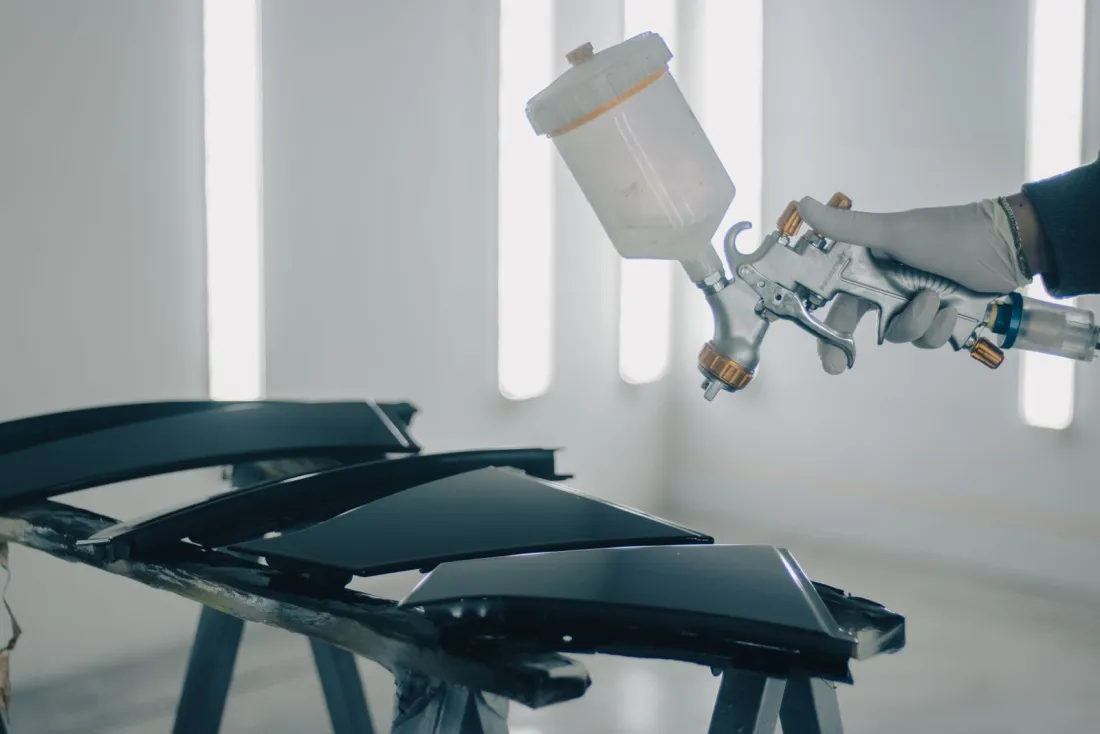
What the Commission decided on 6 November
The Commission cleared the transaction in Phase I, without opening an in-depth investigation, because the parties offered commitments that removed its concerns. The deal was notified on 17 September 2026 under case number M.12269. Under Article 10(1) of Regulation 139/2004, a Phase I decision is due within 25 working days, extended to 35 working days where the parties offer commitments under Article 6(2). The Commission confirmed the case used the full 35 days.
Clearance is conditional on full compliance with those commitments, and an independent trustee will monitor implementation. Teresa Ribera, the Commission's Executive Vice-President for a Clean, Just and Competitive Transition, said the commitments ensure that suppliers cannot extract high margins from car repairs "by increasing prices or lowering quality".
| Point | Detail |
|---|---|
| Decision | Conditional Phase I clearance, 6 November 2026 |
| Case | M.12269, notified 17 September 2026 |
| Market of concern | Vehicle refinish coatings in the EEA |
| Remedy | Sale of AkzoNobel's EEA vehicle refinish business, including a dedicated plant, IP and staff |
| Buyer condition | Merger cannot be implemented until the Commission approves a suitable purchaser |
| Still pending | CMA Phase 1 decision (deadline 11 November 2026) and other regulatory approvals |
| Expected closing | Early 2027 |

Why vehicle refinish coatings worried Brussels
Vehicle refinish coatings are the liquid paints body shops use to repair dented or weathered cars, and the Commission found that market already highly concentrated. According to the Commission's decision summary, the four largest suppliers account for up to 80 to 90% of sales across the EEA, and every other supplier has an EEA-wide share below 5%. Axalta is the EEA market leader; AkzoNobel is the fourth largest.
Three findings drove the case:
- Concentration. Together the parties would hold a very strong position at both EEA and national level.
- Switching costs. Matching the colour of an aged car relies on scanning and colour databases, and garages use scanning and mixing equipment from their paint supplier, so they cannot easily move to a rival.
- Efficiencies. The benefits the parties claimed were neither substantiated nor large enough to offset the likely harm.
The Commission concluded that garages, and ultimately drivers, would probably pay more. Where customers depend on a supplier's equipment or data, authorities treat a merger of two leading suppliers with extra suspicion. Our guide to multi-jurisdiction antitrust scrutiny of the Paramount and Warner Bros. deal shows the same pattern of overlapping reviews.
The remedy: a full carve-out with an upfront buyer
The remedy is structural and complete: AkzoNobel will divest its whole EEA vehicle refinish business rather than a few brands or plants. The package includes a dedicated manufacturing site able to handle the same volumes, all other assets, transitional services agreements, intellectual property and the staff needed to run it. The buyer must already be active in coatings or be an industrial player in a related industry.
Two features stand out. First, the parties may only implement the merger after the Commission approves a suitable purchaser in a separate buyer approval procedure. That is what the Commission's Remedies Notice calls an "up-front buyer" commitment: the parties cannot complete until they have a binding agreement with an approved purchaser, although the buyer's identity is not known when clearance is granted. Second, divesting the smaller party's business removes the overlap entirely, and the market test was positive.
AkzoNobel said on 6 November that the commitments remove the horizontal overlap in the EEA, the UK and Switzerland, and that the Commission identified no competition issues in any other market. Its chief executive, Greg Poux-Guillaume, called the approval "an important milestone".
Breach carries real risk. Under Article 14(2)(d) of the Merger Regulation, the Commission can fine an undertaking up to 10% of its aggregate turnover for failing to comply with a condition attached to a clearance decision. The Remedies Notice also says the merged group will normally be barred from reacquiring influence over a divested business for around 10 years. For a buyer, a carve-out raises the usual purchase questions; our comparison of a share sale and an asset sale sets out the trade-offs.
The deal at a glance: terms, Axanzo and timetable
The companies announced the all-stock merger of equals on 18 November 2025. Axalta shareholders will receive 0.6539 AkzoNobel shares for each Axalta share, and AkzoNobel will pay its own shareholders a special cash dividend of €2.5 billion, less any regular dividends paid in 2026 before completion. AkzoNobel shareholders will own 55% of the combined group and Axalta shareholders 45%.
The combined company expects revenue of about $17 billion and run-rate cost synergies of about $600 million. It will have dual headquarters in Amsterdam and Philadelphia, remain domiciled in the Netherlands, and be led by Poux-Guillaume as chief executive, with Axalta's Chris Villavarayan as deputy chief executive and Axalta chair Rakesh Sachdev chairing the board. On 15 October 2026 the parties named the combined business Axanzo, with an envisaged ticker of AXZ on the NYSE and Euronext Amsterdam.
Shareholders of both companies approved the merger on 5 August 2026, leaving regulatory approvals and customary closing steps. Advisers to Dutch and US companies can find specialists through our Netherlands directory and United States directory.
Still to come: the CMA and the US divestiture
Brussels was not the only gate. The CMA's case page shows it formally launched its Phase 1 inquiry on 16 September 2026, after an invitation to comment that ran from 16 April to 1 May, with a statutory deadline of 11 November 2026 for its Phase 1 decision. If the CMA finds a competition problem, section 73 of the Enterprise Act 2002 lets it accept undertakings from the parties instead of referring the deal to an in-depth Phase 2 review. Because the EU remedy also covers the UK overlap, the CMA may rely on the same divestiture. The CMA's wider powers are explained in our piece on the DMCC Act.
In the United States, Axalta's quarterly report filed on 29 October 2026 states that on 20 October it announced plans to divest its North American Building Products business to address regulatory requirements, and that it expects the merger to close in early 2027.
| Authority | Status at 9 November 2026 | Remedy |
|---|---|---|
| European Commission | Cleared with conditions, 6 November | Sale of AkzoNobel's EEA vehicle refinish business, upfront buyer |
| UK CMA | Phase 1 decision due by 11 November | Not yet decided; EU remedy covers the UK overlap, say the parties |
| United States | Pending | Axalta plans to sell its North American Building Products business |
What the decision tells dealmakers
The AkzoNobel Axalta merger offers several practical lessons for companies planning large cross-border combinations:
- Find the narrow overlap early. A $25 billion deal turned on one product market, and offering a clean fix kept it out of a Phase II review that could have run for 90 working days or more.
- Divest the smaller business whole. Selling the smaller party's complete operation, with plant, IP and people, is the remedy authorities trust most.
- Expect buyer conditions. An upfront buyer clause pushes the sale onto the critical path, so sale processes should start before clearance.
- Coordinate the regulators. One remedy drafted to cover the EEA, the UK and Switzerland reduces the risk of conflicting conditions.
Global deals now often face a third layer of review as well: the EU's foreign subsidies rules, explained in our analysis of the JD.com and Ceconomy case. Companies weighing a merger can compare advisers in our competition and antitrust directory and our corporate and M&A directory.
What happens next
AkzoNobel and Axalta must find a purchaser for the European refinish business and win the Commission's approval of it before they can complete. Both companies continue to operate independently until closing, which they expect in early 2027, when the combined group will become Axanzo. Until the buyer is approved, the AkzoNobel Axalta merger remains cleared in principle but not yet free to close.
Frequently asked questions
Has the AkzoNobel Axalta merger been approved?
The European Commission approved it on 6 November 2026, subject to conditions, and shareholders of both companies approved it on 5 August 2026. The UK CMA's Phase 1 decision is due by 11 November 2026 and other regulatory approvals are pending, with closing expected in early 2027.
Why did the EU require AkzoNobel to sell a business?
The Commission found that the merger would combine the EEA's largest and fourth largest suppliers of vehicle refinish coatings in an already concentrated market where garages struggle to switch. Selling AkzoNobel's EEA refinish business removes that overlap entirely.
What is an upfront buyer remedy?
It is a commitment under which the merging parties cannot complete until they have a binding agreement with a buyer for the divested business that the Commission has approved. The buyer is not known when clearance is granted.
What will AkzoNobel and Axalta be called after the merger?
The combined company will be called Axanzo, announced on 15 October 2026. The envisaged ticker symbol is AXZ on the NYSE and Euronext Amsterdam, with dual headquarters in Amsterdam and Philadelphia.
What do Axalta shareholders receive?
Each Axalta share will be exchanged for 0.6539 AkzoNobel shares. After closing, AkzoNobel shareholders will own 55% of the combined group and Axalta shareholders 45%. AkzoNobel shareholders also receive a special cash dividend of €2.5 billion, less 2026 regular dividends paid before completion.
Does the CMA still need to approve the deal?
Yes. The CMA launched its Phase 1 inquiry on 16 September 2026 and has a statutory deadline of 11 November 2026. It can clear the deal, accept undertakings in lieu of a reference, or refer it for an in-depth Phase 2 investigation.
Sources
- European Commission, Commission approves merger between AkzoNobel and Axalta, subject to conditions, IP/26/2347 (6 November 2026)
- AkzoNobel, European Commission approves AkzoNobel and Axalta merger of equals (6 November 2026)
- AkzoNobel, AkzoNobel and Axalta to combine in all-stock merger of equals (18 November 2025)
- AkzoNobel, AkzoNobel and Axalta to be called Axanzo following merger (15 October 2026)
- AkzoNobel, AkzoNobel shareholders overwhelmingly vote in favor of intended merger with Axalta (5 August 2026)
- Axalta Coating Systems Ltd., Form 10-Q for the quarter ended 30 September 2026 (filed 29 October 2026)
- Competition and Markets Authority, AkzoNobel / Axalta merger inquiry, case page
- Council Regulation (EC) No 139/2004 on the control of concentrations between undertakings (EU Merger Regulation)
- Commission notice on remedies acceptable under Regulation 139/2004 and Regulation 802/2004 (2008/C 267/01)
- Enterprise Act 2002, section 73: undertakings in lieu of references
About this article
This analysis was researched and written by The Corporate INTL Newsroom, which covers cross-border legal, regulatory and business developments for lawyers, professional advisers and financiers in over 150 jurisdictions. It was checked against the European Commission's decision announcement, the companies' own releases and SEC filing, the CMA case page and the governing legislation. It is general information, not legal or investment advice; for a specific matter, consult a qualified adviser. Last reviewed 9 November 2026. Read more cross-border coverage in our newsroom or subscribe for updates.
Looking for legal or business advice?
Tell us what you need and the Corporate INTL team will help you find the right lawyer or adviser from our members in 150+ jurisdictions.
1What you need2Your details
More from the newsroom
All latest news → Related stories

Competition & Antitrust
How to Prepare for a Dawn Raid: What to Do When the Commission or the CMA Arrives

Competition & Antitrust
Wayfair Fined: Why the CMA Imposed £4.8m Over False Time-Limited Deals

Competition & Antitrust