Do medical devices need to be CE marked? To sell in the European Union, yes: under the EU Medical Devices Regulation, every device other than a custom-made or investigational one must bear the CE marking of conformity before it is placed on the market, and the device's risk class decides the route to that mark. Great Britain runs its own UKCA system, but on 21 October 2026 the UK government confirmed it will continue to accept CE marked medical devices on a long-term basis, while Northern Ireland still requires the CE mark. This analysis explains what counts as a medical device, when you can self-certify, what non-EU manufacturers need, the 2027 and 2028 legacy deadlines and what it now takes to sell across the EU and UK.
Corporate INTL Newsroom · Life Sciences & Pharmaceuticals
Do Medical Devices Need to Be CE Marked? EU MDR Rules, UKCA and Selling in Great Britain
By The Corporate INTL Newsroom · 27 October 2026

Do medical devices need to be CE marked to be sold in the EU?
Yes. The CE mark is a legal precondition for placing a medical device on the EU market, not an optional quality badge. Article 5 of Regulation (EU) 2017/745, the Medical Devices Regulation (MDR), allows a device on the market only if it complies with the Regulation, and Article 20 requires every conforming device, other than custom-made and investigational devices, to bear the CE marking. It must be affixed visibly, legibly and indelibly to the device or its sterile packaging, and appear on sales packaging and in the instructions for use. Where a notified body was involved, its identification number follows the mark.
The mark is the end of a process, not the process itself: under Article 10, a manufacturer may sign the EU declaration of conformity and affix the CE marking only once the applicable conformity assessment has been completed. The European Commission describes CE marking as the manufacturer's declaration that a product meets all the legal requirements for CE marking and can be sold throughout the European Economic Area. Importers must check the mark too: Article 13 requires them to verify the CE marking, the declaration of conformity and, for non-EU manufacturers, the authorised representative before placing a device on the market. Penalties are set by each member state under Article 113, which requires them to be "effective, proportionate, and dissuasive".
Is your product a medical device in the first place?
The CE question only arises if the product is a medical device, and the Article 2(1) definition is wide. It covers any instrument, apparatus, appliance, software, implant, reagent, material or other article intended by the manufacturer for a specific medical purpose, such as the diagnosis, prevention, monitoring, prediction, prognosis, treatment or alleviation of disease or injury, provided its principal intended action is not pharmacological, immunological or metabolic. If it is, the product is likely to be a medicine instead.
- Intended purpose is decisive. Labelling, instructions and marketing claims fix it. A step-counting app is not a device; the same app marketed to detect a heart condition probably is.
- Software counts. Stand-alone medical software is a device in its own right. Developers of AI diagnostic tools also need to follow the timeline for implementing the EU AI Act, which overlaps with the MDR.
- Some non-medical products are pulled in. Products for the control or support of conception and products for cleaning or sterilising devices are deemed devices, and Annex XVI brings certain products without a medical purpose within the Regulation once common specifications apply.
Borderline products sitting between devices, medicines and consumer goods are where early input from health care regulatory advisers saves the most money.
How classification decides your route to the CE mark
Classification determines how much independent scrutiny a device needs. Article 51 divides devices into classes I, IIa, IIb and III, "taking into account the intended purpose of the devices and their inherent risks", and Annex VIII sets out 22 classification rules. The higher the class, the deeper the notified body's involvement and the heavier the clinical evidence burden.
Rule 11 on software shows how classification can surprise developers. Software providing information used for diagnostic or therapeutic decisions is class IIa by default, class IIb where a decision could cause serious deterioration in health or surgery, and class III where it could cause death or irreversible deterioration. Only "all other software" is class I, so some software self-certified under the old Medical Devices Directive now needs a notified body.

| Class | Typical risk profile | Route to the CE mark under the MDR |
|---|---|---|
| Class I | Lowest risk, such as many non-invasive products | Technical documentation and EU declaration of conformity by the manufacturer |
| Class I sterile, measuring or reusable surgical (Is, Im, Ir) | Low risk with a sterility, metrology or reprocessing element | Self-declaration plus notified body review of those aspects only |
| Class IIa | Medium risk | Notified body conformity assessment |
| Class IIb | Medium to high risk | Notified body conformity assessment with deeper documentation review |
| Class III | Highest risk, such as many implants | Notified body conformity assessment including the clinical evidence |
Classification is the manufacturer's responsibility. Under Article 51(2), disputes with a notified body over how Annex VIII applies go to the competent authority of the member state where the manufacturer has its registered place of business.
Can a CE mark be self-certified? Class I and its exceptions
Yes, but only for class I devices that are not sterile, have no measuring function and are not reusable surgical instruments. Under Article 52(7), these manufacturers declare conformity by issuing the EU declaration of conformity after drawing up the technical documentation in Annexes II and III, with no notified body certificate.
Self-certification is not light-touch compliance. A class I manufacturer still has to meet the general safety and performance requirements in Annex I, run risk management, carry out a clinical evaluation, maintain a proportionate quality management system and post-market surveillance, assign a Unique Device Identifier and register. The difference is that nobody checks the file before launch.
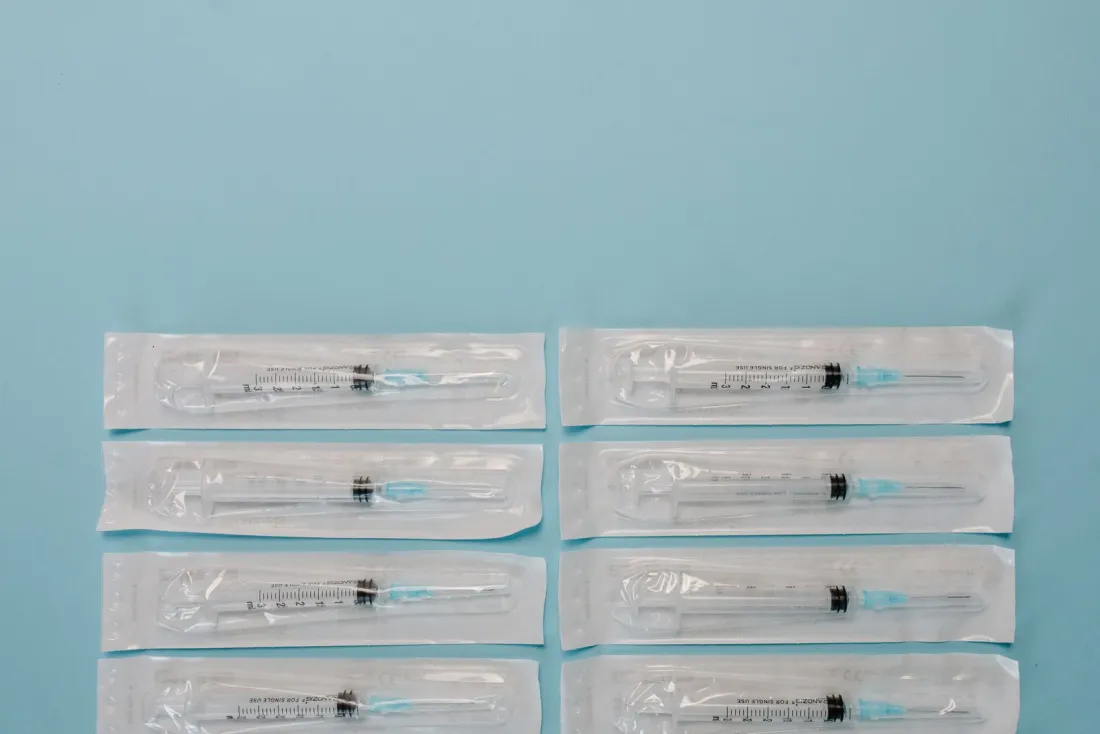
Three class I categories need a notified body for part of the assessment, limited to establishing and maintaining sterile conditions for sterile devices, to metrological requirements for measuring devices, and to cleaning, disinfection, sterilisation, maintenance, functional testing and instructions for reusable surgical instruments. Treating a sterile or measuring class I device as fully self-certified is one of the most common and most avoidable errors.
What a notified body does and how to find one
A notified body is an independent conformity assessment organisation designated by a member state and notified to the Commission. For class IIa, IIb and III devices, and the special class I categories, the CE mark cannot be affixed until it has issued the relevant certificate. Notified bodies audit the quality management system, review technical documentation and clinical evidence, and carry out surveillance, including unannounced audits, while the certificate runs.
Manufacturers can use any body designated for their device type, wherever it is based in the EU, from Germany to Ireland. Article 43 requires the Commission to publish the list of notified bodies, their identification numbers and the device types they may assess (the NANDO database); a body outside the right scope cannot help, however well known. Under Section 4.3 of Annex VII, the manufacturer lodges a formal application and both sides sign a written agreement, a step that now matters for the legacy deadlines below.
Step by step: what you need before affixing the CE mark
The CE mark is the last step. Article 10 sets out manufacturers' general obligations, and in practice the sequence runs:
- Confirm qualification and intended purpose, because everything flows from it.
- Classify the device under Annex VIII and record the reasoning.
- Appoint a person responsible for regulatory compliance. Under Article 15, micro and small enterprises need not employ one but must have one "permanently and continuously at their disposal".
- Build the quality management system covering the elements listed in Article 10(9), from supplier control to vigilance and corrective action.
- Meet the general safety and performance requirements in Annex I, using harmonised standards where available.
- Carry out the clinical evaluation under Article 61 and Annex XIV, including post-market clinical follow-up.
- Compile the technical documentation and keep it for at least 10 years after the last device is placed on the market, or 15 years for implantables.
- Complete the conformity assessment, by self-declaration or with a notified body.
- Assign a UDI and register as Article 10(7) requires.
- Sign the EU declaration of conformity and affix the CE mark.
Regulatory work runs alongside commercial protection. Innovators usually file patents before technical files circulate to notified bodies and partners: see our guides on how to patent an idea internationally and how to register a trademark internationally, or speak to intellectual property advisers.
Non-EU manufacturers: authorised representatives and registration
A manufacturer outside the EU cannot simply ship CE marked devices into the single market. Under Article 11, a manufacturer not established in a member state may place devices on the Union market only if it designates a sole authorised representative, accepted in writing. Since Brexit that applies to UK manufacturers as much as to US or Asian ones. The representative must hold the technical documentation and cooperate with authorities, and where the manufacturer has not complied with its Article 10 obligations, it is liable for defective devices jointly and severally with the manufacturer.
Some groups set up their own EU company, often in Ireland or the Netherlands, to act as importer or representative, a choice with tax and liability consequences discussed in our analysis of branch versus subsidiary when expanding abroad. Registration is also pressing: according to UK government guidance, since 28 May 2026 most devices other than custom-made devices must be registered on EUDAMED before being placed on the EU and Northern Ireland markets.
Legacy MDD devices and the 2027 and 2028 deadlines
Many devices on sale are still CE marked under the old Medical Devices Directive or Active Implantable Medical Devices Directive, and can stay on sale only until the MDR transition deadlines. The MDR has applied since 26 May 2021, but notified body capacity shortages led to extensions. Under Article 120(3a) as amended, legacy devices with a valid directive certificate may be placed on the market until:
- 31 December 2027 for class III devices and class IIb implantables, other than items such as sutures, staples, dental fillings, screws, plates, wires, pins, clips and connectors; and
- 31 December 2028 for other class IIb, class IIa, and sterile or measuring class I devices, and, under Article 120(3b), for devices self-certified under the directive that now need a notified body.
The extension is conditional. Article 120(3c) requires continued compliance with the directive, no significant change in design or intended purpose and no unacceptable risk, plus a quality management system by 26 May 2024, a formal notified body application by 26 May 2024 and a signed written agreement by 26 September 2024. A manufacturer that missed those milestones cannot rely on the extended dates, and MDR rules on post-market surveillance, vigilance and registration already apply to legacy devices.

| Market | Device position | Key date or rule |
|---|---|---|
| EU and EEA | Legacy class III and most class IIb implantables | Until 31 December 2027, if the Article 120(3c) conditions are met |
| EU and EEA | Legacy class IIb (other), IIa, sterile or measuring class I | Until 31 December 2028, on the same conditions |
| EU and EEA | New devices | MDR CE marking before placing on the market |
| Northern Ireland | All devices | CE marking; UKNI added where a UK notified body assessed the device |
| Great Britain | CE marked under EU MDR or IVDR | Accepted until 30 June 2030; indefinite recognition planned |
| Great Britain | CE marked under the old MDD | Sooner of certificate expiry or 30 June 2028; alignment with the EU date (currently 31 December 2028) planned |
| Great Britain | UKCA marked | Remains available as the domestic route |
Selling in Great Britain: UKCA mark or CE mark?
For Great Britain, a device needs a UKCA mark or a recognised CE mark, plus MHRA registration and, for overseas manufacturers, a UK Responsible Person. UKCA rests on the UK Medical Devices Regulations 2002. According to the MHRA, class I manufacturers write their own declaration, with a UK approved body certifying sterility or measuring aspects, while class IIa, IIb and III devices need a certificate from a UK approved body. UKCA is valid only in Great Britain, not in Northern Ireland.
Under current transitional rules, devices compliant with the EU MDR or IVDR can be placed on the Great Britain market until 30 June 2030, and directive-certified devices until the sooner of certificate expiry or 30 June 2028. A targeted consultation from 16 February to 10 April 2026 drew 1,056 responses. The government response of 21 October 2026 says it intends to recognise all CE marked devices certified under the EU MDR and IVDR indefinitely, to align MDD recognition with the EU deadline (currently 31 December 2028), and not to create a reliance route for devices classified higher in Great Britain. Subject to Parliament, the changes are to be made before 30 June 2028.
Recognition is not the whole job. CE marked devices must still meet domestic requirements, including a UK Responsible Person for manufacturers outside the UK, MHRA registration, documents in English, compliance with MHRA enforcement notices and the strengthened post-market surveillance rules in force since 16 June 2025. The MHRA says more than 90% of devices registered in Great Britain carry a CE mark. Registration now costs £300 a year per Level 2 GMDN category for 2026 to 2027, a recurring cost for anyone selling into England and the rest of Great Britain.
Northern Ireland: still a CE market
Northern Ireland applies the EU MDR, in force there since 26 May 2021, and the IVDR, since 26 May 2022, so devices need a CE mark. Where a UK notified body performs the mandatory assessment, the device also carries the UKNI indication, which always accompanies the CE mark and is not accepted on the EU market. Government guidance says Great Britain based manufacturers need an EU or Northern Ireland based authorised representative for this market, and that custom-made devices must still be registered with the MHRA within 28 days. The government expects permanent CE recognition in Great Britain to let manufacturers sell the same product across the whole UK.
What does CE marking cost?
There is no single price, because cost depends on class, route, product range and notified body. Basic class I devices avoid notified body fees, leaving testing, consultancy and the internal cost of the documentation and quality system. For class IIa and above, external costs include application fees, quality system audits, documentation reviews, annual surveillance and any clinical investigation. Fees vary between bodies, and the Commission publishes a list of links to notified bodies' published MDR and IVDR fee schedules, the best basis for comparison. Internal staff, an authorised representative and, for Great Britain, the MHRA fee and a UK Responsible Person complete the budget.
Common CE marking mistakes
- Misclassification, especially of software under Rule 11, invalidates the whole route.
- Self-certifying a sterile or measuring class I device without notified body involvement.
- Assuming one mark covers every market. UKCA is not valid in Northern Ireland or the EU, and CE UKNI is not accepted in the EU.
- No authorised representative or UK Responsible Person where one is required.
- Changing a legacy device significantly, which ends its right to the extended deadlines.
- Overreaching marketing claims that change the intended purpose and class; specialists in advertising rules for medical products can review them.
- Weak post-market surveillance, which feeds directly into liability claims handled by product liability lawyers after a serious incident.
What is changing next: the EU's targeted revision of the MDR
The EU rules are being revised, but nothing has changed yet for manufacturers. On 16 December 2025 the Commission proposed a targeted simplification of the MDR and IVDR, citing inefficient coordination, divergent application of requirements by notified bodies and procedures that are overly complex and costly. It says the sector has more than 38,000 companies, about 90% of them small and medium-sized, and estimates savings of €3 billion to €5 billion a year from measures including more proportionate requirements and classification rules, pathways for breakthrough and orphan devices and electronic instructions for use.
A Council progress report of 5 June 2026 found member states broadly supportive but needing more work, including on the European Medicines Agency's role and oversight of notified bodies, and said Parliament aimed to vote on its position in early 2027. Until a final text applies, the current MDR governs every CE marking decision. The pressures are not new: our report on the global medtech industry reset charted the shift to connected devices, which also raises data transfer questions covered in our analysis of whether the Data Privacy Framework is still valid.
When to get specialist advice
Do medical devices need to be CE marked? For the EU and Northern Ireland, yes, and for Great Britain the CE mark now looks set to remain a long-term alternative to UKCA for MDR and IVDR devices. What varies is the route: self-declaration or notified body, the clinical evidence needed and which representatives each market requires. Early input from life sciences and pharmaceuticals advisers on classification, and from regulatory specialists on EU and UK market access, usually costs far less than a failed audit or a withdrawal.
Frequently asked questions
Do medical devices need to be CE marked?
Yes, for the EU and wider EEA. Article 20 of the EU Medical Devices Regulation requires every conforming device, other than custom-made and investigational devices, to bear the CE marking before it is placed on the market. Northern Ireland also requires CE marking; Great Britain accepts UKCA or recognised CE marks.
Can a CE mark be self-certified?
Only for class I devices that are not sterile, have no measuring function and are not reusable surgical instruments. Those manufacturers prepare the technical documentation and sign an EU declaration of conformity. Other class I variants need a notified body for those aspects, and classes IIa to III need full notified body assessment.
What is a notified body for CE marking?
An independent conformity assessment organisation designated by a member state and notified to the European Commission. It audits quality systems, reviews technical documentation and clinical evidence, issues certificates and carries out surveillance. The Commission publishes the list of notified bodies and the device types each may assess.
Does the UK still accept CE marking?
Yes. MDR and IVDR CE marked devices can be placed on the Great Britain market until 30 June 2030, and on 21 October 2026 the government said it intends to recognise them indefinitely, with legislation before 30 June 2028. MHRA registration and, for overseas manufacturers, a UK Responsible Person are still required.
Is UKCA marking mandatory?
Not for a device carrying a CE mark that Great Britain recognises. UKCA remains the domestic route and stays available, but it is valid only in Great Britain. It is not recognised in Northern Ireland or the EU, where the CE mark is required.
Is the MDR deadline extended?
Yes. Legacy directive-certified devices may be placed on the EU market until 31 December 2027 (class III and most class IIb implantables) or 31 December 2028 (other classes), if the manufacturer applied to a notified body by 26 May 2024 and signed a written agreement by 26 September 2024.
Do non-EU manufacturers need an EU authorised representative?
Yes. Article 11 of the MDR requires a manufacturer not established in a member state to designate a sole authorised representative, accepted in writing, before placing devices on the EU market. This includes UK manufacturers. The representative can be jointly liable for defective devices if the manufacturer has not met its obligations.
How can I tell if a CE mark on a medical device is genuine?
Check that the manufacturer is identified, that an EU declaration of conformity exists and, above basic class I, that a notified body identification number follows the mark. Check that number against the Commission's published list of notified bodies (NANDO) to confirm it covers that device type.
Sources
- EUR-Lex: Regulation (EU) 2017/745 on medical devices, consolidated text (10 January 2025)
- European Commission: CE marking
- European Commission: Published fees of notified bodies for MDR and IVDR services
- European Commission: Questions and answers on simpler and more effective rules for medical devices (16 December 2025)
- Council of the European Union: Regulation to simplify rules on medical and in vitro diagnostic devices, progress report (5 June 2026)
- MHRA: Regulating medical devices in the UK
- MHRA: Medical devices: conformity assessment and the UKCA mark
- MHRA: Register medical devices to place on the market
- MHRA: Government confirms indefinite recognition of CE marked medical devices (21 October 2026)
- GOV.UK: Targeted consultation on the indefinite recognition of CE marked devices and government response
About this article
This analysis was researched and written by The Corporate INTL Newsroom, which covers cross-border legal, regulatory and business developments for lawyers, professional advisers and financiers in over 150 jurisdictions. It has been checked against the consolidated EU Medical Devices Regulation, European Commission and Council documents, MHRA guidance and the UK government's response of 21 October 2026. The UK legislation to implement indefinite recognition had not been laid, and the EU revision of the MDR was still being negotiated, at the time of writing. This article is general information, not legal or regulatory advice; for advice on a specific device, consult a qualified adviser. Last reviewed 27 October 2026. For more analysis like this, visit the Corporate INTL newsroom or subscribe to Corporate INTL.
Looking for legal or business advice?
Tell us what you need and the Corporate INTL team will help you find the right lawyer or adviser from our members in 150+ jurisdictions.
1What you need2Your details
More from the newsroom
All latest news → Related stories

Life Sciences & Pharmaceuticals
Global Medtech Industry Resets to Pre-pandemic Norms As Digitalization Accelerates

Life Sciences & Pharmaceuticals
Drug Sentiment Index Launches on Bloomberg Enterprise Access Point

Life Sciences & Pharmaceuticals