What are the main anti-corruption laws in China? Until last month the answer was a patchwork: the Criminal Law, the Anti-Unfair Competition Law and a scattering of rules on judicial assistance and foreign sanctions. On 25 August 2026 China's top legislature began work on the piece that ties them together, a draft Anti-Cross-Border Corruption Law of six chapters and 47 articles, published for public comment on 28 August with a deadline of 26 September. For multinationals the draft matters for three reasons: it imposes integrity-compliance duties on the China subsidiaries of foreign groups, it bars foreign anti-corruption investigations on Chinese soil without official consent, and it authorises counter-measures against foreign states that use anti-corruption laws as what Beijing calls a pretext. This analysis sets out where the draft sits among China's existing laws, what each key article does, and how it compares with the US Foreign Corrupt Practices Act and the UK Bribery Act.
What Are the Main Anti-Corruption Laws in China? The Draft Cross-Border Corruption Law Explained
By The Corporate INTL Newsroom · 9 September 2026
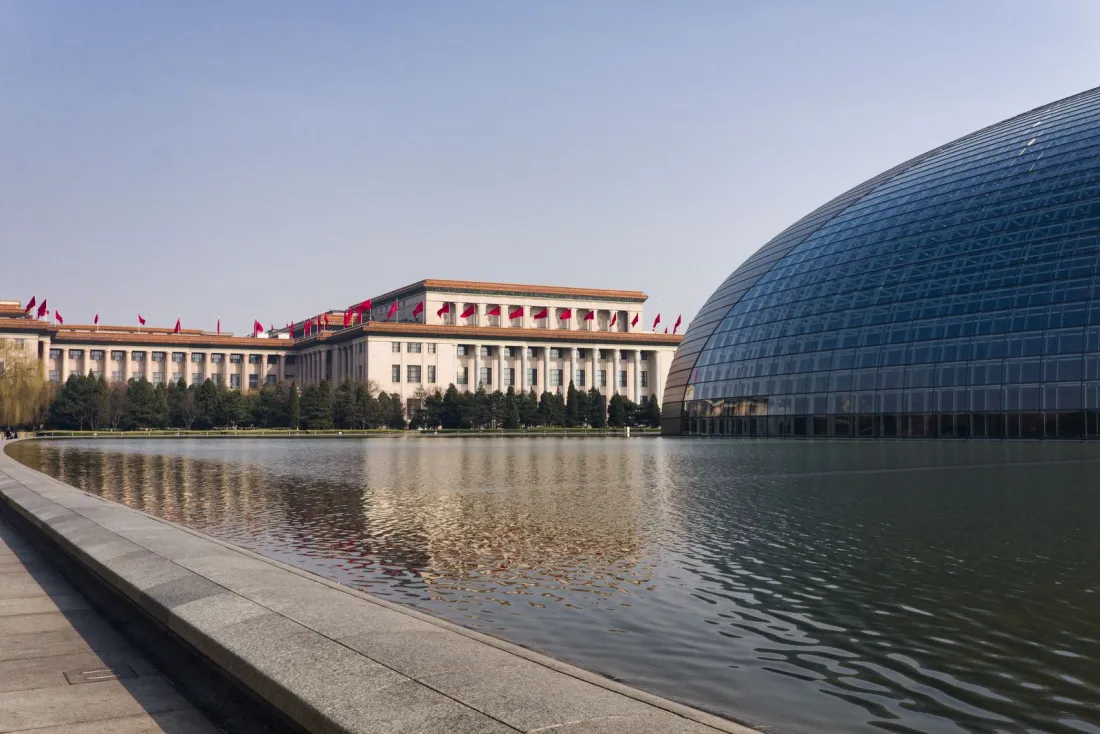
What are the main anti-corruption laws in China?
China's main anti-corruption laws are the Criminal Law, which punishes bribery, and the Anti-Unfair Competition Law, which covers commercial bribery by businesses. Two further statutes shape how cross-border cases work in practice: the International Criminal Judicial Assistance Law of 2018 and the Anti-Foreign Sanctions Law of 2021.
Each has been tightened recently. Amendment XII to the Criminal Law, adopted on 29 December 2023 and in force from 1 March 2024, stipulates heavier punishment for those who offer bribes repeatedly or to more than one person, or who bribe state functionaries, supervisors, law-enforcement officers and judicial officers. The revised Anti-Unfair Competition Law, adopted on 27 June 2025 and in force from 15 October 2025, now targets the acceptance of bribes as well as the offering of them, raises the maximum fine for commercial bribery from ¥3 million to ¥5 million, allows fines of up to ¥1 million on legal representatives and responsible individuals, and reaches conduct outside China that disrupts the domestic market. Companies already operating there will want advisers in China who track how these regimes are enforced locally.
| Law | What it covers | Relevance to cross-border business |
|---|---|---|
| Criminal Law (Amendment XII in force 1 March 2024) | Bribery offences, including heavier punishment for bribe-givers | Draft Article 35 routes criminal cross-border corruption to the Criminal Law |
| Anti-Unfair Competition Law (revised, in force 15 October 2025) | Commercial bribery by businesses and acceptance of bribes | Fines up to ¥5 million; reaches some conduct abroad |
| International Criminal Judicial Assistance Law (2018) | Mutual legal assistance in criminal matters | Article 4 bars foreign criminal procedure in China without consent |
| Anti-Foreign Sanctions Law (2021) | Counter-measures against foreign sanctions | Draft Article 6 invokes it against foreign "anti-corruption" pretexts |
| Draft Anti-Cross-Border Corruption Law (first reading, August 2026) | Five categories of cross-border corruption, enforcement mechanism, compliance duties | Covers China subsidiaries of foreign groups and Chinese groups abroad |
What the draft Anti-Cross-Border Corruption Law is and where it stands
The draft is a dedicated statute that gathers China's scattered rules on corruption with a foreign element into one law, covering prevention, investigation, international cooperation, corporate compliance and what the drafters call counter-measures. It was submitted for its first reading at the 24th session of the Standing Committee of the 14th National People's Congress on 25 August.
The legislative signals were long in place. According to The Beijing News, the Third Plenum of the 20th Party Central Committee listed the law among its key reform measures, and the Standing Committee put it in its 2026 legislative work plan. The same report says existing rules were "relatively scattered" and lacked systematic provisions on referring leads, whistleblowing, international cooperation, cooperation with investigations and fugitive and asset recovery. The drafters' stated aim, as reported by China News Service, is to address four practical problems in cross-border cases: they are hard to detect, hard to evidence, hard to recover assets in and hard to convict.
Xinhua described the law as "an important step by China to put in place a systematic and comprehensive foreign-related legal framework for anti-corruption". Its context is scale: the same report counts more than 50,000 overseas enterprises set up by Chinese investors in 190 countries, and 963 fugitives returned to China in 2025.
The published notice invites comment for 30 days through the NPC website or by post to the Legislative Affairs Commission. The text is a first draft: Article 47 leaves the commencement date blank, and Chinese laws commonly change between readings. Companies with exposure should read it now with white-collar crime specialists, not wait for the final version.
The five types of cross-border corruption in Article 3
Article 3 defines "cross-border corruption" in five categories, and the breadth of the definition is what gives the draft its reach. Read with the rest of the text, it covers conduct by Chinese parties abroad, conduct by foreign parties in China, and conduct whose effects land in China wherever it began.
- Outbound foreign bribery. Chinese citizens and enterprises, including their branches and subsidiaries, bribing foreign public officials or officials of international public organisations; and foreign persons bribing such officials while in China.
- Inbound bribery. Foreign persons and enterprises, and their branches, bribing Chinese public officials or their "specific related persons", or state organs, state-owned enterprises, public institutions and people's organisations, together with the related acceptance of bribes.
- Misconduct abroad by Chinese parties. Other official misconduct committed outside China by Chinese citizens and entities, such as embezzlement, abuse of power, dereliction of duty, rent-seeking, improper transfers of benefits and waste of state assets.
- Effects in China. Other corruption of the same nature where the conduct happens wholly or partly abroad and the result occurs wholly or partly in China.
- Flight and asset transfers. People suspected of corruption fleeing abroad, and the cross-border transfer of corrupt assets.
The first category puts the bribery of foreign officials by Chinese companies, and by their overseas subsidiaries, at the head of the list. The second and fourth categories are what reach foreign groups. Arnold & Porter's analysis of the draft reads the fourth as covering corrupt conduct with partial or complete foreign occurrence that affects China, which is an effects test of the kind familiar from competition law. Businesses reviewing their exposure often bring in economic crime advisers to map which of their activities could fall within each limb.
Who enforces it: the National Supervisory Commission and the working mechanism
The National Supervisory Commission leads enforcement. Article 7 creates a national working mechanism to coordinate policy, publish anti-cross-border corruption guidelines, coordinate law enforcement and judicial work, and guide risk identification and response. Article 8 places the commission at its head and lists the other participants: the foreign affairs, public security, justice, finance and commerce authorities, the anti-money laundering regulator, audit, state-assets supervision, financial and securities regulators, and the cyberspace administration.
The commission runs the mechanism day to day, organises the investigation of major cases and leads international cooperation. Provincial supervisory commissions take charge within their regions. Article 9 confirms the separate roles of supervisory bodies, the police, the procuratorates and the courts.
Detection is built in from several directions. Article 13 has anti-money laundering authorities direct banks and designated non-financial businesses to monitor cross-border funds, and allows the central bank to investigate suspicious transactions and pass leads to supervisory bodies or the police. Article 14 requires audit, finance, tax and financial regulators to refer suspicious flows they find in their own inspections. Article 15 calls for big data and artificial intelligence to integrate supervisory information. For businesses this means a report to one regulator may now travel further than before, a point worth raising with regulatory advisers.
The blocking clause: Article 26 and foreign investigations in China
Article 26 is the provision multinational compliance teams will read first. It provides that, without the consent of the relevant Chinese authorities, foreign bodies, organisations and individuals may not conduct anti-cross-border corruption investigations or other law enforcement activities inside China, whether directly or through others, and that bodies and individuals in China may not provide evidence or other assistance to them. Breaches may lead to blocking measures and legal liability.

The clause is not new in principle. Article 4 of the International Criminal Judicial Assistance Law, adopted on 26 October 2018, already says that, except with the consent of the responsible Chinese organs, foreign bodies may not carry out criminal procedure activities in mainland China and domestic bodies may not provide evidence and assistance to foreign nations. What the draft adds is a specific anti-corruption application. Arnold & Porter notes that it targets foreign government agencies such as the US Department of Justice or the UK Serious Fraud Office.
The practical question is what counts as an "investigation or other law enforcement activity". An internal investigation run by a company's own lawyers is not obviously a foreign state's enforcement action, but one commissioned in response to a US or UK request, with the findings intended for a prosecutor, may be treated differently. The draft does not define the terms, and it pairs the ban with Article 27, which lets Chinese authorities refuse foreign requests where China is itself investigating, has ruled, or has other lawful grounds. Companies facing a parallel inquiry should plan the sequence of internal and government investigations before any document leaves China.
Counter-measures: Article 6 and the Anti-Foreign Sanctions Law
Article 6 allows China to respond when a foreign state, in breach of international law, uses anti-corruption as a pretext, or improperly applies its own laws extraterritorially, to contain or suppress China or to impose discriminatory restrictions on Chinese citizens and companies. In those cases China may take counter-measures and blocking measures under the Anti-Foreign Sanctions Law, promulgated on 10 June 2021, and other rules.
The wording is aimed at foreign enforcement that Beijing regards as political, and the draft does not say who decides whether a given prosecution crosses that line. That uncertainty is itself a risk factor for companies caught between regulators. The tension between Chinese authority and foreign-controlled groups has already played out in other forms, as the Wingtech and Nexperia dispute shows. Article 4, by contrast, strikes a cooperative note, affirming the United Nations Convention against Corruption as the main channel for international cooperation and opposing safe havens for corrupt people and assets.
Compliance duties for companies doing cross-border business
Chapter 4 imposes integrity-compliance duties on "enterprises engaged in cross-border business". Article 29 defines them as Chinese enterprises that set up overseas branches or subsidiaries or invest abroad, and the branches and subsidiaries that foreign enterprises establish in China. That second limb is the answer to one of the most common questions foreign companies ask about current regulations in China: a foreign group's China subsidiary is squarely within scope.

The duties will look familiar to anyone who has built a programme to FCPA or UK Bribery Act standards:
- Compliance systems (Article 30). Integrity-compliance rules and operating mechanisms scaled to the company's size, business scope and revenue, covering decision-making, execution and supervision; Chinese enterprises should set up compliance functions and may post compliance officers to overseas units.
- Risk assessment and reporting (Article 31). Integrity risk assessments of cross-border business, an internal whistleblowing channel, and reports to supervisory bodies or the police where suspected cross-border corruption is found. State-owned enterprises face extra controls such as directly appointed overseas finance heads, staff rotation and conflict-of-interest recusal.
- Books and records (Article 32). True and complete accounting records, and a ban on using accounting to carry out or conceal corruption.
- Third parties (Article 33). Due diligence on and supervision of agents and other third parties, who must follow the company's code; companies may not use third parties to commit cross-border corruption.
- Training (Article 34). Integrity education for employees and, for Chinese groups, compliance training for overseas staff.
The overlap with Western programmes is useful but not complete. A foreign group's global policy may already meet most of these points, yet the Chinese duties run to Chinese regulators, and a reporting step owed under Article 31 in China may sit awkwardly with a disclosure strategy agreed with a prosecutor abroad. Groups with regional structures are asking cross-border advisers to reconcile the two, and risk management specialists to re-run China risk assessments against the new headings.
Penalties, cooperation demands, exit bans and self-reporting
The draft relies mostly on existing penalty regimes rather than creating new fines. Article 35 sends criminal conduct to the Criminal Law; Article 36 provides for administrative penalties, including on directly responsible managers; Article 38 adds civil liability; Article 39 records penalties in credit records; and Article 40 requires confiscation or return of illegal gains. Arnold & Porter notes that the draft sets no specific penalty amounts.
The new tools sit elsewhere. Article 17 lets anyone report cross-border corruption, with confidentiality and rewards for useful information. Article 18 obliges organisations and individuals to cooperate with investigators and, in major cases and on the basis of reciprocity, allows authorities to require cooperation from foreign enterprises and organisations; Arnold & Porter reads this as potentially reaching a foreign group's overseas headquarters. Article 19 permits exit restrictions on people suspected of corruption, enforced by immigration authorities.
Two provisions bite directly on companies. Article 44 covers refusing to provide evidence, hiding, forging or destroying it, or obstructing an investigation: the result can be an order to correct, public security penalties or criminal liability. Article 45 deals with failure to meet the Chapter 4 compliance duties: an order to rectify within a time limit and, if the company refuses, suspension of the relevant business, suspension for rectification or revocation of licences.
Credit is available. Article 43 allows lighter or mitigated penalties for voluntary surrender and truthful confession, active cooperation and provision of materials, remedial steps and return of proceeds, and reporting others' cross-border corruption that proves true. Article 42 lists aggravating factors, including repeat conduct and refusal to hand over gains. Documenting remediation well is where forensic investigators usually earn their fee.
How the draft compares with the FCPA and the UK Bribery Act
The draft borrows the architecture of Western anti-bribery law, with foreign-bribery offences, books-and-records duties, third-party diligence and incentives to come forward, but adds two features the FCPA and Bribery Act do not have: a ban on foreign investigations and a counter-measures clause. The table below sets out the main differences.
| Feature | China draft law | US FCPA | UK Bribery Act 2010 |
|---|---|---|---|
| Foreign bribery offence | Article 3(1): Chinese persons and their subsidiaries, and foreign persons acting in China | Anti-bribery provisions since 1977 | Section 6: bribery of foreign public officials |
| Who is covered abroad | Chinese citizens and enterprises, including overseas branches and subsidiaries | US persons and certain foreign issuers; foreign firms acting in US territory | Persons with a close connection to the UK (section 12) |
| Corporate prevention duty | Articles 29 to 34, enforced by rectification orders and licence sanctions (Article 45) | Accounting provisions for issuers: books, records and internal controls | Section 7 failure to prevent bribery, with an adequate procedures defence |
| Maximum penalty | No new fines in the draft; Criminal Law and administrative law apply | Criminal and civil penalties under US law | 10 years' imprisonment for individuals; a fine, uncapped on indictment, for companies |
| Blocking foreign investigations | Yes, Article 26 | No | No |
| Counter-measures against foreign enforcement | Yes, Article 6 | No | No |
Is it true that the Foreign Corrupt Practices Act prohibits bribery abroad? Yes. According to the US Department of Justice, its anti-bribery provisions have applied since 1977 to all US persons and certain foreign issuers of securities and, since 1998 amendments, also to foreign firms and persons who cause an act in furtherance of a corrupt payment within US territory. Its accounting provisions require issuers to keep accurate books and records and adequate internal controls. The UK equivalent is the Bribery Act 2010: section 7 makes a relevant commercial organisation, including any company that carries on a business or part of a business in the UK, guilty if an associated person bribes to win business for it, unless it had adequate procedures. Under section 11, individuals face up to 10 years' imprisonment. Groups with exposure in both jurisdictions tend to instruct US advisers and UK advisers side by side.
Where US and UK enforcement stands in 2026
The draft arrives while US enforcement is narrower than it was. On 10 February 2025 President Trump signed Executive Order 14209 pausing new FCPA investigations for 180 days, and on 9 June 2025 the Deputy Attorney General issued guidelines for FCPA investigations and enforcement. They direct prosecutors to focus on individuals and not attribute "nonspecific malfeasance to corporate structures", and to weigh factors including links to cartels and transnational criminal organisations, harm to specific and identifiable US companies, threats to US national security in sectors such as critical minerals and deep-water ports, and serious misconduct. New FCPA investigations need approval from the head of the Criminal Division, and prosecutors are told to consider whether an appropriate foreign law enforcement authority is willing and able to pursue the same misconduct.

Two points in the memo matter for China. It says enforcement will not focus on companies "on the basis of their nationality", yet it also observes in a footnote that the most significant FCPA actions have been overwhelmingly brought against foreign companies, and its harm-to-US-competitors factor naturally captures foreign rivals that win contracts by bribery. Observers are likely to ask whether Chinese prosecutions of Chinese companies' overseas bribery under the new law would make China the kind of willing foreign authority the memo tells US prosecutors to weigh. And the wider US white-collar docket has not gone quiet, as the insider trading charges tied to law firm M&A files and the LOGZONE False Claims Act settlement show.
The UK has moved the other way, widening corporate liability. The failure to prevent fraud offence created by the Economic Crime and Corporate Transparency Act 2023 came into force on 1 September 2025. According to the Crown Prosecution Service, it applies to large organisations meeting two of three tests (more than 250 employees, turnover above £36 million, balance sheet above £18 million) and carries unlimited fines. Home Office guidance explains the defence of reasonable fraud prevention procedures.
The conflict-of-laws squeeze for multinationals
The hardest problem the draft creates is not a new offence but a new conflict. A US or UK prosecutor may expect a cooperating company to produce documents and witnesses from its China business quickly and in full. Article 26 would require Chinese consent before evidence or assistance goes to a foreign body, Article 44 penalises refusing to provide evidence to Chinese investigators, and Article 18 lets Chinese authorities demand cooperation from foreign enterprises in major cases.
Arnold & Porter flags several open questions: whether penalties could fall on a Chinese subsidiary if its foreign headquarters refuses to cooperate, whether Article 31 reporting is voluntary or mandatory, and whether regulators will enforce the compliance duties proactively or only during investigations. The draft answers none of these, which is one reason the comment period matters.
Commentators in China present the law in cooperative terms. Huo Zhengxin, a professor at the China University of Political Science and Law, told the Global Times that "a key innovation of the draft is to strengthen international cooperation and corporate integrity". Both things can be true: the law can deepen cooperation through treaty channels while restricting informal routes. For companies, the practical effect is that the order in which they speak to regulators, and what they commission in writing, will need more care. Recent scrutiny of how external investigation reports are commissioned and described is a reminder that such choices can resurface later.
Hong Kong and offshore wealth
The flight-and-assets limb of Article 3, with the asset recovery tools in Article 25, looks set to draw attention to the places where mainland wealth has been parked. Karen Cheung, a partner at HFW, told the South China Morning Post that "high-value assets, including luxury goods and prime property, together with complex corporate and trust structures, may come under closer scrutiny" where they become relevant to mainland investigations.
The draft also tightens the net on officials themselves. Article 12 directs supervisory bodies to address public officials who acquire foreign nationality or foreign permanent residence in breach of the rules, and to improve reporting of officials' overseas deposits and investments. Trustees, banks and family offices holding assets for mainland clients may want to review source-of-wealth files with Hong Kong advisers.
What general counsel should do now
The draft is not law, but its direction is clear, and the comment window closes on 26 September 2026. Companies with China exposure can prepare in five steps:
- Map scope. Identify every entity that is an "enterprise engaged in cross-border business" under Article 29, including China subsidiaries, branches and outbound investment vehicles.
- Gap-test the programme. Compare the China policy set against Articles 30 to 34: risk assessment, whistleblowing, books and records, third-party diligence and training.
- Write a data-transfer protocol. Decide in advance how a request from a foreign authority for China-held documents will be routed, who seeks Chinese consent under Article 26 and the 2018 judicial assistance law, and how that is explained to the foreign authority.
- Align disclosure strategy. Consider how an Article 31 report in China and a self-report to the DOJ or SFO would interact, and in what order.
- Consider commenting. Industry bodies and companies can submit comments through the NPC website before the deadline.
When a live issue is involved, such as a whistleblower allegation touching China, a foreign subpoena for Chinese records or an employee subject to an exit restriction, the stakes justify specialist help. Our directory of investigations specialists is a starting point for finding advisers with experience across China, the US and the UK. For now, the answer to what are the main anti-corruption laws in China is changing: the Criminal Law and the Anti-Unfair Competition Law remain the core, but a cross-border statute with a blocking clause is on its way.
Frequently asked questions
What are the main anti-corruption laws in China?
The core laws are the Criminal Law, which punishes bribery and was toughened by Amendment XII from 1 March 2024, and the Anti-Unfair Competition Law, revised from 15 October 2025 to target commercial bribery on both sides. The 2018 International Criminal Judicial Assistance Law and the 2021 Anti-Foreign Sanctions Law also shape cross-border cases, and a draft cross-border corruption law is now before the legislature.
What is China's draft Anti-Cross-Border Corruption Law?
It is a draft statute of six chapters and 47 articles submitted to the NPC Standing Committee for first reading on 25 August 2026. It defines five types of cross-border corruption, creates a National Supervisory Commission-led enforcement mechanism, imposes compliance duties on companies doing cross-border business and adds blocking and counter-measure provisions.
When is the deadline for comments on the draft law?
The draft was published for public comment on 28 August 2026 for a 30-day period ending on 26 September 2026. Comments can be submitted through the National People's Congress website or the national laws and regulations database, or by post to the Standing Committee's Legislative Affairs Commission.
Does the draft law apply to foreign companies?
Yes, in several ways. It covers foreign persons who bribe Chinese officials or state bodies, and foreign persons who bribe foreign officials while in China. Its compliance duties in Articles 29 to 34 expressly apply to branches and subsidiaries that foreign enterprises establish in China.
Can the DOJ or the SFO investigate a company in China under the draft?
Not without Chinese consent. Article 26 bars foreign bodies from conducting anti-corruption investigations or other law enforcement in China without the consent of Chinese authorities, and bars bodies in China from giving them evidence or assistance. It builds on Article 4 of the 2018 International Criminal Judicial Assistance Law.
Is it true that the Foreign Corrupt Practices Act prohibits bribery abroad?
Yes. The FCPA's anti-bribery provisions prohibit corrupt payments to foreign officials to obtain or retain business. Since 1977 they have applied to US persons and certain foreign issuers, and since 1998 to foreign firms and persons who act in furtherance of a corrupt payment within US territory.
What are the two main components of the FCPA?
The FCPA has anti-bribery provisions, which prohibit corrupt payments to foreign officials, and accounting provisions, which require companies with US-listed securities to keep books and records that accurately reflect their transactions and to maintain an adequate system of internal accounting controls. The two were designed to operate in tandem.
What is the UK equivalent of the FCPA, and does it apply overseas?
The UK equivalent is the Bribery Act 2010. Section 6 criminalises bribing foreign public officials, and section 7 makes companies liable for failing to prevent bribery unless they had adequate procedures. It reaches conduct abroad by people with a close connection to the UK and companies that carry on business in the UK.
What penalties does the draft law set for companies?
The draft sets no new fine amounts. It relies on the Criminal Law and administrative penalties, requires confiscation of illegal gains and records penalties in credit records. Companies that fail to meet compliance duties can be ordered to rectify and, if they refuse, face suspension of business or revocation of licences.
Sources
- Xinhua: China mulls draft law against cross-border corruption (25 August 2026)
- China News Service: Draft Anti-Cross-Border Corruption Law submitted for first reading (25 August 2026, in Chinese)
- The Beijing News via Tencent News: Draft Anti-Cross-Border Corruption Law proposes national working mechanism (28 August 2026, in Chinese)
- NPC Standing Committee notice and draft text of the Anti-Cross-Border Corruption Law, reproduced by LexisNexis China (in Chinese)
- Arnold & Porter: China Issues Draft Anti-Cross-Border Corruption Law (9 September 2026)
- South China Morning Post: China's anti-corruption legal framework is about to extend beyond its borders (25 August 2026)
- South China Morning Post: As Beijing targets cross-border corruption, Hong Kong markets brace for impact (26 August 2026)
- Global Times: China proceeds legislation against cross-border corruption (25 August 2026)
- Xinhua: China amends criminal law to toughen punishment for bribery (29 December 2023)
- Hogan Lovells: China's 2025 Anti-Unfair Competition Law revision (25 July 2025)
- China Law Translate: International Criminal Justice Assistance Law of the PRC (2018)
- China Law Translate: Anti-Foreign Sanctions Law of the PRC (2021)
- US Department of Justice: Guidelines for Investigations and Enforcement of the FCPA (9 June 2025)
- US Department of Justice: Foreign Corrupt Practices Act
- Bribery Act 2010, section 7: failure of commercial organisations to prevent bribery
- Bribery Act 2010, section 11: penalties
- Crown Prosecution Service: Organisations must prepare now for new fraud prevention law (18 August 2025)
- Home Office: Offence of failure to prevent fraud introduced by ECCTA
About this article
This analysis was researched and written by The Corporate INTL Newsroom, which covers cross-border legal, regulatory and business developments for lawyers, professional advisers and financiers in over 150 jurisdictions. It has been checked against the published draft text of the Anti-Cross-Border Corruption Law, state media reports of its first reading, the US Department of Justice's FCPA guidelines, UK legislation and prosecutors' guidance. The draft is subject to change before enactment and its commencement date has not been set. This article is general information, not legal advice; for advice on a specific matter, consult a qualified adviser. Last reviewed 9 September 2026. For more analysis like this, visit the Corporate INTL newsroom or subscribe to Corporate INTL.
Looking for legal or business advice?
Tell us what you need and the Corporate INTL team will help you find the right lawyer or adviser from our members in 150+ jurisdictions.
Related stories

How to Comply With Failure to Prevent Fraud: 8 Steps to Reasonable Procedures

Former Nodus Bank CEO Sentenced: 112 Months for Fraud and Venezuela Sanctions Evasion