What is litigation funding in the UK? In its commonest form it is money from an outside investor that pays a claimant's lawyers, experts and adverse-costs cover in return for a share of whatever the case recovers, and it pays for most of the opt-out class actions brought at the Competition Appeal Tribunal (CAT). That model has been under strain since the Supreme Court's 2023 PACCAR ruling, and September 2026 has brought the pressure to a head. The Department for Business and Trade's consultation on the opt-out collective actions regime closes on 25 September 2026, a House of Lords amendment would force the Treasury to consider bringing funders under the Financial Conduct Authority, and the legislation ministers promised to repair PACCAR has still not been introduced. This analysis explains how third-party litigation funding works, what PACCAR changed, what the Civil Justice Council and the government have proposed, how the EU approaches the same questions, and what general counsel, funders and claimant firms should be doing before the consultation window shuts.
What Is Litigation Funding in the UK? PACCAR and the CAT Reforms
By The Corporate INTL Newsroom · 14 September 2026

What is litigation funding in the UK?
Third-party litigation funding is an arrangement in which a commercial funder with no other connection to a dispute pays some or all of a party's legal costs, usually on a non-recourse basis, and is repaid only if the claim succeeds or settles. If the case is lost, the funder typically loses its investment. The funded party signs a litigation funding agreement (LFA) that sets out the funder's return, the order in which any proceeds are paid out, and the protections that stop the funder from controlling the litigation.
Funding is used across commercial litigation and arbitration, from single-claimant disputes to large group claims such as the mass diesel emissions claim against Mercedes-Benz in the English High Court. It matters most, however, in competition class actions. The government's own consultation document states that opt-out claims before the CAT are mostly financed by third-party funders, that claimant budgets now run to £20 million or more, and that the regime is "virtually reliant" on that support. A class representative acting for millions of consumers cannot pay those costs personally, and a law firm cannot currently take the case on a contingency fee.
That is why the answer to "what is litigation funding in the UK?" has become a policy question as much as a legal one. Funding decides which claims are brought, how large they must be to attract backing, and how much of any recovery reaches the people the claim is supposed to compensate.
How opt-out collective actions work at the Competition Appeal Tribunal
An opt-out collective action is a single competition claim brought by a class representative on behalf of everyone within a defined class, who are included automatically unless they choose to leave. The regime was introduced in 2015 with three stated objectives: better redress for victims of anti-competitive conduct, deterrence of future breaches, and protection for defendants against having to settle unmeritorious claims.
The DBT document sets out the mechanics. A claim can be follow-on, building on an infringement finding by the Competition and Markets Authority (CMA) or the European Commission, or standalone, where the claimant must prove the breach itself. Before it can proceed, the CAT must certify it by making a collective proceedings order, satisfied that the claims are brought for an identifiable class, raise common issues and are suitable for collective treatment. The tribunal must also authorise the proposed class representative, who has to show that it can act fairly for the class and can meet the defendant's recoverable costs if ordered to pay them. That last requirement is, in practice, a requirement to have a funder and adverse-costs insurance in place.
Opt-out claims are confined to competition law. That limit explains why so many recent claims against technology platforms have been framed as abuse of dominance, a point the consultation criticises as claims "dressed up" as competition cases. The pipeline remains busy: in the first week of September 2026 a £2bn claim was filed at the CAT on behalf of app developers over Apple's App Tracking Transparency rules, brought by a vehicle whose director is former CMA official Ann Pope, adding to a docket in which technology, media and telecoms defendants are heavily represented. Businesses also bring their own damages claims at the CAT outside the opt-out regime, as in Moy Park's interchange-fee claim against Visa and Mastercard.

The PACCAR Supreme Court decision and why it broke the funding model
The PACCAR Supreme Court decision held that litigation funding agreements under which the funder's return is calculated as a percentage of the damages are damages-based agreements, and therefore subject to the statutory rules for such agreements. The judgment, R (PACCAR Inc) v Competition Appeal Tribunal [2023] UKSC 28, was handed down on 26 July 2023. PACCAR is the American parent of the truck maker DAF, which was a defendant in the trucks cartel collective claims and argued that the claimants' funding agreements were unenforceable.
The consequence was severe for class actions because damages-based agreements, often called contingency fees, are not permitted at all in opt-out collective proceedings. As the DBT consultation puts it, the enforceability of many LFAs before the CAT "came into question". Funders renegotiated their agreements so that their return became a multiple of the money invested rather than a percentage of the damages. The consultation notes that this shift has increased the cost of funding and reduced returns for the underlying class.
The courts have since given the multiple model some stability. In Sony Interactive Entertainment v Neill the Court of Appeal held on 4 July 2025 that an LFA pricing the funder's return as a multiple of its investment does not become a damages-based agreement merely because it is paid from, or capped by, the damages, and the Supreme Court refused permission to appeal in November 2025. That reduced the immediate litigation risk, but it did not restore percentage-based funding, and many older agreements still carry the uncertainty that the government has promised to remove.
The Civil Justice Council review of litigation funding
The Civil Justice Council review of litigation funding, published as a final report in June 2025, is the blueprint for most of the reform now under discussion. Its first recommendation was that PACCAR be reversed by legislation with both retrospective and prospective effect, making clear that funding from a third party is categorically different from contingency fee funding provided by a party's own lawyers.
The report runs to 58 recommendations. The central ones for funders and defendants are:
- Light-touch statutory regulation. Regulations made by the Lord Chancellor, rather than regulation by the Financial Conduct Authority, with the FCA question to be revisited five years after the new regime begins.
- Baseline rules for all funding. Case-specific capital adequacy, a codified ban on funder control of litigation, conflict of interest provisions, anti-money laundering requirements and early disclosure of the fact of funding, the funder's name and the ultimate source of funds.
- Enhanced protection in collective and consumer cases. A regulatory Consumer Duty, independent legal advice on proposed LFAs, court approval of the terms including whether the funder's return is fair, just and reasonable, and enhanced notice of the funder's return to class members during the opt-out period.
- No caps. The working party expressly rejected caps on funders' returns.
- Arbitration excluded. The proposed regulations would not apply to the funding of arbitration.
The CJC also recommended a twin-track timetable: reverse PACCAR "as soon as possible" to restore certainty, and implement the rest through separate primary legislation. More than a year later, neither track has produced a bill.
What the government has promised, and what it has not delivered
The government has accepted the CJC's two headline recommendations in principle but has not legislated for either. On 17 December 2025 justice minister Sarah Sackman KC told Parliament that ministers would legislate to clarify that LFAs are not damages-based agreements and would introduce proportionate regulation of funding. As Mayer Brown's analysis of the statement notes, the clarification is to have prospective effect, not the retrospective effect the CJC wanted, and it will come "when parliamentary time allows".
The Ministry of Justice's announcement of 19 December 2025 framed the change as an access to justice measure, quoting Ms Sackman: "Without litigation funding, the Sub-postmasters affected by the Horizon IT scandal would never have had their day in court." Then, on 14 May 2026, the King's Speech set out 37 bills and included no litigation funding bill, prompting disappointment from funders and practitioners. The ministry said legislation could still be introduced.
| Date | Development | Effect on funding |
|---|---|---|
| 2015 | Opt-out collective actions regime begins at the CAT | Creates demand for large-scale third-party funding |
| 26 July 2023 | Supreme Court decides PACCAR | Percentage-based LFAs treated as damages-based agreements |
| June 2025 | CJC final report on litigation funding | Recommends retrospective and prospective reversal plus light-touch regulation |
| 4 July 2025 | Court of Appeal decides Sony v Neill | Multiple-based LFAs held not to be damages-based agreements |
| 6 August 2025 | DBT call for evidence on the opt-out regime | Opens the review that led to the 2026 consultation |
| 17 and 19 December 2025 | Government statement and announcement on PACCAR | Commits to prospective reversal and proportionate regulation |
| 18 December 2025 | Supreme Court decides Evans v Barclays | Restores the CAT's refusal of opt-out certification in the FX claim |
| 14 May 2026 | King's Speech | No litigation funding bill announced |
| 17 July 2026 | DBT "Swifter and Simpler" consultation published | Proposes stricter certification, DBAs and funder-return certainty |
| 25 September 2026 | Consultation closes | Responses shape any future bill |
The DBT consultation: a stricter gate for opt-out claims
The DBT consultation's most consequential proposal for defendants is a statutory tightening of certification, because the government's stated view is that "the threshold for certification is too low". It does not propose abolishing or expanding the regime; it says it is "not currently persuaded" to do either.
The consultation proposes writing three changes into statute. First, suitability should be assessed in absolute terms, asking not only whether a claim suits collective rather than individual proceedings but whether it is proportionate to bring it through the opt-out mechanism at all, which the department says would lock merits into the test. Second, the cost-benefit criterion should carry greater weight and should include the likely take-up by the class. Third, the CAT should consider whether there appears to be sufficient evidence to assess damages on an aggregate basis.
Case law has already moved in the same direction. In Evans v Barclays, the foreign exchange cartel claim, the Supreme Court unanimously restored the CAT's refusal to certify the claim on an opt-out basis on 18 December 2025, holding that the weakness of the claim was properly treated as a factor weighing strongly against opt-out proceedings. The consultation also cites Waterside Class Limited v Mowi [2026] CAT 32, in which the tribunal refused certification on cost-benefit grounds. Defendants have learned, as in US certification fights such as Boeing's, that the certification stage is where the largest claims can be stopped.
For businesses facing claims, the practical message is that the arguments available at certification are likely to become broader and more predictable. Early engagement with competition and antitrust specialists on class definition, take-up and damages methodology is likely to matter more under a statutory test than it did under the case law that followed Merricks v Mastercard.
Funding proposals: DBAs, funder returns and budgets
The funding chapter is where the consultation tries to keep capital in the market while trimming costs. Its starting point is stark: the document records a cumulative estimated total of over £130 billion in damages claimed and 655 million class members represented since 2020, but also consultation feedback that a claim now needs a quantum of roughly £500 million to attract funder backing. One respondent described a viable follow-on claim worth around £230 million that could not be brought for that reason.
| Proposal | What would change | Likely effect |
|---|---|---|
| Lift the ban on DBAs | Law firms could run opt-out claims on contingency fees | More competition for funders; the consultation cites lower funding rates in Victoria, Australia |
| Early indication on funder returns | CAT to indicate at certification whether the funder's return and payment order look reasonable | Greater certainty for funders, earlier scrutiny for defendants |
| Presumption of payment on award or settlement | Funders paid when damages are ordered or a settlement approved, without waiting for distribution | Reduces time-value losses that deter investment |
| Budgets from both sides after certification | Material budget changes flagged to the CAT; costs sanctions for tactics that drain budgets | Tighter cost control on claimants and defendants |
| Settlement offers with automatic cost shifting | An offer mechanism akin to Rule 45 offers elsewhere before the CAT | Pressure on both sides to engage in settlement |
The DBA proposal reverses a choice made when the regime was designed. Contingency fees were banned in 2015 to avoid stoking a litigation culture, but the consultation notes that funders already focus on the largest cases and that DBAs could promote competition in funding and help lower-value claims. It acknowledges the counter-risk of speculative litigation and concerns about some firms' handling of high-volume consumer claims, and relies on the stricter certification test as the safeguard.
The funder-return proposals respond directly to the Merricks dispute, which the consultation cites as an example of uncertainty. Under the plan, the CAT would give its indication at certification based on a damages award or settlement sum similar to the one claimed, while keeping discretion to revisit it if the claim changes materially. For banking and finance advisers structuring funding facilities, that early signal would make returns easier to model.
Where the money goes: settlements, distribution and funder disputes
The weakest point of the regime so far is distribution: very little money has reached class members, and the consultation says success "can be measured by returns seen by class members". The only completed distribution it can point to, Gutmann v SSWT, saw take-up of less than one per cent, so that about £216,000 of a potential £25 million reached consumers while more than £10 million went to other stakeholders in the claim. The document adds that mature North American regimes suggest take-up will rarely exceed about 10 per cent.
Settlements show the same tension between class and funder. The Merricks v Mastercard settlement led to a public dispute between the class representative and his funder, Innsworth, which challenged the CAT's distribution ruling by judicial review; the High Court upheld the CAT's funder award in June 2026. In late August 2026 Alphabet agreed to pay £260 million to settle the app-developer claim led by Professor Barry Rodger, with £160 million earmarked for developers and £100 million for funding, legal fees and related costs. That settlement remains subject to CAT approval, and the split will be read closely by both sides of the funding debate.
No damages award has yet been paid out in the regime. The consultation identifies Kent v Apple as the first claim to reach judgment in the claimant's favour, representing a potential £1.5 billion, although it is subject to an application for permission to appeal. Undistributed sums currently go to the Access to Justice Foundation; the government asks whether some or all should instead go to the Consumers' Association, known as Which?. Outside the CAT, settlements of funded commercial claims continue to be negotiated privately, as with the Vodafone franchisee settlement.
Leniency immunity, CAT fees and other defendant-side proposals
Several proposals would change the economics of defending and bringing claims beyond funding itself. The most significant for cartel defendants is a question on whether the first business to report a cartel under the CMA's leniency programme, a Type A applicant, should receive full immunity from civil damages claims. The consultation says the growth of private claims may be discouraging potential whistleblowers, and suggests that the CAT would retain a power to set immunity aside where damages could not otherwise be recovered.
The CAT also charges no fees for applications, leaving its costs to the taxpayer. The government proposes fees for private litigation, linked to claim value and capped, noting that value-based fees also encourage realistic headline damages figures. Other proposals include allowing some decisions to be taken by a chair sitting alone or with one other member, empowering the CAT to encourage or require mediation, simplifying voluntary redress schemes and giving the CMA a larger role in securing redress.
Taken together, these measures would give defendants more tools to contest weak claims early while giving claimants a clearer route to funding strong ones. Whether that balance holds depends on the detail of any bill.
Parliament and regulators: the Bowles amendment and the SRA
Parliament has started to test the government's timetable. Liberal Democrat peer Baroness Bowles of Berkhamsted has tabled an amendment to the Financial Services and Markets Bill that would require the Treasury to assess within six months whether litigation funding should be regulated by the FCA, consult the FCA and the Lord Chancellor, and publish a report with a timetable. That goes further than the CJC, which recommended against FCA regulation for now. Justice minister Lord Lemos responded that the government plans "proportionate regulation" when parliamentary time allows and agreed "that third-party funding is crucial for enabling ordinary people to access justice".
Legal regulators are not waiting. On 9 July 2026 the Solicitors Regulation Authority published guidance on using or arranging third-party litigation funding. It requires solicitors to assess whether funding is in the client's best interests, to prevent funders influencing litigation decisions in ways that compromise duties to the client, to disclose any financial interest when introducing clients to funders, to carry out due diligence on a funder's capital adequacy, and to manage money laundering risks where funding involves opaque ownership structures. The SRA's scrutiny of conduct in major group litigation, including Post Office Horizon-related matters, shows how closely it now watches this area.
A separate Law Commission project, backed by the DBT, is looking at whether an opt-out regime should be created for consumer law claims, with an initial scoping questionnaire open until 30 October 2026. Any extension beyond competition law would multiply demand for funding.
How the EU handles representative actions and third-party funding
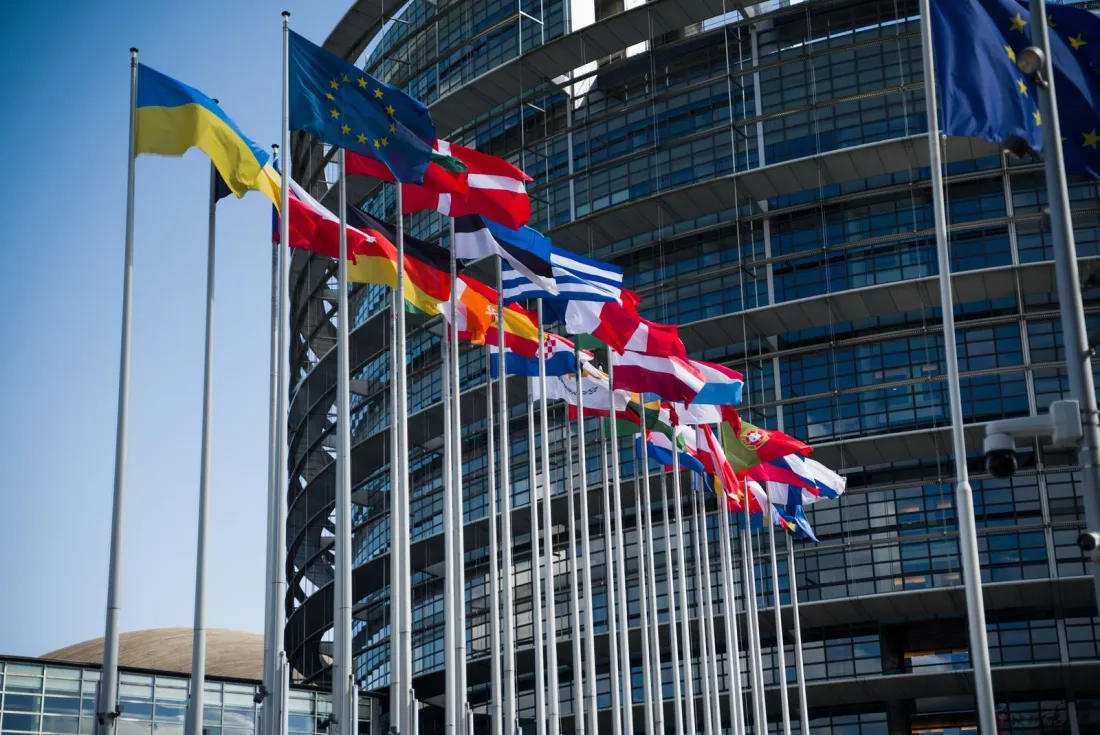
The EU takes a different route: collective redress is channelled through non-profit qualified entities under the Representative Actions Directive, with funding controls built into the directive rather than a separate funding regime. Directive (EU) 2020/1828 was adopted on 25 November 2020, had to be transposed by 26 June 2023 and applies from 25 June 2023.
- Who can sue. Cross-border actions must be brought by qualified entities that are non-profit, have at least 12 months of public consumer-protection activity, are independent of traders and publicly disclose their funding sources.
- Opt-in or opt-out. Article 9 leaves the choice to member states, but consumers not habitually resident in the forum state must opt in.
- Funding controls. Article 10 lets courts check for conflicts of interest, require a qualified entity to refuse problematic funding and, if necessary, reject its standing in a case; funding by a competitor of the defendant is prohibited.
Brussels has decided against going further. On 18 November 2025 Justice Commissioner Michael McGrath said the Commission would prioritise monitoring the directive's implementation over new legislation on third-party funding. National rules therefore decide how attractive each forum is. In Ireland, the chair of the Law Society's litigation committee has said the country is "an outlier in Europe" on third-party funding, a point that matters for any group action planned against companies based there. The Netherlands and Portugal, by contrast, are cited in the DBT document as EU states where opt-out claims are not restricted by claim type. For multinationals already facing EU regulatory action, such as that described in our coverage of Apple's DMA gatekeeper ruling, the practical risk is parallel claims in several forums under different funding rules.
What general counsel and funders should do now
With the consultation closing on 25 September and no funding bill yet before Parliament, the practical priorities differ depending on which side of a claim a business sits. Businesses that may face claims, funders and claimant firms each have steps to take now:
- Respond to the consultation. The certification, DBA, leniency and fee proposals affect defendants and funders directly, and responses are the main opportunity to shape the eventual bill.
- Audit existing LFAs. Agreements drafted as percentages before PACCAR, or amended afterwards, should be checked against Sony v Neill; the promised fix is prospective, so older agreements may not be rescued.
- Prepare certification arguments early. Defendants should gather evidence on class take-up, aggregate damages methodology and cost-benefit, which a statutory test would put at the centre.
- Plan for disclosure. The CJC's baseline rules would require early disclosure of the fact of funding, the funder and the source of funds; funders should expect that to become standard.
- Map multi-forum exposure. Groups active in the UK and the EU should assess where representative actions could be brought and how local funding rules differ.
Funded litigation raises questions of competition law, insurance, regulatory conduct and finance at once, and complex matters usually need specialist help. Corporate INTL's directory lists dispute resolution and litigation advisers, insurance specialists for adverse-costs cover, and advisers in England and across cross-border practice. Whatever the consultation produces, the answer to what is litigation funding in the UK will soon rest on statute rather than on case law and workarounds, and businesses on both sides should prepare for that shift now.
Frequently asked questions
What is litigation funding in the UK?
Litigation funding in the UK is usually third-party funding: an outside investor pays a party's legal costs and adverse-costs cover in return for a share of any damages or settlement, and loses its money if the case fails. It underpins most opt-out collective actions at the Competition Appeal Tribunal.
What was the PACCAR Supreme Court decision?
In R (PACCAR Inc) v Competition Appeal Tribunal, decided on 26 July 2023, the Supreme Court held that funding agreements giving the funder a percentage of the damages are damages-based agreements. Because such agreements are banned in opt-out collective proceedings, many funding agreements had to be rewritten on a multiple-of-investment basis.
Has the government reversed PACCAR?
Not yet. In December 2025 ministers committed to legislate, with prospective effect, that litigation funding agreements are not damages-based agreements, and to introduce proportionate regulation. No bill was announced in the May 2026 King's Speech, and the government says it will act when parliamentary time allows.
What did the Civil Justice Council recommend on litigation funding?
Its June 2025 final report made 58 recommendations, led by reversing PACCAR retrospectively and prospectively. It proposed light-touch regulation by the Lord Chancellor rather than the FCA, capital adequacy and disclosure rules, extra protections in consumer and collective cases, court approval of funder returns in collective proceedings, and no caps on returns.
What does the DBT consultation propose for opt-out collective actions?
Published on 17 July 2026 and closing on 25 September 2026, it proposes a stricter statutory certification test, lifting the ban on damages-based agreements, an early CAT indication on funder returns, budgets from both parties, settlement offers with cost consequences, possible civil immunity for Type A leniency applicants and fees for CAT claims.
How do I know if I'm part of a class action?
In a UK opt-out collective action you are included automatically if you fall within the class definition approved by the Competition Appeal Tribunal, unless you opt out within the period the tribunal sets. The government is consulting on listing claims on the CAT website to make them easier for class members to find and trust.
How much money can you get from a class action in the UK?
It depends on the settlement or award and on how many class members claim. In the only completed distribution the government could cite, Gutmann v SSWT, take-up was under one per cent and about £216,000 of a potential £25 million reached consumers. Unclaimed sums currently go to the Access to Justice Foundation.
What are the SRA's expectations on litigation funding?
The SRA's guidance of 9 July 2026 requires solicitors to check that funding is in the client's best interests, stop funders influencing decisions in ways that compromise client duties, disclose any financial interest in funder introductions, assess funders' capital adequacy, protect confidentiality and privilege, and manage money laundering risks.
Does the EU regulate third-party litigation funding?
Not through dedicated legislation. The Representative Actions Directive lets courts police conflicts of interest in funded actions and bans funding by a defendant's competitors, but in November 2025 the Commission said it would monitor the directive rather than propose new funding rules. National laws still differ widely.
Sources
- GOV.UK: Swifter and simpler competition redress, regulatory appeals and competition enforcement (consultation page)
- Department for Business and Trade: consultation document, July 2026
- Civil Justice Council: Review of Litigation Funding, Final Report (June 2025)
- UK Supreme Court: R (PACCAR Inc and others) v Competition Appeal Tribunal [2023] UKSC 28
- UK Supreme Court: Evans v Barclays Bank Plc and others [2025] UKSC 48, press summary
- GOV.UK: Increased access to justice for claimants to take on powerful organisations in court (19 December 2025)
- Mayer Brown: UK Government to mitigate impact of PACCAR (January 2026)
- Legal Futures: King's Speech, no litigation funding, SLAPPs or AML reform (May 2026)
- Law Society Gazette: Parliament offered chance to bring forward litigation funding regulation (September 2026)
- Aceris Law: UK litigation funding after PACCAR and Sony v Neill
- Solicitors Regulation Authority: Using or arranging third-party litigation funding (July 2026)
- Silicon Republic: Alphabet to resolve UK class action lawsuit for £260m (August 2026)
- Insurance Business: Apple applied one tracking rule to rivals and another to itself (September 2026)
- Osborne Clarke: Law Commission explores new class actions regime for consumer law claims (June 2026)
- EUR-Lex: Directive (EU) 2020/1828 on representative actions
- Law Society of Ireland Gazette: No EU legislation on third-party litigation funding (November 2025)
About this article
This analysis was researched and written by The Corporate INTL Newsroom, which covers cross-border legal, regulatory and business developments for lawyers, professional advisers and financiers in over 150 jurisdictions. It has been checked against the Department for Business and Trade's consultation document, the Civil Justice Council's final report, UK Supreme Court judgments, the Solicitors Regulation Authority's guidance, the text of the Representative Actions Directive and primary reporting. The government's response to the consultation and any funding bill had not been published at the time of writing. This article is general information, not legal advice; for advice on a specific matter, consult a qualified adviser. Last reviewed 14 September 2026. For more analysis like this, visit the Corporate INTL newsroom or subscribe to Corporate INTL.
Looking for an expert?
Tell us what you need and the Corporate INTL team will help you find the right lawyer or adviser from our members in 150+ jurisdictions.
Related stories

How to Enforce a Foreign Judgment: UK, EU and US Routes, Costs and Timelines

Is MTN Being Sued? What the US Anti-Terrorism Act Ruling Means for Multinationals