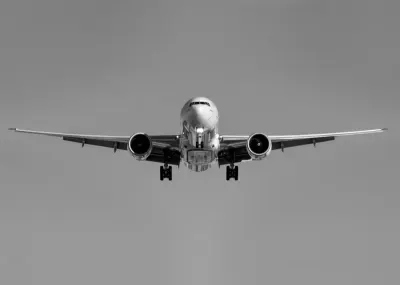
A Paris appeals court has returned a guilty verdict against both Airbus and Air France for corporate manslaughter over the 2009 crash of flight AF447, in which 228 passengers and crew died. The ruling overturns the acquittals both companies secured in 2023 and marks a significant moment in the long-running effort to attach criminal responsibility to the manufacturers and operators of complex transport systems. Each company was ordered to pay the maximum available fine of €225,000, a figure that is modest in financial terms but carries considerable symbolic weight given the reversal of the earlier verdict.
Corporate INTL Newsroom · Aviation
Paris Appeals Court Convicts Airbus and Air France Over AF447 Disaster
By The Corporate INTL Newsroom · 21 May 2026
The 2009 disaster
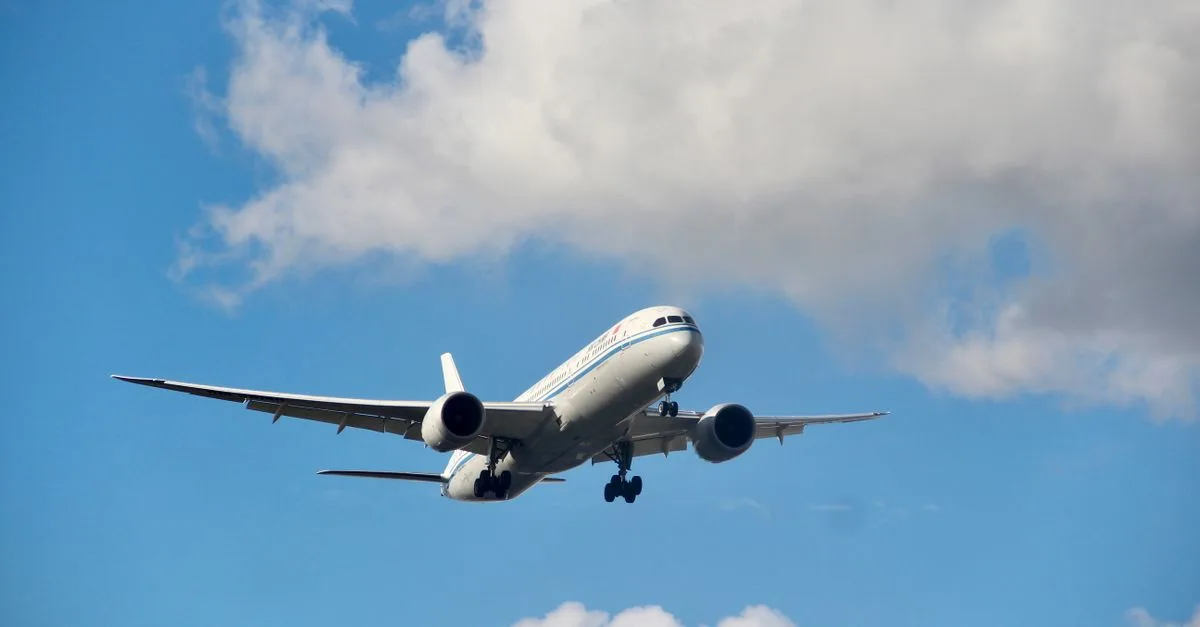
Flight AF447, an Airbus A330, was travelling from Rio de Janeiro to Paris when it was lost over the Atlantic Ocean in 2009. Investigators established that the aircraft's speed sensors iced over, feeding inconsistent readings to the cockpit. In the confusion that followed, the pilots lost control and the aircraft stalled before descending into the sea. All 228 people on board were killed. The technical sequence, and in particular the role of the pitot probes and the crew's response to the loss of reliable airspeed data, has been examined repeatedly in the years since.
What the court decided
The appeals court concluded that failures within both companies had contributed meaningfully to the disaster. Prosecutors focused on shortcomings in pilot training, technical oversight and the wider management of safety, arguing that these corporate failings crossed the threshold required for criminal liability. In accepting that case, the court departed from the first-instance decision, which had found that the causal link between the companies' conduct and the deaths could not be established to the criminal standard. The judgment therefore turns on questions of foreseeability and the adequacy of the measures taken before the flight.
Fines and the route to appeal
Following the guilty verdict, both companies were fined €225,000, the maximum permitted under the applicable provisions. Airbus has confirmed that it intends to take the matter to France's highest court, a step that could extend the proceedings by several more years. Any such appeal would test the appeal court's reasoning on causation and on the standard of corporate fault, and its outcome may prove more consequential than the fine itself. Air France's position on further appeal was not detailed in the same terms.
Corporate liability in transport cases
The decision reflects a broader willingness among courts to scrutinise internal corporate decision-making after major transport incidents. Central to the reasoning is the extent to which each organisation was, or should have been, aware of technical or training weaknesses before the events in question. Where prior knowledge of a hazard can be shown, the argument that a subsequent loss was unforeseeable becomes harder to sustain.
The wider implications extend well beyond a single flight. For manufacturers, operators and their advisers, the ruling underscores that documented awareness of a defect or a training gap can later be read as evidence of culpable failure, and that acquittal at first instance offers no guarantee of finality. It suggests that safety governance, record-keeping and the timely remediation of known risks will increasingly be assessed not only by regulators but by criminal courts, with corporate reputations and legal exposure alike resting on how organisations respond to warnings they have already received.
Looking for legal or business advice?
Tell us what you need and the Corporate INTL team will help you find the right lawyer or adviser from our members in 150+ jurisdictions.
1What you need2Your details
More from the newsroom
All latest news →