The Tesla racial discrimination trial opens on Monday 21 September 2026 in Oakland, where California's Civil Rights Department (CRD) will try to prove that Black workers at Tesla's Fremont assembly plant endured pervasive racial harassment, segregation into the hardest and lowest-paid jobs, and unequal pay and promotion. Alameda County Superior Court Judge Peter Borkon will hear the case without a jury, and the trial is scheduled to run through 30 October. Because California's Fair Employment and Housing Act (FEHA) does not carry the federal caps on compensatory and punitive damages, the financial exposure is open-ended. Tesla denies wrongdoing and no liability has been established. This analysis sets out what the state alleges, how Tesla has fought the case, why the remedies picture is so different from federal law, how the trial fits among the other race cases Tesla faces, and what general counsel at large employers should take from it.
Tesla Racial Discrimination Trial: What California Alleges and Why FEHA Has No Damages Cap
By The Corporate INTL Newsroom · 21 September 2026
The short answer: what the Tesla racial discrimination trial is about
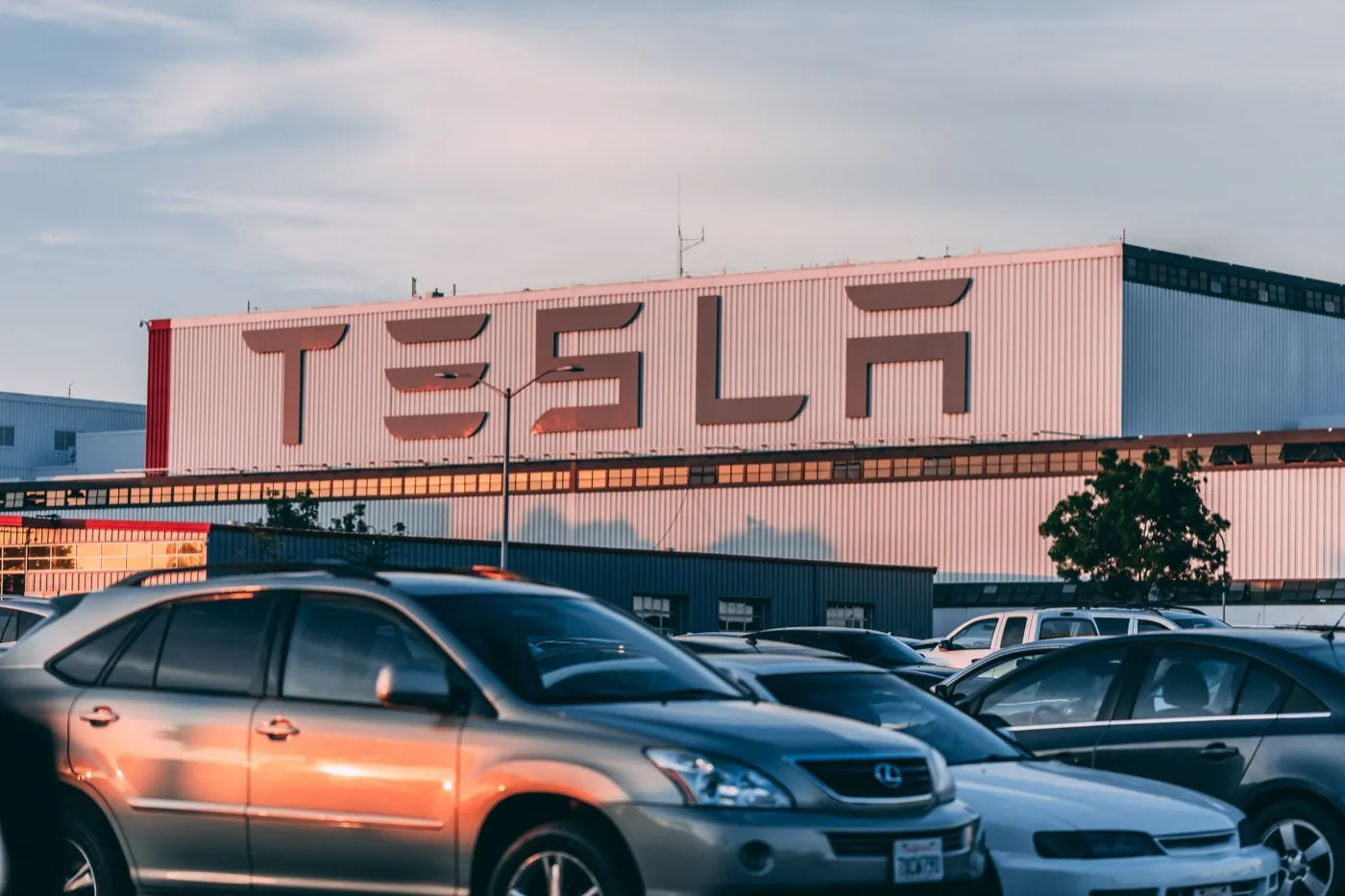
The direct answer is that California's civil rights regulator is suing Tesla, in its own name and in the public interest, for systemic race discrimination, harassment and retaliation against Black workers, principally at the Fremont factory. The case, Department of Fair Employment and Housing v. Tesla, Inc., No. 22CV006830, was filed in Alameda County Superior Court in February 2022 after what the agency described as a nearly three-year investigation prompted by hundreds of worker complaints. The department has since been renamed the Civil Rights Department, which is why the case now appears in reporting as Civil Rights Department v. Tesla.
Four features make this trial worth following closely for anyone who advises large employers:
- It is a state enforcement action, not a private suit. The regulator is suing on behalf of the state and all Black workers at Tesla, including people placed there by staffing agencies.
- A judge, not a jury, will decide liability. Judge Borkon has set the case down as a bench trial.
- The damages are uncapped. FEHA does not import the Title VII limits that restrict federal awards against large employers to $300,000 per claimant in compensatory and punitive damages combined.
- The state wants structural change. Beyond money for affected workers, the department is asking for court orders that would change how Tesla assigns, pays, disciplines and promotes staff.
For in-house teams, the practical question is less whether Tesla wins or loses than what the evidence being tested in Oakland says about how a regulator builds a systemic case. For support on US workplace exposure, employment and labour advisers in our directory cover California and federal practice.
Who is suing Tesla, and on what legal basis
The claimant is the California Civil Rights Department, the state agency that investigates and prosecutes civil rights violations, including employment discrimination and racial harassment. Its power to sue comes from section 12965 of the California Government Code, which allows the director to bring a civil action "in the name of the department, acting in the public interest" on behalf of aggrieved people. Where the department treats a complaint as a group or class matter, the statute gives it two years from the filing of the complaint to sue, rather than the one year that applies to individual complaints.
The department's own case FAQs explain that the lawsuit was filed on 9 February 2022, amended on 11 March 2022, and brought "on behalf of the state in the public interest and all Black and/or African American workers at Tesla". Crucially, the agency says the action covers workers supplied through staffing agencies, not only direct employees. That matters in a manufacturing workforce where contract labour is common, and it widens the population whose treatment the court will examine.
The legal claims arise under two statutes. The first is FEHA, which makes it unlawful to discriminate in the terms of employment, to harass, to retaliate against people who complain, and, under Government Code section 12940(k), "to fail to take all reasonable steps necessary to prevent discrimination and harassment from occurring". The second is the California Equal Pay Act, which the department invoked for its pay claims, according to its February 2022 announcement.
The standard for co-worker harassment is important to the way the trial will run. Under section 12940(j), harassment by a non-supervisory employee is unlawful if the employer "knows or should have known of this conduct and fails to take immediate and appropriate corrective action". Much of the evidence in Oakland will therefore go to what Tesla's managers and human resources staff knew, and what they did about it.
What the Civil Rights Department alleges
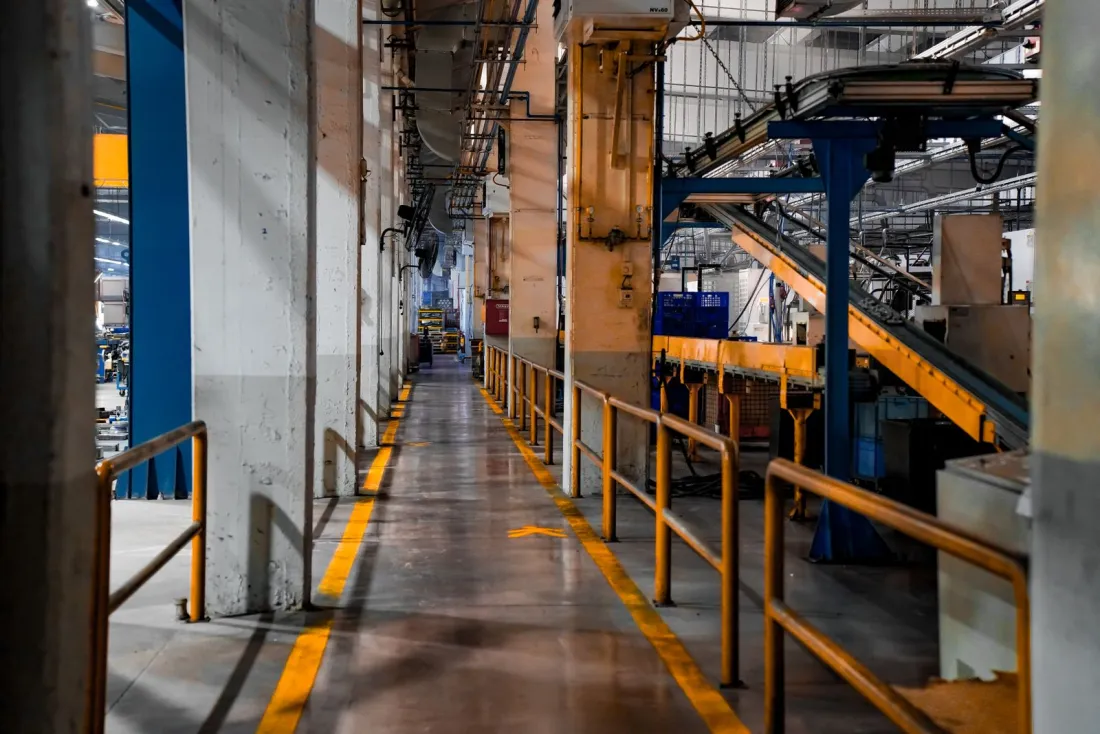
The department alleges that Tesla ran a racially segregated workplace at Fremont in which Black workers heard slurs almost daily, saw racist graffiti in common areas, and were concentrated in the most physically demanding and lowest-paid roles. When it filed suit, the agency's director, Kevin Kish, said the department had found evidence that "Tesla operates a racially segregated workplace where Black workers are subjected to racial slurs and discriminated against in job assignments, discipline, pay, and promotion".
The agency's case, as reported ahead of trial, rests on several strands:
- Harassment. The complaint describes near-constant racial slurs and racist graffiti, including swastikas, in shared work areas, and says complaints were met with indifference.
- Segregation and assignment. Black workers, the agency says, were steered into the lowest levels of the workforce and are severely under-represented among executives, senior officials and managers.
- Pay. The department's analysis found that Black workers earned an average of $1,533 less per month than white workers between June 2018 and June 2024.
- Discipline, promotion and termination. Black workers were allegedly disciplined more harshly and denied advancement.
- Retaliation. The agency alleges that workers who complained suffered for it.
A further strand concerns the capacity of Tesla's human resources function. According to HR Dive's account of the pre-trial record, the department found that in 2016 Tesla had 33 human resources professionals and managers serving 19,916 workers in California, a ratio of about one to 604, and that by 2020 the ratio had grown to roughly one to 740. The agency's argument is that a function that thin could not investigate complaints properly, which goes directly to the "reasonable steps" and "immediate and appropriate corrective action" tests.
At the time of filing, the department put Tesla's California workforce at more than 36,200 direct employees plus thousands of contract workers. The department's FAQs note that Tesla also has a second California factory, at Lathrop, but the allegations centre on Fremont.
How Tesla has fought the case, and the pre-trial rulings
Tesla denies the allegations and says it investigates complaints, disciplines or dismisses employees found to have engaged in misconduct, and does not tolerate racial harassment or discrimination. It has contested the case at every stage since 2022.
Its first line of attack targeted the regulator itself. Tesla filed a cross-complaint arguing that the department had failed to give it notice of the allegations or an opportunity to settle before suing, and had adopted "underground regulations" to sidestep its own pre-suit procedures. In January 2023 Judge Evelio Grillo dismissed that counter-suit in a tentative ruling, having already held in August 2022 that Tesla's attack on the agency's procedures was not a valid defence to the discrimination claims. Tesla has also said the lawsuit is politically motivated.
The second line was evidential. Tesla filed declarations from 228 employees saying they had not witnessed the conduct alleged, Electrek reported. On 27 May 2026, however, the court refused Tesla's bid to dispose of most of the claims before trial. Judge Borkon found enough factual disputes over the alleged harassment, discrimination and retaliation to require a trial.
For defence counsel, the pattern is instructive. Procedural challenges to a regulator's pre-suit conduct rarely end a case of this kind; they tend to delay it. And "no-see" declarations from current employees, while useful, do not usually defeat a claim that turns on documentary records, pay data and the testimony of those who did complain.
A judge, not a jury: why the bench trial matters
The Tesla racial discrimination trial will be decided by Judge Borkon alone, and that choice shapes both sides' strategies. There is no jury to persuade with emotive testimony; instead, the outcome turns on how one experienced judge weighs years of witness evidence, internal records, HR files and competing statistical analyses of pay and job assignment.
Three consequences follow. First, the statistical case becomes central. A judge can be expected to scrutinise the department's regression work on pay and placement closely, and Tesla's experts will attack the model's controls: tenure, shift, job family, location and performance. Second, the findings will come with reasons. A bench judgment sets out findings of fact and conclusions of law, which makes it more useful as guidance for other employers and more targeted on appeal than a general jury verdict. Third, the remedial phase is likely to be more tailored. If liability is found, the same judge who heard the evidence decides what changes Tesla must make.
The contrast with Tesla's history is stark. The best-known award against Tesla in a race case came from a federal jury: $137 million to former elevator operator Owen Diaz in October 2021, made up of $6.9 million for emotional distress and $130 million in punitive damages. Judge William Orrick cut it to $15 million; Diaz rejected that figure and a second jury awarded about $3.2 million in April 2023. The parties then settled confidentially in March 2024. Jury awards in these cases have swung dramatically; a bench trial reduces that volatility, though it does not reduce the ceiling.
Readers following other high-exposure trials may compare the dynamics with jury proceedings such as Meta's Tennessee consumer-protection trial, where the fact-finder's reaction to evidence carries very different risks.
Why FEHA has no damages cap, and how it compares with federal law
FEHA has no statutory cap because California chose not to copy the limits Congress attached to Title VII in the Civil Rights Act of 1991. Under 42 U.S.C. section 1981a(b)(3), compensatory and punitive damages under Title VII are capped on a sliding scale, from $50,000 for employers with 15 to 100 employees up to $300,000 for employers with more than 500. Back pay sits outside the cap, and the caps do not apply to race claims under 42 U.S.C. section 1981.
Under FEHA, by contrast, section 12965 allows the court to grant "any relief a court is empowered to grant" in a civil action, including actual damages and injunctive relief, with reasonable attorney's fees available to a prevailing party, including the department. That is why reporting on the trial has stressed that Tesla could be on the hook for many millions of dollars if it loses.
| Issue | California FEHA (this case) | Federal Title VII (EEOC case) | 42 U.S.C. section 1981 |
|---|---|---|---|
| Who can sue | CRD in its own name, or individuals after a right-to-sue notice | EEOC, or individuals after a right-to-sue notice | Individuals directly |
| Cap on compensatory and punitive damages | None | $50,000 to $300,000 per claimant by employer size | None |
| Back pay | Recoverable | Recoverable, outside the cap | Recoverable |
| Injunctive relief | Yes | Yes | Yes |
| Statutory source of the cap | None in section 12965 | 42 U.S.C. section 1981a(b)(3) | Excluded by section 1981a(b)(4) |
For multinational employers used to thinking in federal terms, the table explains why California litigation is often the larger risk. The same facts can generate an uncapped state claim alongside a capped federal one. If you are assessing that exposure for a US subsidiary, advisers in California and across the United States can help map the overlap.
The wider web of Tesla race litigation
The state trial is one of several proceedings over the treatment of Black workers at Fremont, and each has taken a different route. Answering the frequent search "how many lawsuits does Tesla have against them" is difficult, because hundreds of individual claims now sit alongside the two agency cases.
| Case | Forum | Key dates | Status at 21 September 2026 |
|---|---|---|---|
| Diaz v. Tesla (individual) | US District Court, Northern District of California | $137m verdict October 2021; cut to $15m; $3.2m on retrial April 2023 | Settled confidentially, March 2024 |
| Vaughn v. Tesla (class action) | Alameda County Superior Court (RG17882082) | Filed 2017; class certified 2024; decertified November 2025 | Three named plaintiffs settled in 2026; others continue individually |
| Smith v. Superior Court (joinder of 440 former class members) | California Court of Appeal, First District, Division Five | Decided 30 June 2026 | Five multi-plaintiff suits allowed to proceed |
| EEOC v. Tesla | US District Court, Northern District of California (4:23-cv-04984) | Filed 28 September 2023 | Referred to private mediation in January 2026 |
| Civil Rights Department v. Tesla | Alameda County Superior Court (22CV006830) | Filed February 2022 | Bench trial opens 21 September 2026, listed to 30 October |
The overlap matters for strategy. Findings in one forum can influence settlement values in the others, and evidence gathered in the class action and the agency cases has been deployed across them. Employers facing parallel agency and private actions should coordinate their defence and document preservation from the start, a point our dispute resolution and litigation specialists regularly make.
How the Vaughn class action unravelled, and what the joinder ruling means
The private class action shows how hard it is to try a workplace harassment case at scale, and why the state's enforcement route may prove more durable. Marcus Vaughn's lawsuit, filed in 2017, was certified as a class action in 2024 covering roughly 6,000 Black workers at Fremont. In November 2025, Judge Borkon decertified the class, finding that the premise of a manageable trial had collapsed when not enough randomly selected class members came forward to testify.
The plaintiffs' lawyers responded by filing hundreds of individual claims and grouping former class members into multi-plaintiff complaints. When the trial court ordered five of those complaints broken up, leaving only the first-named plaintiff in each, the Court of Appeal intervened. In Smith v. Superior Court, decided on 30 June 2026, the First District held that the 440 plaintiffs, grouped in complaints of between 54 and 98 people, had been properly joined because their claims arose from the same "series of transactions or occurrences": an alleged pattern of ignoring racist conduct at a single factory.
Meanwhile, three of the named plaintiffs in Vaughn, Marcus Vaughn, Titus McCaleb and Monica Chatman, reached confidential settlements, disclosed in a June 2026 court filing, while two other named plaintiffs and hundreds of workers pressed on.
The lesson for employers is double-edged. Decertification is a real defence win, but it rarely makes the underlying claims disappear; it converts one manageable case into many. The same tension appears in shareholder litigation, as in the Fourth Circuit's reversal of class certification against Boeing. And an agency enforcement action does not depend on class certification at all, which is why the state case may carry more weight than any private claim.
The federal EEOC case and its move to mediation
The US Equal Employment Opportunity Commission sued Tesla separately on 28 September 2023, alleging that Black employees at Fremont had been subjected to racial harassment, including slurs and graffiti with racist symbols, since at least 2015, and that Tesla retaliated against those who objected. The claims are brought under Title VII and the agency seeks compensatory and punitive damages, back pay and injunctive relief. The EEOC brought the suit alone, following a commissioner's charge; it is not a joint action with the Department of Justice.
In January 2026 the parties agreed to private mediation. US District Judge Jacqueline Scott Corley in San Francisco paused some discovery deadlines so that talks could take priority, and the parties were to report to the court by 17 June on next steps if settlement failed, Insurance Journal reported. Tesla has accused the agency of "headline-chasing" and denies knowledge of the harassment alleged.
The federal case is narrower than the state action: it focuses on harassment and retaliation, whereas the state case adds pay, assignment, promotion and segregation claims. It is also subject to the Title VII caps described above. That combination explains why the California proceeding is widely regarded as the higher-stakes case.
What the pay and HR evidence tells other employers
The most transferable part of the Tesla racial discrimination trial is the evidence base. The state's pay analysis draws on data the company itself holds, and California now requires large employers to hand much of that data to the same regulator every year.
Under Government Code section 12999, private employers with 100 or more payroll employees, and private client employers of 100 or more labour contractor employees, must file annual pay data reports with the Civil Rights Department. The reports for 2025 were due on 13 May 2026. In practice, that means the agency already holds pay, demographic and workforce data for many large employers before any investigation begins.
Employers should draw three conclusions from the Tesla evidence:
- Pay gaps by race are litigation evidence. An unexplained monthly gap of the kind alleged here will be the first exhibit in any systemic case. Privileged pay-equity analysis, run with counsel, lets a company find and fix gaps before a regulator does.
- Job placement data matters as much as pay. A segregation claim is built from who works where. Assignment and promotion rates by race should be reviewed alongside compensation.
- HR capacity is a compliance issue. A ratio of one HR professional to more than 600 workers is now part of a regulator's case that an employer failed to take reasonable steps. Complaint-handling resources should scale with headcount.
These issues are not confined to California. Employers with European operations are already preparing for pay-gap reporting and joint pay assessments under the EU Pay Transparency Directive, and UK retailers have faced large-scale comparator litigation, as in Tesco's Court of Appeal defeat on equal pay.
Lessons for in-house counsel: a practical checklist
Whatever Judge Borkon decides, general counsel can use the case now to test their own exposure. The following steps reflect the issues in dispute in Oakland:
- Audit complaint handling. Confirm that every harassment report is logged, investigated within a defined time and closed with a documented outcome. The FEHA standard is "immediate and appropriate corrective action".
- Check contractor coverage. The state case covers staffing-agency workers. Make sure agency staff can report harassment and that reports reach the host employer.
- Run privileged pay and placement reviews. Analyse pay, assignment, discipline and promotion by race and sex, and document the business reasons for any gaps.
- Reconcile regulatory filings. Pay data reports filed under section 12999 should be consistent with internal analyses. Inconsistencies invite questions.
- Scale HR resources. Benchmark HR staffing to workforce size and complaint volume, and record the rationale.
- Remove visible hostility quickly. Graffiti and symbols in shared areas were central to the allegations. Facilities teams need a same-day removal and reporting protocol.
- Prepare for parallel proceedings. Agency actions, class actions and individual claims can run side by side. A single litigation hold and a coordinated narrative reduce the risk of inconsistent positions.
- Brief the board. Uncapped state exposure and injunctive relief are governance risks as well as legal ones, and belong on the risk register.
Where allegations surface internally, an independent investigation run by internal and government investigations specialists is often the most credible way to establish the facts before a regulator does. Broader programmes can be supported by risk management advisers.
Why the case matters beyond California
For readers outside the United States, the trial is a reminder that US state regulators can be as consequential as federal agencies, and that a subsidiary's workplace practices can create group-level financial and reputational exposure. Discrimination claims against global employers are rising across jurisdictions: see our coverage of the 21-count bias and retaliation suit against JPMorgan and the discrimination claim over Coca-Cola's diversity targets, which shows that diversity programmes themselves can be challenged.
The funding environment also shapes how these cases are brought. In the UK, group claims increasingly rely on third-party capital, a trend discussed in our analysis of litigation funding in the UK. In the Tesla litigation, by contrast, the state carries the cost of the agency case, which removes the funding and participation problems that sank the private class action.
Manufacturers in particular should note the setting. The allegations concern a factory floor with shift work, contract labour and large supervisory spans, the conditions in which harassment can go unreported. Sector specialists in manufacturing can help translate the lessons into site-level controls.
What to watch as the trial runs to 30 October
Several questions will determine the outcome and the case's wider influence:
- The statistics. Whether the court accepts the department's model of the pay gap and job placement, or Tesla's alternative explanations.
- Knowledge and response. How the court assesses what Tesla's managers and HR team knew about harassment and how they responded, the heart of the section 12940(j) and (k) claims.
- The scope of any remedy. If liability is found, whether the court orders monitoring, training, pay adjustments or changes to assignment and promotion processes, and for how long.
- Knock-on effects. How a judgment affects the joined individual suits and the EEOC mediation.
- Appeal. A bench judgment with detailed findings is likely to be appealed by whichever side loses, so any ruling may be only the first word.
The Tesla racial discrimination trial is ultimately a test of whether a state regulator can prove systemic discrimination at one of the world's most scrutinised employers without a jury and without class certification. For employers everywhere, the safest assumption is that the pay, placement and complaint records they keep today are the evidence a regulator will rely on tomorrow. Tesla denies the allegations, and the court has yet to hear the evidence in full.
Frequently asked questions
What is the Tesla racial discrimination trial about?
California's Civil Rights Department alleges that Tesla allowed pervasive racial harassment of Black workers at its Fremont factory, segregated them into lower-paid and harder jobs, paid them less, disciplined them more harshly, denied them promotion and retaliated against those who complained. Tesla denies wrongdoing and no liability has been established.
Is the Tesla case being heard by a jury?
No. It is a bench trial before Alameda County Superior Court Judge Peter Borkon in Oakland. The judge alone will decide whether Tesla is liable under California civil rights law. The trial opened on 21 September 2026 and is scheduled to run through 30 October 2026.
Are there damage caps under FEHA?
No. California's Fair Employment and Housing Act does not impose the Title VII caps on compensatory and punitive damages, which under federal law range from $50,000 to $300,000 per claimant depending on employer size. A court hearing a FEHA case can also order injunctive relief and award attorney's fees to a prevailing claimant.
Did Tesla settle the Black workers' lawsuit?
Not the state case, which has gone to trial. Tesla settled Owen Diaz's individual case confidentially in March 2024, and three named plaintiffs in the decertified Vaughn class action reached confidential settlements in 2026. Hundreds of other individual claims, the EEOC's federal case and the state enforcement action remain unresolved.
How many lawsuits does Tesla have against them over race at Fremont?
There is no single figure. Beyond the state and EEOC actions, hundreds of former workers are pursuing individual or grouped claims after the Vaughn class action, which once covered about 6,000 Black workers, was decertified in November 2025. In June 2026 the Court of Appeal allowed 440 of them to proceed in five joint complaints.
How is the California case different from the EEOC case?
The EEOC case, filed in federal court in September 2023 under Title VII, focuses on harassment and retaliation and is subject to federal damages caps. The state case, filed in February 2022 under FEHA and the California Equal Pay Act, also covers pay, job assignment, promotion and segregation, with no statutory damages cap.
What pay gap does the Civil Rights Department allege?
The department's analysis found that Black workers at Tesla earned an average of $1,533 less per month than white workers between June 2018 and June 2024. Tesla contests the department's claims, and the court will weigh competing statistical evidence at trial.
What was the outcome of the Owen Diaz case against Tesla?
A federal jury awarded Diaz about $137 million in October 2021. The judge reduced it to $15 million, Diaz sought a new trial, and a second jury awarded about $3.2 million in April 2023. The parties settled confidentially in March 2024.
What should employers do in response to the Tesla case?
Review complaint handling and investigation timelines, include contract workers in reporting channels, run privileged pay, placement and promotion analyses, make sure pay data reports are consistent with internal data, resource HR in proportion to headcount, and brief the board on uncapped state-law exposure.
Sources
- Claims Journal (Reuters): Tesla faces major trial for alleged bias against Black workers, after years of lawsuits (21 September 2026)
- Law Commentary: Tesla goes to trial over California's claims of widespread race discrimination at Fremont factory (21 September 2026)
- California Civil Rights Department: DFEH sues Tesla, Inc. for race discrimination and harassment (10 February 2022)
- California Civil Rights Department: FAQs, CRD v. Tesla, Inc., Case No. 22CV006830
- California Government Code section 12940: unlawful employment practices
- California Government Code section 12965: civil actions by the department
- California Civil Rights Department: Pay data reporting
- 42 U.S.C. section 1981a: damages in cases of intentional discrimination (Legal Information Institute)
- HR Dive: Lawsuit pointing to understaffed HR department at Tesla cleared for jury trial (May 2026)
- Electrek: Tesla partly settles racism lawsuit as hundreds of workers press on (27 July 2026)
- FBC News (Reuters): Judge rejects Tesla's challenge to Calif. agency in race bias lawsuit (January 2023)
- KQED: Tesla dodges class action case, now faces hundreds of individual race-harassment claims (17 November 2025)
- Smith v. Superior Court (Tesla, Inc.), Court of Appeal, First District, Division Five, No. A174789 (30 June 2026)
- US EEOC: EEOC sues Tesla for racial harassment and retaliation (28 September 2023)
- Insurance Journal (Reuters): Tesla agrees to mediation that could resolve EEOC's racism lawsuit (14 January 2026)
- Diaz v. Tesla, Inc. (case history)
- Spectrum News (AP): Former Tesla worker settles discrimination case, ending appeals over lowered $3.2 million verdict (16 March 2024)
About this article
This analysis was researched and written by The Corporate INTL Newsroom, which covers cross-border legal, regulatory and business developments for lawyers, professional advisers and financiers in over 150 jurisdictions. It has been checked against the California Government Code, federal statute, the California Civil Rights Department's own filings and announcements, court decisions and primary reporting. It describes the litigation as it stood when the trial opened; no court has found Tesla liable, and Tesla denies the allegations. This article is general information, not legal advice; for advice on a specific matter, consult a qualified adviser. Last reviewed 21 September 2026. For more analysis like this, visit the Corporate INTL newsroom or subscribe to Corporate INTL.
Looking for an expert?
Tell us what you need and the Corporate INTL team will help you find the right lawyer or adviser from our members in 150+ jurisdictions.