The Goldman Sachs Supreme Court case will decide whether a bankruptcy court can refuse to send a debtor's claim to arbitration when the debtor signed a valid arbitration clause. On Friday 6 November 2026 the US Supreme Court granted Goldman Sachs Bank USA's petition in Goldman Sachs Bank USA v. Brown, No. 25-1408, after the bank argued that the Fourth Circuit had split from the Second Circuit on the point. The dispute began with two Apple Card holders in Virginia. For card issuers, consumer lenders and the restructuring lawyers who advise them, the ruling will settle how far the Federal Arbitration Act reaches inside a bankruptcy case.
Corporate INTL Newsroom · Insolvency & Restructuring
Goldman Sachs Supreme Court Case: Can Bankruptcy Courts Refuse Arbitration?
By The Corporate INTL Newsroom · 7 November 2026
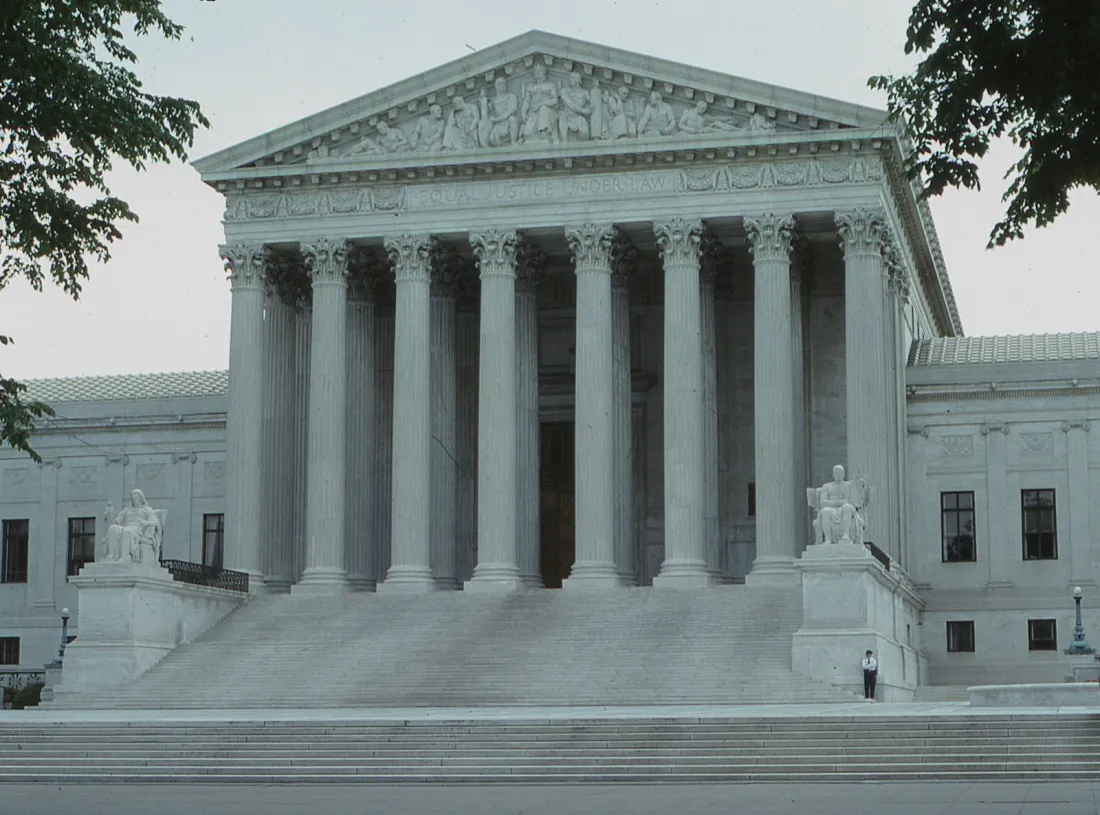
What the Supreme Court agreed to decide
The justices will answer one question, framed by Goldman Sachs in its petition for certiorari: whether, and under what circumstances, a bankruptcy court may override the Federal Arbitration Act and refuse to honour a valid arbitration agreement with respect to Section 362(k) claims.
Section 362(k) is the Bankruptcy Code's private damages remedy. Under 11 U.S.C. § 362, filing a petition operates as an automatic stay of collection efforts against the debtor, and an individual injured by any wilful violation of the stay "shall recover actual damages, including costs and attorneys' fees", and may recover punitive damages in appropriate circumstances. On the other side sits 9 U.S.C. § 2, which makes written arbitration agreements "valid, irrevocable, and enforceable", save on grounds that would revoke any contract.
The petition was filed on 16 June 2026 and was considered at four consecutive conferences before the grant, according to SCOTUSblog's report of the order. It joins the docket for the 2026 to 2027 term.
The dispute: Apple Card debts and the automatic stay
Goldman Sachs issued and ran Apple Card accounts after partnering with Apple in 2019. Rhea Ann Brown and Gregory Kevin Maze were approved for accounts in late 2020 and accepted a customer agreement with an individual arbitration clause and a class arbitration waiver. Brown filed for Chapter 13 bankruptcy in June 2023; Maze filed for Chapter 7 in November 2023 and received his discharge in February 2024.
According to the Fourth Circuit's published opinion, the debtors allege that the bank kept contacting them by email, letter and telephone for months after it was notified of the filings. In March 2024 they started an adversary proceeding in the US Bankruptcy Court for the Western District of Virginia, seeking damages, punitive damages and fees for wilful stay violations, and they sought to represent a nationwide class of consumer debtors. The bank moved to compel individual arbitration. No court has found the bank liable.

How each court has ruled so far
Three courts have refused to compel arbitration, on differing reasoning.
| Court | Date | Outcome | Key reasoning |
|---|---|---|---|
| US Bankruptcy Court, W.D. Virginia | 15 July 2024 | Arbitration refused | Section 362(k) claim is a core proceeding; court used its discretion to keep it |
| US District Court, W.D. Virginia | 17 March 2025 | Affirmed | Rejected discretion based on core status alone, but found an inherent conflict with the Code |
| US Court of Appeals, Fourth Circuit | 18 March 2026 | Affirmed, 2 to 1 | Arbitration would conflict with the Code's policies; Judge King dissented |
| US Supreme Court | 6 November 2026 | Certiorari granted | Argument and decision still to come |
Judge Niemeyer, joined by Judge Harris, accepted that there were "substantial arguments on both sides" but held that arbitration "would interfere and conflict with the strong and established policies and purposes of the Bankruptcy Code". The majority gave five reasons: arbitration would undermine the centralisation of claims, weaken the shield of the automatic stay, threaten uniform enforcement of bankruptcy law, bypass the expertise of bankruptcy judges, and blunt punitive damages, whose deterrent purpose "cannot function in the dark" of a private forum. It added that the Bankruptcy Code "presents a unique statutory context" the Supreme Court has not yet addressed.
Judge King's dissent was blunt. In his view there was "no conflict at all", because the claims would neither add nor remove a creditor nor frustrate distribution, and the majority had "needlessly created a circuit split with the Second Circuit".
The circuit split: the Second Circuit's Hill test
The split that drew the Supreme Court in is with MBNA America Bank, N.A. v. Hill, 436 F.3d 104 (2d Cir. 2006). There, a Chapter 7 debtor who had received her discharge brought a putative class claim for stay violations, and the Second Circuit ordered arbitration. Goldman's petition describes Hill as requiring a particularised inquiry into the claim and the specific bankruptcy, with the most important question being whether arbitration would interfere with or affect the distribution of the estate.
The Fourth Circuit distinguished Hill as a case of "peculiar circumstances", a closed Chapter 7 case. Goldman replies that Maze's case is exactly that, and that Brown's Chapter 13 plan was confirmed without relying on any damages recovery. On the merits, the bank relies on Epic Systems v. Lewis (2018) and the line of cases holding that Congress must give a clear and manifest command before the Arbitration Act yields to a federal statute.
The debtors' answer: Section 105(a) and a dismissed complaint
Brown and Maze urged the Court not to take the case. Their brief in opposition argues that Goldman concedes an arbitration agreement cannot stop a bankruptcy court enforcing the stay through contempt under 11 U.S.C. § 105(a). If so, they say, sending only the Section 362(k) damages request to arbitration would force the same dispute into two forums and risk conflicting results. They add that Hill never considered Section 105(a) and that the question seldom arises.
A further twist came in September. In a supplemental brief, the debtors told the Court that on 10 September 2026 the bankruptcy court dismissed their adversary complaint without prejudice. The court said there could be "little debate" that a wilful violation was plausibly alleged, but found that actual damages were not adequately pleaded, and gave 21 days to amend. The debtors said an amended complaint would invoke Section 105(a) expressly. The Court granted review regardless.
Why lenders and creditors are watching
The stakes are commercial as much as doctrinal. Goldman told the Court that arbitration clauses appear in the standard contracts of nearly every major card issuer, auto lender and consumer finance company, and that more than 530,000 non-business bankruptcy petitions were filed in the 2025 fiscal year, each triggering the stay. It warned that the reasoning could spread to discharge injunction claims and avoidance actions.
The American Bankers Association's amicus brief made a similar case, saying a circuit-dependent rule complicates contract drafting, compliance systems and litigation reserves, and invites costly fights over arbitrability before anyone reaches the merits. Arbitration with a class waiver would also end the nationwide class claim. Teams weighing arbitration against litigation for consumer portfolios now face a year of uncertainty in the Fourth Circuit's states.

The cross-border angle: a different balance in English law
The same tension between insolvency and arbitration has played out in common law courts, though on creditor petitions rather than debtor damages claims. In Sian Participation Corp v Halimeda International [2024] UKPC 16, an appeal from the British Virgin Islands, the Privy Council held that a creditor's winding-up petition should be stayed in favour of arbitration only where the debt is disputed on genuine and substantial grounds, overruling the English Court of Appeal's approach in Salford Estates v Altomart, as Lewis Silkin's analysis of the judgment explains. The Board directed that its ruling represents English law.
Groups with lending books in the United States, England and offshore centres such as the British Virgin Islands will want consistent drafting across jurisdictions. Our guides to the seat and venue of an arbitration and to enforcing arbitral awards internationally cover the clause choices. Recognition of foreign insolvencies is also widening, as Malaysia's new cross-border insolvency law shows.
What happens next and what to do now
SCOTUSblog expects argument sometime next year, with a decision likely by late June or early July. Until then the Fourth Circuit's ruling binds courts in Maryland, Virginia, West Virginia, North Carolina and South Carolina, and Hill remains the law in the Second Circuit. Practical steps for lenders and their advisers include:
- Audit stay compliance. The surest way to avoid a Section 362(k) claim is to stop collection promptly once notice of a filing arrives, across email, letters and calls.
- Map exposure by circuit. Identify pending stay or discharge claims in Fourth Circuit districts, where motions to compel are now likely to fail.
- Review arbitration clauses. Check delegation wording, class waivers and carve-outs.
Creditors facing a borrower's insolvency should also understand the wider process, from the US stay to administration in the UK. Advisers in insolvency and restructuring, banking and finance and dispute resolution, including firms in the United States, can assess the position for a specific portfolio.
Frequently asked questions
What is the Goldman Sachs Supreme Court case about?
Goldman Sachs Bank USA v. Brown asks whether a bankruptcy court can refuse to enforce a valid arbitration agreement covering a debtor's Section 362(k) damages claim for a wilful automatic stay violation. The Supreme Court granted review on 6 November 2026 after the Fourth Circuit refused to compel arbitration.
What is a Section 362(k) claim?
It is the Bankruptcy Code's private cause of action for individuals injured by a wilful violation of the automatic stay. A successful debtor recovers actual damages, including costs and attorneys' fees, and may recover punitive damages in appropriate circumstances under 11 U.S.C. § 362(k).
Why did the Fourth Circuit refuse arbitration?
The majority held that arbitrating Section 362(k) claims would conflict with the Bankruptcy Code's purposes: centralising claims, protecting the automatic stay, uniform enforcement, bankruptcy judges' expertise and the public deterrence of punitive damages. Judge King dissented, finding no inherent conflict.
What did the Second Circuit decide in MBNA v Hill?
In 2006 the Second Circuit compelled arbitration of a stay violation claim brought by a discharged Chapter 7 debtor. It asked whether arbitration would interfere with or affect distribution of the estate, and found it would not, so the bankruptcy court lacked discretion to refuse arbitration.
When will the Supreme Court decide the case?
SCOTUSblog expects oral argument sometime in 2027, with a decision likely by late June or early July. Until then, the Fourth Circuit ruling applies in its five states and the Second Circuit's Hill approach applies in New York, Connecticut and Vermont.
Sources
- Supreme Court of the United States, docket No. 25-1408, Goldman Sachs Bank USA v. Brown (petition granted 6 November 2026)
- Goldman Sachs Bank USA, petition for a writ of certiorari with appendix (16 June 2026)
- US Court of Appeals for the Fourth Circuit, Goldman Sachs Bank USA v. Brown, No. 25-1439 (18 March 2026)
- Brief of respondents Rhea Ann Brown and Gregory Kevin Maze in opposition (24 August 2026)
- Supplemental brief for respondents (14 September 2026)
- Brief of the American Bankers Association as amicus curiae (23 July 2026)
- 11 U.S.C. § 362, automatic stay (Legal Information Institute)
- 9 U.S.C. § 2, Federal Arbitration Act (Legal Information Institute)
- SCOTUSblog, Supreme Court agrees to weigh in on Goldman Sachs arbitration dispute (6 November 2026)
- Lewis Silkin, Privy Council directs English courts to adopt new test on staying a creditor's winding-up petition (9 July 2024)
About this article
This analysis was researched and written by The Corporate INTL Newsroom, which covers cross-border legal, regulatory and business developments for lawyers, professional advisers and financiers in over 150 jurisdictions. It was checked against the Supreme Court docket, the parties' briefs and the Fourth Circuit's judgment. It is general information, not legal advice; for a specific matter, consult a qualified adviser. Last reviewed 7 November 2026. Read more cross-border coverage in our newsroom or subscribe for updates.
Looking for legal or business advice?
Tell us what you need and the Corporate INTL team will help you find the right lawyer or adviser from our members in 150+ jurisdictions.
1What you need2Your details
More from the newsroom
All latest news → Related stories
Insolvency & Restructuring
Administration vs Liquidation: Control, Directors, Staff, Creditors and Which Suits Your Company

Insolvency & Restructuring
Company Insolvencies September 2026: Down 5% as Administrations Fall 44%
Insolvency & Restructuring