The UK Supreme Court has confirmed that local authorities may restrict which councillors are entitled to vote on a planning application, ruling that internal standing orders can lawfully confine participation to members who attended the meeting at which the matter was first considered. The decision arose from a long-running dispute over a redevelopment of the Old Truman Brewery site in Spitalfields, east London, and clarifies the scope of a council's power to govern its own committee proceedings. The court dismissed the challenge unanimously, finding that no absolute personal right to vote exists where a deferred application returns to a committee whose membership has since changed.
Corporate INTL Newsroom · Regulatory & Public
UK Supreme Court Upholds Council Power to Restrict Who Votes on Planning Applications
By The Corporate INTL Newsroom · 1 June 2026
The Spitalfields Dispute
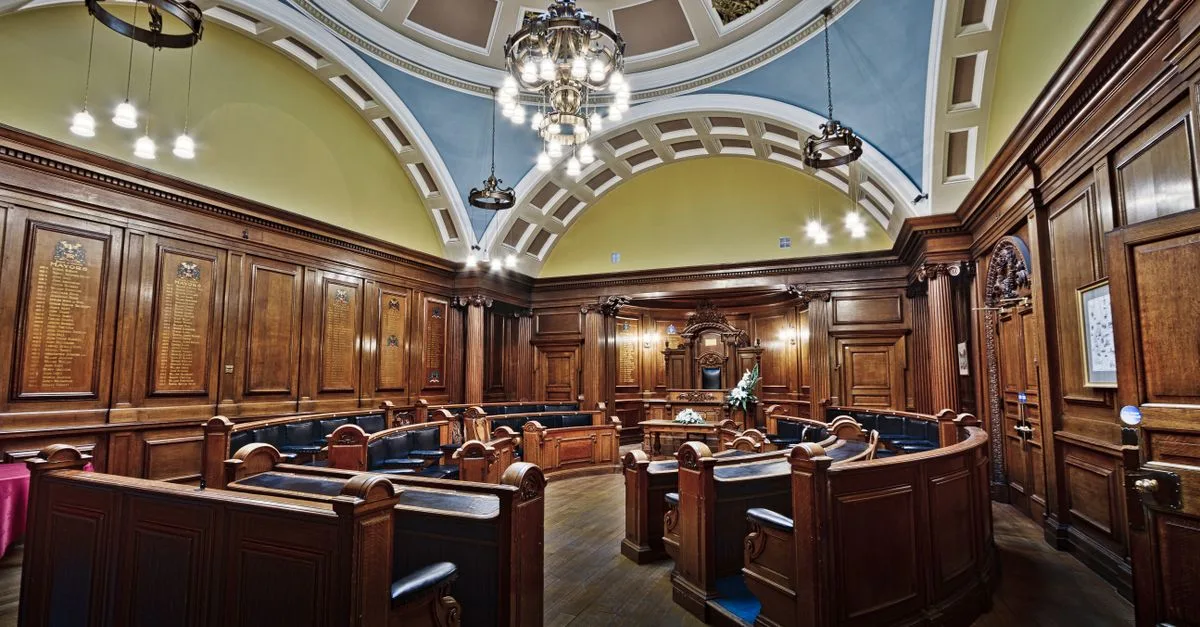
The case began when Tower Hamlets Council's development committee examined proposals for the brewery site in April 2021. Rather than decide the application immediately, the committee deferred it so that officers could negotiate obligations under section 106 of the planning legislation. By the time the matter returned some months later, the composition of the committee had altered. Under the council's standing orders, only councillors who had attended the initial hearing were permitted to vote, and three eligible members approved the scheme by two votes to one. The Spitalfields Historic Building Trust, which opposed the development, sought judicial review of the resulting permission.
The Legal Arguments
The Trust contended that excluding councillors from the vote had unlawfully deprived those members, and the residents they represented, of a proper voice in the decision. It argued that any restriction of this kind required explicit statutory authority and could not rest on procedural rules devised by the council itself. The council maintained that its standing orders were a legitimate exercise of the discretion granted to local authorities to manage the conduct of their committees, and that limiting the vote to those who had heard the full case supported sound decision-making.
The Supreme Court's Reasoning
The Supreme Court rejected the appeal, holding that the Local Government Act 1972 confers broad powers on councils to regulate the proceedings of their committees through standing orders. Restrictions on voting, the court found, may lawfully govern participation where an application has been deferred and later reconsidered. The judges emphasised that the statutory framework is intended to help councils reach lawful and effective decisions, and that procedural rules serving that aim should not be automatically regarded as unlawful. The court concluded that the quality of decision-making, rather than any fixed entitlement of an individual councillor to cast a vote, was the governing consideration.
Implications for Local Authorities
The judgment gives councils clearer confidence that their existing standing orders on voting eligibility rest on firm legal ground. It confirms that authorities may structure committee participation to ensure that those deciding an application have engaged with the evidence, particularly in complex cases that are heard over more than one sitting. Developers, objectors and residents alike now have greater certainty over how deferred applications will be handled.
More widely, the ruling reinforces the principle that local authorities enjoy considerable latitude to design their own decision-making procedures within the statutory framework, and that courts will be reluctant to disturb internal governance arrangements that promote lawful and effective outcomes. For planning practitioners and civic bodies across the United Kingdom, the decision signals that challenges to procedural rules will face a high threshold, and that the emphasis of the law rests on the integrity of the process as a whole rather than on the rights of any single participant.
Looking for legal or business advice?
Tell us what you need and the Corporate INTL team will help you find the right lawyer or adviser from our members in 150+ jurisdictions.
1What you need2Your details
More from the newsroom
All latest news → Related stories

Regulatory & Public
Are Prediction Markets Legal? The Kalshi Rulings, State Gaming Law and Global Bans

Regulatory & Public
What Is the Status of IEEPA Refunds? CAPE Phase 3, Liquidated Entries and the Appeal

Regulatory & Public