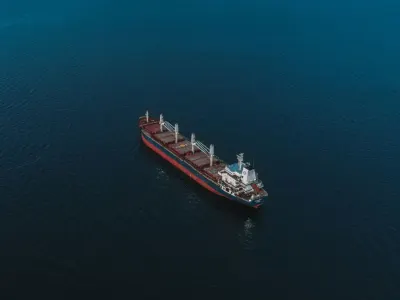
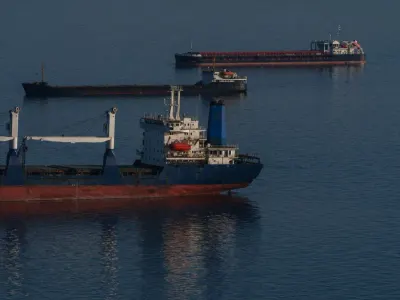
The Office of the United States Trade Representative announced on 17 April 2025 that it will impose USTR port fees on Chinese ships and on certain other foreign vessels calling at US ports. The action ends a Section 301 investigation into China's targeting of the maritime, logistics and shipbuilding sectors for dominance, according to the USTR announcement.
Corporate INTL Newsroom · Maritime & Shipping
USTR Port Fees on Chinese Ships: What the Section 301 Action Means for Carriers
By The Corporate INTL Newsroom · 18 April 2025
The investigation was opened on 17 April 2024 after a petition from five national labour unions in March 2024. USTR says it held a two-day public hearing, received nearly 600 comments and published proposed actions on 21 February 2025. It determined that China's practices are unreasonable and burden or restrict US commerce, making them actionable under Sections 301(b) and 304(a) of the Trade Act of 1974.
How the fees work
All fees are set at zero for the first 180 days. After that, according to the USTR fact sheet, phase one applies three types of charge:
- Vessel owners and operators of China: $50 per net ton per US voyage in the first year, rising by $30 per net ton in each of the following three years.
- Operators of Chinese-built ships: $18 per net ton or $120 per container at the start, rising by $5 per net ton a year, or a proportional amount per container, over the following three years.
- Foreign-built car carriers: $150 per car equivalent unit of capacity.
The USTR port fees on Chinese ships are charged per US voyage rather than per port call, no more than five times a year per vessel, and they do not stack, so only one fee applies to a voyage. Fees on Chinese-built ships effectively exclude Great Lakes and Caribbean services, voyages to and from US territories, and bulk commodity exports on ships arriving empty. If an owner orders an equivalent US-built vessel, the fees on its non-US-built vessel can be suspended for up to three years.
Phase two and cranes
After three years, phase two introduces limited restrictions on transporting liquefied natural gas on foreign vessels, increasing over 22 years to encourage US-built LNG carriers. USTR is also seeking comment on proposed tariffs on ship-to-shore cranes and other cargo handling equipment, with requests to appear at the hearing due by 8 May 2025.
Who is affected
Container lines, car carrier operators and charterers serving the US are most exposed, because fleet composition and shipyard of build now feed directly into voyage costs. Shipowners will need to map which vessels are Chinese-owned, Chinese-operated or Chinese-built, and charter parties may need clauses allocating the new costs before the fees start to bite after the 180-day window.
Sources
Looking for legal or business advice?
Tell us what you need and the Corporate INTL team will help you find the right lawyer or adviser from our members in 150+ jurisdictions.
1What you need2Your details
More from the newsroom
All latest news →