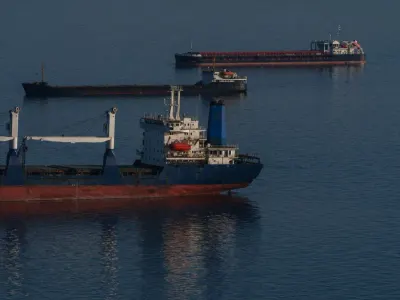
Time charter vs voyage charter is the first decision any cargo owner, trader or operator makes when it needs tonnage, and it fixes almost everything that follows: who pays for fuel and port calls, who carries the cost of a ship waiting at anchor, who answers to cargo interests, and what happens when a vessel is detained. Under a voyage charter the shipowner sells a cargo movement for freight; under a time charter the owner sells the use of the ship and crew for a period in return for hire.
Corporate INTL Newsroom · Maritime & Shipping
Time Charter vs Voyage Charter: Costs, Risks and Which to Choose
By The Corporate INTL Newsroom · 27 October 2026
This analysis compares the two side by side, explains the standard forms most fixtures use (GENCON 2022 and NYPE 2015), sets out the leading English case on off-hire, covers bareboat chartering and the newer cost of EU emissions allowances, and ends with a practical framework for choosing between them.
Time charter vs voyage charter: the short answer
The short answer is that a voyage charter buys an outcome, while a time charter buys control. The broker Clarksons describes a voyage charter as hiring a vessel for one trip between set ports, commonly used for one-time shipments, and a time charter as an agreement to hire a vessel and its crew for a specified period of time, during which the charterer directs routes, ports and cargo handling.
That single distinction drives the economics. A voyage charterer pays freight, either as a lump sum or per tonne of cargo, and the owner bears the voyage costs and the risk that the trip takes longer than planned at sea. A time charterer pays a daily rate of hire and, in exchange for commercial control, takes on most voyage costs and the risk of slow or inefficient employment. The owner remains responsible for the ship itself in both cases: crew, maintenance, insurance of the hull and the vessel's operating costs.
Put simply:
- Voyage charter. The owner runs the voyage and is paid for delivering the cargo. The charterer's main exposure is delay in port, measured through laytime and demurrage.
- Time charter. The charterer runs the commercial operation and pays for the ship's time rather than for a result. Its main protection is the off-hire clause, which stops hire when the ship cannot work for reasons on the owner's side.
- Bareboat charter. The charterer takes the ship without crew and runs it as though it were the owner, which is why it is usually a financing or long-term fleet decision rather than a trading one.
How a voyage charter works
A voyage charter is a contract for the carriage of a specified cargo between named ports in return for freight. The owner nominates the ship, sails her to the loading port, loads, carries and discharges the cargo, and pays the costs of getting there. The charterer is obliged to provide the cargo and to load and discharge it within the agreed laytime.
Most dry bulk voyage fixtures are written on, or heavily based on, BIMCO's GENCON form. BIMCO calls GENCON a standard voyage charter party and a general purpose agreement for the services of a ship in exchange for freight, and describes it as the most widely used voyage charter party in the dry bulk sector. First developed in 1922, it was last revised in 1994 before GENCON 2022, which was a comprehensive rewrite rather than a light update and comes with its own bill of lading, CONGENBILL 2022.
The 2022 edition moved a good deal of risk onto charterers in express terms. According to West of England P&I's July 2023 review of GENCON 2022:
- Cargo (Clause 3). Charterers are responsible for many cargo-related regulations and for matters such as bulk cargo delivery, part cargo and lighterage.
- Fumigation (Clause 5). Responsibility and cost of fumigation sit with charterers.
- Suspension and termination (Clause 16). Owners gain enhanced rights if charterers fail to pay sums due, including demurrage.
- General exceptions (Clause 18). A mutual exemption for events beyond a party's control, without affecting laytime, demurrage or payment obligations.
- No force majeure clause. The form deliberately does not incorporate one.
The point for a voyage charterer is that the headline freight rate is only part of the price. The real cost depends on how quickly the cargo is loaded and discharged and on how the charter allocates delays, cargo regulation and port risk.
How a time charter works
A time charter is a contract under which the owner places the ship and her crew at the charterer's disposal for a period, or for a defined trip, in return for hire paid at a daily rate. The owner keeps possession through the master and crew and remains responsible for navigation and the ship's condition; the charterer gives employment orders, chooses the cargo and the ports within the trading limits, and pays for most of what the voyage consumes.
The dominant dry cargo form is the New York Produce Exchange form. BIMCO states that NYPE is the most widely used standard time charter party in the dry cargo sector, and that the current edition, NYPE 2015, was developed jointly by BIMCO, the Association of Shipbrokers and Agents (ASBA), which holds the copyright, and the Singapore Maritime Foundation.
Time charters range from multi-year period fixtures to a single "trip time charter", where the charterer hires the ship on time terms for one voyage. The trip time charter is a useful hybrid: the charterer pays hire rather than freight, so it takes the speed and port-time risk, but it is committed only for the duration of one trip. The leading English case on off-hire, discussed below, concerned exactly this structure: the Global Santosh was fixed in 2008 on an amended NYPE form for one time charter trip carrying cement from Slite in Sweden to Port Harcourt in Nigeria.
Because hire runs continuously, the time charterer's economics depend on keeping the ship busy and efficient. Hire is payable whether or not there is a cargo on board, unless an off-hire event intervenes. That is the trade-off for control: a time charterer can sublet the ship, take advantage of a rising market or combine several cargoes, but it carries the risk of idle time and of a market that falls below the hire it has agreed to pay.
Time charter vs voyage charter: side-by-side comparison
The table below sets out how the two contracts compare on the points that matter most in negotiation. It reflects the typical position under the standard forms; any individual fixture can move these lines, so the charter party itself always governs.
| Feature | Voyage charter | Time charter |
|---|---|---|
| What is bought | Carriage of a cargo between named ports | Use of the ship and crew for a period or trip |
| Payment | Freight, as a lump sum or per tonne | Hire, usually a daily rate |
| Commercial control | Owner | Charterer, within the trading limits |
| Nautical control and crew | Owner | Owner |
| Fuel (bunkers) | Owner, built into the freight | Charterer |
| Port charges | Owner, unless agreed otherwise | Charterer in most cases |
| Delay at sea | Owner's risk | Charterer's risk (hire keeps running) |
| Delay in port | Laytime, then demurrage payable by charterer | Charterer's risk unless the ship is off-hire |
| Typical standard form | GENCON 2022 | NYPE 2015 |
| Typical user | One-off or occasional cargo shipper | Regular shipper, operator or trader |
Who pays what: time charter vs voyage charter cost
The cost question turns on which party bears the voyage expenses. Clarksons summarises it this way: under a voyage charter, charterers pay a lump-sum or quantity-based freight rate for each voyage, cover loading and unloading, and leave maintenance and operating expenses with the shipowner; under a time charter, the charterer pays a fixed amount or daily hire and, in most cases, is responsible for all port-related expenses, while the owner covers maintenance and operating costs.
| Cost item | Voyage charter | Time charter | Bareboat charter |
|---|---|---|---|
| Crew wages | Owner | Owner | Charterer |
| Maintenance and repairs | Owner | Owner | Charterer |
| Hull and P&I insurance | Owner | Owner | Charterer |
| Fuel | Owner | Charterer | Charterer |
| Port charges | Owner, unless agreed otherwise | Charterer in most cases | Charterer |
| Cargo handling | Often charterer, depending on terms | Charterer | Charterer |
| Price paid to owner | Freight | Hire | Bareboat hire |
Market timing matters as much as the cost split. Clarksons notes that in high-demand periods owners can push voyage freight rates up, so charterers may find voyage rates higher than time charter rates, while a time charter rate stays constant for the whole fixture and shields the charterer from seasonal spikes. The reverse risk is just as real: a time charterer can end up paying for unused capacity, or be locked into a high rate after the market turns down.
For that reason traders often compare offers by converting voyage freight into a daily equivalent (stripping out fuel, port and other voyage costs and dividing by the days the voyage will take) so that a voyage quote and a time charter quote can be set against each other on a like-for-like basis. The comparison is only as good as the assumptions about speed, consumption and port time behind it.
Laytime and demurrage: the voyage charterer's delay risk
Laytime is the period the charterer is allowed, without extra payment, to load and discharge; demurrage is the agreed daily sum it pays the owner once laytime is exceeded. These two provisions are where most voyage charter money disputes arise, because a ship waiting days or weeks for a berth can turn a profitable fixture into a loss for whoever carries the waiting time.
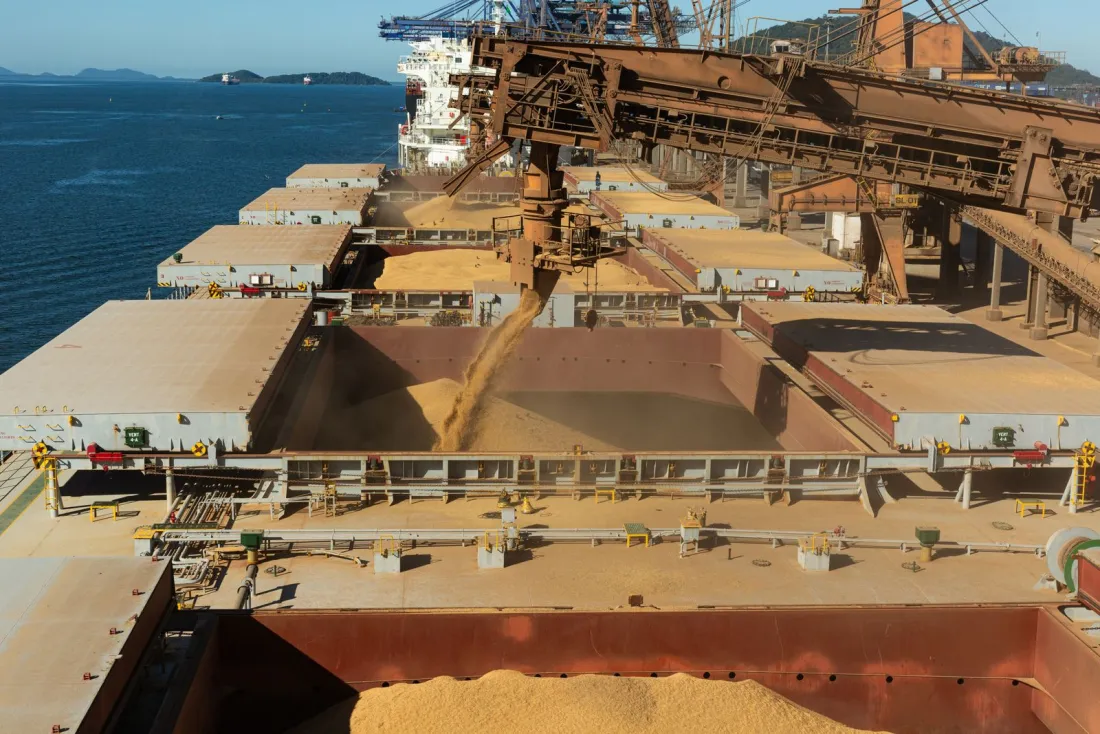
GENCON 2022 takes a clear line. West of England P&I explains that the form incorporates the BIMCO Laytime Definitions for Charter Parties 2013 and that laytime runs continuously unless the actual working of the vessel is prevented by weather. Other provisions in the new form point the same way:
- Shifting between berths is for charterers' account.
- Environmental or public health delays count as laytime.
- Cargo documents must be provided within three hours of completion of cargo operations.
- Strikes (Clause 17) reduce demurrage to 50% for up to 10 days, after which the full rate applies.
- Unpaid demurrage can trigger the owners' new suspension rights under Clause 16.
Under a time charter the equivalent risk is simpler but no smaller: the charterer pays hire for every day in port, congested or not. There is no laytime clock to protect it and no demurrage to collect; a congested port simply costs a time charterer its daily hire for every day of waiting. That is why time charterers who sublet on voyage terms try to match the laytime and demurrage they recover from their sub-charterers to the hire they pay upstream.
Off-hire and The Global Santosh: the time charterer's protection
An off-hire clause suspends the time charterer's obligation to pay hire when the ship is prevented from working for a listed cause, typically breakdown, deficiency of crew or detention. It is the time charterer's main protection, and its wording is construed strictly.
The leading modern authority is NYK Bulkship (Atlantic) NV v Cargill International SA [2016] UKSC 20, decided by the UK Supreme Court on 11 May 2016. The Global Santosh arrived at Port Harcourt on 15 October 2008 and waited at anchor because of congestion. When she was later ordered off the berth, she was arrested under a Nigerian court order obtained by a party further down the contractual chain to secure its demurrage claim against the cargo receiver; the order should have been directed at the cargo, not the ship. Discharge did not begin until 15 January 2009.
Cargill, the time charterer, withheld hire under clause 49, which put the ship off-hire during detention or arrest unless that was occasioned by any personal act, omission or default of the charterers or their agents. The Supreme Court held by four to one that the ship was off-hire throughout the arrest. Lord Sumption, giving the lead judgment, said there must be a sufficient nexus between the occasion for the arrest and the function the sub-contractor was performing on the charterer's behalf, and that the Court of Appeal had been wrong to ask in whose "sphere of responsibility" the arrest fell. Lord Clarke dissented.
Two practical lessons follow. First, off-hire clauses are drafted against a background of strict construction, so charterers and owners should agree the exceptions they actually want rather than relying on general wording. Second, arrests can arise from disputes that neither party to the head charter controls, a risk examined in our guide to ship arrest and wrongful arrest.
Time charter vs bareboat charter: the third option
A bareboat (or demise) charter transfers possession of the ship itself. BIMCO's BARECON form describes an arrangement in which the charterer takes possession and full control of the ship, along with legal and financial responsibility for it, generally bearing fuel, crew, maintenance and repairs and paying P&I and hull insurance. The latest edition is BARECON 2017.
The difference between a time charter and a bareboat charter is therefore not one of degree. A time charterer directs the ship's employment but never employs the master or crew; a bareboat charterer appoints and pays them and, in practice, stands in the owner's shoes for most operational and liability purposes. That makes bareboat chartering a fleet or financing decision rather than a cargo decision. It is common where a registered owner, often a financier or leasing company, wants the asset managed and insured by an operator over a long term.
Answering the common question "what are the three types of charters", then: voyage charters sell a cargo movement, time charters sell the ship's time with crew, and bareboat charters sell possession of the ship without crew. Each step along that line moves more cost, risk and control from owner to charterer, which is why the price paid to the owner falls as the charterer's responsibilities grow.
Cargo claims, bills of lading and the Hague-Visby Rules
Whichever charter is chosen, the cargo usually moves under a bill of lading, and that document can bring in mandatory liability rules that the charter party itself does not. In the UK, the Carriage of Goods by Sea Act 1971 gives the Hague-Visby Rules the force of law. Article V of the Rules scheduled to the 1971 Act states that they shall not be applicable to charter parties, but that bills of lading issued in the case of a ship under a charter party must comply with them.
Article I(b) of the Rules confirms that a bill of lading issued under or pursuant to a charter party is covered from the moment it regulates the relations between the carrier and a holder of it. Once that happens, the carrier's liability is capped at the higher of 666.67 units of account per package or unit or 2 units of account per kilogramme, and suits must be brought within one year of delivery unless the parties agree an extension after the cause of action has arisen.
This matters differently under each charter. Under a voyage charter the owner is usually the carrier on the bill of lading, so cargo claims fall naturally on it. Under a time charter the owner may still be treated as carrier on bills signed by the master even though the charterer chose the cargo and ports, which is why the allocation of cargo claims between owner and time charterer needs express attention in the charter. GENCON 2022 also gives owners the benefit of Hague-Visby exceptions and a one-year time bar as between owner and charterer, although the charter does not incorporate the Rules as a whole. For background on how the original Hague Rules came about, see our piece on the Hague Rules centenary, and for specialist advice on cargo liability our directory of carriage of goods specialists.
Sanctions, war risks and emissions costs in 2026
Three risks have moved from the boilerplate to the centre of chartering negotiations: sanctions, war zones and carbon costs. Each falls differently depending on whether the charterer is paying freight or hire.
On sanctions and war risks, GENCON 2022 incorporates BIMCO's standard clauses covering Ice, ISPS, Sanctions, War Risks and Piracy, according to West of England P&I. Under a time charter, the charterer's trading orders decide whether a ship goes near a high-risk area, so the allocation of additional premiums, crew bonuses and the right to refuse orders becomes a commercial point in its own right. Our analysis of what war risk insurance covers in Hormuz, the Red Sea and the Black Sea explains how the insurance side works, and our explainer on secondary sanctions on Iran sets out why non-US parties can still be caught. Charterers who need help with cover can consult insurance advisers in the directory.
Emissions are the newer cost. The European Commission explains that the EU Emissions Trading System has covered maritime emissions since January 2024 for ships of 5,000 gross tonnage and above, regardless of flag. Shipping companies surrender allowances for 40% of 2024 emissions in 2025, 70% of 2025 emissions in 2026, and 100% of reported emissions from 2027 onwards. The system covers 100% of emissions between two EU ports and 50% of emissions on voyages that start or end outside the EU.
The regulation places the surrender obligation on the shipping company, not the charterer, so who ultimately pays depends on the contract. Under a voyage charter the cost is likely to be priced into freight; under a time charter, where the charterer buys and burns the fuel, owners will usually seek to pass the cost through expressly. With the surrender share rising to 100% from 2027, contracts fixed now for period business should deal with it clearly. Advisers on the regulatory side can be found among the directory's energy, environment and resources specialists.
Time charter vs voyage charter pros and cons: which to choose
The right answer depends on how often you ship, how much control you need, and which risks you are better placed to manage. Clarksons suggests weighing cargo type, shipment frequency, the need for cost predictability and flexibility, and risk tolerance; it sees voyage charters as suiting one-off or occasional shipments and time charters as suiting consistent, regular shipping.
Choose a voyage charter if:
- You have a single cargo or an irregular programme. You pay for the movement and avoid idle-time risk.
- You want a known price for the sea leg. Freight fixes the cost of carriage, leaving port time as the main variable.
- You lack chartering and operations staff. The owner manages bunkering, routing and port calls.
- Your loading and discharge ports are reliable. The laytime and demurrage exposure is then manageable.
Choose a time charter if:
- You ship regularly or operate tonnage commercially. Control over the ship's employment lets you combine cargoes and reduce ballast legs.
- You want rate certainty over a period. A fixed daily hire shields you from spikes in spot freight.
- You have the expertise to run voyages efficiently. Gains on speed, fuel and port time are yours.
- You can absorb downturn risk. Hire remains payable if the market falls.
Counterparty strength deserves equal weight. A long time charter is a credit exposure on both sides: the owner depends on the charterer's ability to pay hire, and the charterer depends on the owner keeping the ship in class and insured. If either side fails, the position is governed by insolvency law as much as by the charter; our explainer on what happens when a company goes into administration covers the UK rules that apply to creditors. Commodity houses weighing a mixed programme of period and spot tonnage may want input from commodities trading advisers as well as maritime counsel.
Disputes: London arbitration and the LMAA
Most charter party disputes on English-law forms go to London arbitration under the terms of the London Maritime Arbitrators Association (LMAA), whose current procedural terms are the LMAA Terms 2021. Its figures show the scale of the market: arbitrating members reported 3,469 appointments and 563 awards in 2025, with an estimated 2,015 new references, and the association notes that these figures understate the full total because not every arbitrator reports.
For smaller demurrage, freight and hire claims, the LMAA Small Claims Procedure 2021 applies, in the absence of an agreed limit, where neither the claims nor the counterclaims exceed US$100,000, the limit applying separately to each rather than in aggregate. In 2025 the LMAA's figures recorded 171 small claims appointments.
Two drafting points recur in practice. The arbitration clause should name the seat clearly, a distinction explained in our analysis of seat vs venue of arbitration. And a party that wins an award still has to enforce it where the other side has assets, which is covered in our piece on whether arbitration awards can be enforced internationally. Cross-border enforcement is usually the moment to involve dispute resolution lawyers in the jurisdiction where the assets sit.
When to bring in a maritime lawyer
The time charter vs voyage charter choice is commercial, but the terms that decide who bears a loss are legal, and the most expensive mistakes are made at the fixture stage. It is worth taking advice before fixing a period time charter, before agreeing riders that change the standard laytime or off-hire wording, when a ship is detained or arrested, and as soon as a demurrage or hire claim is disputed, because time bars in these contracts can be short.
Corporate INTL's directory lists maritime and shipping lawyers across the major chartering centres, including firms in the United Kingdom, Singapore and Greece.
Related Corporate INTL maritime guides
These sibling guides cover the risks that most often follow a chartering decision.
| Guide | What it covers |
|---|---|
| Ship arrest: maritime claims, security and wrongful arrest | How vessels are detained to secure claims, and how owners obtain release |
| What does war risk insurance cover? | Cover, additional premiums and listed areas in 2026 |
| What are secondary sanctions on Iran? | How sanctions reach non-US shipping and trading counterparties |
| Seat vs venue of arbitration | Drafting the dispute clause in a charter party |
Frequently asked questions
What is the main difference between a time charter and a voyage charter?
A voyage charter pays the owner freight to carry a specific cargo between named ports, and the owner runs and pays for the voyage. A time charter pays the owner daily hire for the use of the ship and crew over a period or trip, and the charterer directs employment and pays most voyage costs, such as fuel and port charges.
What are the three types of charters?
The three main types are voyage charters, time charters and bareboat (demise) charters. A voyage charter sells a cargo movement, a time charter sells the ship's time with her crew, and a bareboat charter hands possession of the ship to the charterer, who then crews, maintains and insures her.
Who pays for fuel under a time charter?
Under a time charter the charterer normally provides and pays for bunkers, because it controls where and how fast the ship trades. Under a voyage charter the owner pays for fuel and recovers the cost through the freight rate. The exact position, including the quantity on delivery and redelivery, is set by the charter party.
What is the difference between a time charter and a bareboat charter?
Under a time charter the owner keeps possession through its own master and crew and pays crew, maintenance and insurance. Under a bareboat charter, such as BARECON 2017, the charterer takes possession and full control and bears crew, fuel, maintenance, repairs and hull and P&I insurance, as though it were the owner.
What is demurrage in a voyage charter?
Demurrage is the agreed daily sum a voyage charterer pays the owner when loading or discharge takes longer than the laytime allowed. GENCON 2022 incorporates the BIMCO Laytime Definitions 2013, runs laytime continuously unless weather prevents work, and halves demurrage for up to 10 days during strikes.
When is a ship off-hire under a time charter?
A ship is off-hire when an event listed in the off-hire clause, such as breakdown or detention, stops her working, and hire is suspended for that time. In The Global Santosh the Supreme Court held a time-chartered ship off-hire during an arrest caused by a dispute further down the contractual chain.
Is a voyage charter cheaper than a time charter?
Not necessarily. Voyage freight includes the owner's fuel and voyage costs, and in high-demand periods voyage rates can exceed the equivalent time charter rate. A time charter fixes a daily rate for the period, which protects against spikes but leaves the charterer paying hire for idle days or after the market falls.
Do the Hague-Visby Rules apply to charter parties?
No. The Rules state that they do not apply to charter parties themselves. But bills of lading issued for a ship under a charter must comply with them, and they govern once the bill regulates relations between the carrier and a holder, bringing in package limits and a one-year time bar.
Which standard forms are used for voyage and time charters?
BIMCO's GENCON, now in its 2022 edition, is the most widely used voyage charter party in dry bulk. The NYPE form, currently NYPE 2015, is the most widely used dry cargo time charter, developed by BIMCO, ASBA and the Singapore Maritime Foundation. BARECON 2017 is BIMCO's bareboat form.
Sources
- Clarksons: How to choose a charter type
- BIMCO: GENCON 2022
- West of England P&I: The new GENCON 2022 charterparty (4 July 2023)
- BIMCO: NYPE 2015
- BIMCO: BARECON 2017
- UK Supreme Court: NYK Bulkship (Atlantic) NV v Cargill International SA [2016] UKSC 20
- legislation.gov.uk: Carriage of Goods by Sea Act 1971, Schedule (Hague-Visby Rules)
- European Commission: Reducing emissions from the shipping sector
- London Maritime Arbitrators Association: Small Claims Procedure 2021
- London Maritime Arbitrators Association: Statistics of appointments and awards to 2025
About this article
This analysis was researched and written by The Corporate INTL Newsroom, which covers cross-border legal, regulatory and business developments for lawyers, professional advisers and financiers in over 150 jurisdictions. It has been checked against BIMCO's published descriptions of its standard forms, the UK Supreme Court's decision in The Global Santosh, the Carriage of Goods by Sea Act 1971, European Commission guidance and LMAA documents. Individual charter parties frequently amend the standard forms, so the terms of a particular fixture always prevail. This article is general information, not legal advice; for advice on a specific matter, consult a qualified adviser. Last reviewed 27 October 2026. For more analysis like this, visit the Corporate INTL newsroom or subscribe to Corporate INTL.
Looking for legal or business advice?
Tell us what you need and the Corporate INTL team will help you find the right lawyer or adviser from our members in 150+ jurisdictions.
1What you need2Your details
More from the newsroom
All latest news →