Knowing how to make a business interruption insurance claim matters most in the weeks after a fire, flood or forced closure, when the policy wording, the loss adjuster and the accounts decide how much of the lost profit a business gets back. The rules have been reshaped by two Supreme Court decisions: FCA v Arch Insurance [2021] UKSC 1, the Covid-19 test case that rewrote how causation and trends clauses work, and Bath Racecourse v Liberty Mutual [2026] UKSC 14, decided on 22 April 2026, which confirmed that furlough money counts as a saving that reduces what insurers pay. This guide sets out the claim step by step under English law: notifying the insurer, proving the loss of gross profit, fixing the indemnity period, dealing with savings and deductions, and what to do when the insurer says no. It is written for finance directors, owners and in-house counsel running a claim, and for the advisers who support them.
How to Make a Business Interruption Insurance Claim: Notice, Proof of Loss and Disputes
By The Corporate INTL Newsroom · 30 October 2026

What business interruption insurance pays for
Business interruption insurance pays for the loss of income, and the extra costs, that follow when an insured event stops or slows the business; it does not pay for the damaged property itself, which is covered by the material damage section. The cover sits alongside property insurance and is designed to put the business back in the financial position it would have been in had the event not happened, no better and no worse.
Most UK policies have two layers. The core cover usually responds only where there has been physical damage to the insured premises or property, which is why it is often written as an add-on to a property policy. On top of that, many wordings include "non-damage" extensions that pay out without physical damage, for example where a notifiable disease occurs within a set radius or a public authority prevents access to the premises. Those extensions were at the centre of the Covid-19 litigation. In the FCA test case, the court examined 21 sample policy wordings issued by eight insurers, and the FCA estimated in July 2020 that the policies listed covered around 370,000 policyholders.
The typical heads of loss are:
- Loss of gross profit. The reduction in turnover, multiplied by the rate of gross profit, during the indemnity period.
- Increased cost of working. Extra spending incurred to keep trading or to reduce the loss, such as renting temporary premises or paying overtime.
- Additional extensions. Cover for loss caused by damage at a supplier's or customer's premises, denial of access, utility failure or disease, depending on the wording.
Many smaller businesses only discover the limits of their cover when they claim. A survey of small business owners reported on Corporate INTL found that most lacked confidence that they were adequately insured, which is why reading the schedule before an incident, not after it, is the first discipline of a successful claim.
How to make a business interruption insurance claim: the steps at a glance
A business interruption claim follows the same basic sequence whatever caused the loss: notify, protect, document, quantify, negotiate and, if needed, challenge. The table below summarises each stage and the main risk at that point. The sections that follow explain each one in detail.
| Step | What you do | Main risk if you get it wrong |
|---|---|---|
| 1. Notify | Tell the insurer or broker promptly, in writing, following the claims conditions in the policy | Breach of a notification condition gives the insurer a defence |
| 2. Protect and mitigate | Take reasonable steps to keep trading and limit the loss; keep records of every decision | Avoidable losses may be disallowed |
| 3. Engage the loss adjuster | Agree what information is needed, by when, and in what form | Delay, requests for documents you do not hold, a polarised relationship |
| 4. Prove the loss | Build the gross profit calculation from accounts, takings and forecasts | Under-claiming, or a claim the adjuster cannot verify |
| 5. Fix the indemnity period | Track when the results stop being affected, within the maximum period | Cutting the claim off too early |
| 6. Account for savings and adjustments | Identify savings, other income and trend adjustments | Disputes over deductions late in the claim |
| 7. Interim payments and settlement | Ask for interim payments; check any final offer carefully | Signing away part of the claim in a full and final settlement |
| 8. Challenge | Complaint, Financial Ombudsman, arbitration or court | Missing a time limit |
Steps 1 and 2: notify the insurer and protect the business
The first step is to notify the insurer, through your broker if you have one, as soon as you know an interruption may lead to a claim, and to do it in writing in the way the policy's claims conditions require. The FCA's guidance to policyholders makes the same practical point: if you believe you have a claim, approach your broker, other adviser or insurer. Notification deadlines and formalities are set by each policy, so read the claims conditions in the schedule and wording before you send anything.
A good notification is short and factual. It identifies the policy number, the insured premises, the date and cause of the incident as far as they are known, the immediate effect on trading and a statement that a business interruption claim will follow. Avoid estimating the final loss at this stage, avoid admitting the cause if it is not yet clear, and do not describe the loss as minor or temporary: early descriptions tend to be quoted back later. Keep a copy of everything sent and received, with dates.
The second step runs in parallel: protect the business and limit the loss. An indemnity policy pays for loss actually suffered, so an insurer will scrutinise whether the business did what a reasonable operator would have done to keep trading. That might mean moving production, diverting orders to a sister site, renting temporary space or keeping key staff on. Record the options considered, the costs and the reasons for each decision, because those notes later support the claim for increased cost of working and answer any argument that the loss could have been reduced.
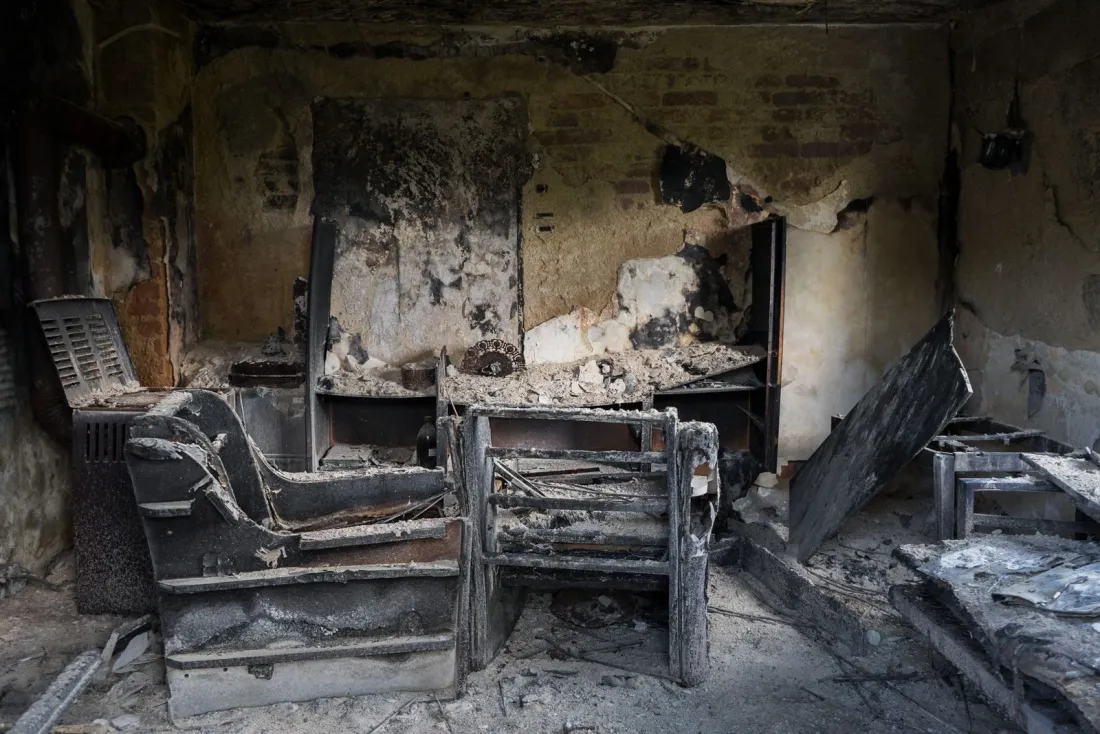
Finally, preserve evidence. Photograph damage before clearance starts, keep damaged stock until the adjuster agrees it can go, and secure the accounting records, sales ledgers and booking systems that will be needed to prove the loss. If the business has a risk management function or a business continuity plan, the incident log it produces is useful claim evidence.
Step 3: working with the loss adjuster
The loss adjuster is appointed by the insurer to investigate the claim, check that it falls within the cover and calculate the amount payable under the policy terms. The adjuster works for the insurer, but the process works best when it is collaborative: a paper published by the Chartered Institute of Loss Adjusters advises adjusters to explain what they are trying to establish and to ask policyholders what documents they actually have, warning that requesting documents a business does not hold can lead to a polarised position.
Practical steps for the first meeting:
- Agree a document list. Ask the adjuster to set out in writing what information is needed and why, and agree realistic dates.
- Nominate one point of contact. Usually the finance director or financial controller, so that figures are consistent.
- Explain the business. Seasonality, contracts in the pipeline, growth plans and any special circumstances matter to the calculation and are easier to explain at the start than in a dispute.
- Keep minutes. Confirm by email what was agreed after each meeting or site visit.
The cost of preparing the figures is a real issue. The CILA paper notes that the claims condition usually requires the policyholder to provide the information at its own expense, but that many policies also include a promise to pay reasonable charges of the insured's professional accountants for producing the particulars the insurer requires, often called a claim preparation clause, subject to the policy limit. Check the wording before instructing accountants, and tell the adjuster who has been appointed. Some businesses also bring in independent claims handling specialists to present the claim on their side; any fee for that is normally a matter for the business unless the policy says otherwise.
On the question many people search, what not to say: the safest approach is to say only what you know, correct any mistake promptly, and never guess at figures. Speculation about the cause, the length of the disruption or the size of the loss is the material most often used against a policyholder later.
Step 4: proving the loss of gross profit
To calculate a business interruption insurance claim, you work out the shortfall in turnover during the indemnity period compared with what the business would have earned, and apply the rate of gross profit to that shortfall, then add increased costs and deduct savings. The exact formula depends on the wording, but the components are common to most UK policies.
The CILA paper lists the documents that support most claims:
- Accounts for the previous two years. Audited or certified accounts, trading profit and loss accounts and management accounts, from which turnover, gross profit and the rate of gross profit are taken.
- Takings for the 12 months before the loss. Daily, weekly or monthly figures, used to work out the "standard turnover": the turnover in the period 12 months before the incident that corresponds with the indemnity period.
- Takings during the indemnity period. The actual turnover achieved while affected.
- Increased cost of working. Evidence of the extra spending and of the turnover it produced or protected.
- Takings from alternative premises. These reduce the amount payable, so they must be disclosed.
- Savings. Costs that stopped or fell because of the interruption.
An illustration shows how the pieces fit together. The figures below are hypothetical and simplified; real wordings differ in the definition of gross profit and in the adjustments allowed.
| Item (illustrative only) | Amount |
|---|---|
| Standard turnover for the corresponding six months last year | £600,000 |
| Actual turnover during the six-month indemnity period | £240,000 |
| Shortfall in turnover | £360,000 |
| Rate of gross profit from the last accounts | 60% |
| Loss of gross profit (£360,000 x 60%) | £216,000 |
| Add: increased cost of working (temporary premises) | £30,000 |
| Less: savings (for example light, heat and suspended contracts) | £20,000 |
| Amount claimed before any trend adjustment and policy limits | £226,000 |
Two practical points follow. First, the figure for what the business would have earned is rarely just last year's number: growth, new contracts or a declining market can all justify adjustments, which is where trends clauses come in (see below). Second, the calculation is only as strong as the records behind it. CILA's paper describes business interruption settlement as far from an exact science, which is why forensic accountants are often used on larger claims to rebuild the counterfactual and test the adjuster's figures.

Step 5: the indemnity period and the maximum indemnity period
The indemnity period for a business interruption claim is the time during which the loss is covered: it starts with the damage or insured event and ends when the results of the business stop being affected by it, subject to the maximum indemnity period stated in the schedule. CILA's paper uses that standard definition and adds an important nuance: the period ends once the business ceases to be affected by the occurrence, whether negatively or positively.
Three consequences matter in practice. First, the indemnity period is not the same as the time it takes to repair the building. A restaurant may reopen after four months but take many more to win back its customers, and the loss continues to be recoverable until trading recovers, up to the maximum. Second, the maximum indemnity period is chosen when the policy is bought, and it caps the claim however long recovery actually takes; a period that looked adequate on renewal can prove too short after a major fire, because rebuilding, refitting and regaining market share all take time.
Third, if trading bounces back strongly, for example because of pent-up demand, the "positive" effect can bring the indemnity period to an end sooner.
For the claim itself, keep monthly management information throughout the period and compare it with the same months of the prior year. That record is what shows when results stopped being affected. Where the business is valued on future earnings, or where the loss affects goodwill and contracts beyond the maximum indemnity period, a valuation specialist can help separate what the policy covers from what it does not.

Step 6: savings, furlough and other deductions
Savings are costs the business no longer incurs because of the interruption, and most policies deduct them from the claim so that the policyholder is not paid more than its actual loss. Typical examples are utilities at closed premises, suspended service contracts and, in a closure, some variable costs of sales.
The Supreme Court's decision in Bath Racecourse Company Ltd v Liberty Mutual Insurance Europe SE, handed down on 22 April 2026 with the linked Gatwick Investment appeal, is now the leading authority on savings clauses. The policyholders, hotels, racecourses, greyhound tracks, golf clubs and a pub, had Covid-19 cover under government action clauses that the insurers accepted applied after the FCA test case. The fight was over whether wages reimbursed under the Coronavirus Job Retention Scheme had to be deducted as savings. Five justices dismissed the policyholders' appeal unanimously, upholding the High Court and the Court of Appeal.
The reasoning matters beyond furlough:
- No special rules for insurance policies. The Court said policies are interpreted objectively, like other contracts, though the indemnity nature of the cover can be taken into account.
- Purpose of a savings clause. It exists to prevent over-indemnification of the policyholder, which is best served by counting all factual savings, including costs met by someone else.
- Causation cuts both ways. The Court rejected a "but for" test for savings because the FCA test case had rejected it for losses; policyholders cannot rely on that analysis to recover and then avoid it when savings are counted.
- Collateral benefits. Third-party payments connected with the insured loss reduce it unless the payer intended to benefit only the policyholder. Furlough was a legal entitlement, not a gift, so it was deducted.
For a current claim, list every source of money received because of the incident, including grants, compensation from third parties, other insurance and income from alternative sites, and take advice on whether each one must be deducted. Raising these items early avoids an argument at the end of the claim when the insurer's accountants review the file.
Trends clauses and the FCA v Arch causation rules
A trends clause adjusts the previous year's figures to reflect trends or circumstances that would have affected the business anyway, so that the claim estimates as nearly as possible what the business would have achieved had the insured event not happened. Almost all policies contain one, and before 2021 insurers used them to argue that losses caused by a wider catastrophe were not recoverable.
The Supreme Court's judgment in FCA v Arch, given on 15 January 2021 after a leapfrog appeal from the Divisional Court, changed that. Its main holdings were:
- Trends clauses cannot take away cover. They should not be read so as to remove cover the insuring clause provides, and adjustments must not reflect circumstances arising from the same underlying cause as the insured peril.
- Pre-trigger losses. A downturn caused by the pandemic before the cover was triggered could not be used to reduce the claim; adjustments are only for circumstances unconnected with Covid-19.
- Concurrent causes. For disease clauses, every case of Covid-19 that had occurred by the time of a government measure was an equally effective proximate cause of it, so one case within the policy radius was enough. The insurers' "but for" argument was rejected.
- Prevention of access. A "restriction imposed" can include a public authority instruction in clear, mandatory terms, and an "inability to use" premises can be satisfied where a discrete part of the premises or a discrete business activity cannot be used.
- Orient-Express overruled. The 2010 hurricane decision that insurers relied on to exclude losses that would have happened anyway because of wider damage to the area was held to have been wrongly decided.
Although the case was about a pandemic, the principles apply to any widespread event, such as regional flooding, a cordon around a major incident or a wider loss of access, where the insurer argues that the business would have suffered anyway. If a loss adjuster proposes a trend adjustment, ask for it in writing with the reasoning, and check whether it reflects something genuinely unconnected with the insured peril.
Interim payments and how long a claim should take
An insurer must pay sums due on a claim within a reasonable time, and that duty is now a term implied into every UK insurance contract. Section 13A of the Insurance Act 2015, in force since 4 May 2017, says a reasonable time includes time to investigate and assess the claim, and depends on factors such as the type of insurance, the size and complexity of the claim and matters outside the insurer's control. An insurer with reasonable grounds to dispute the claim does not breach the term simply by not paying while the dispute continues, but how it handled the claim can still be relevant.
Damages for late payment are separate from the claim itself, so a business that suffers further loss because an insurer delays without good reason may have an additional claim. Under the Insurance Act, a business policy cannot exclude liability for deliberate or reckless breaches of that duty, and other limits on it only work if the Act's transparency requirements are met. There is a short deadline: an action for breach of the late payment term must be brought within one year of the date the insurer paid all the sums due.
Interim payments are the practical answer to cash flow pressure. Ask for them as soon as part of the loss is clear, supported by the figures already agreed. After the Covid-19 test case, the FCA said it expected insurers to make interim payments wherever possible on affected claims, which reflects the regulator's view of good practice. For a business close to insolvency, the timing of interim payments can be decisive, and directors should take advice early; Corporate INTL's guide to what happens when a company goes into administration explains why, and insolvency and restructuring advisers can help manage the period while the claim is pending.
What to do if the claim is rejected or underpaid
If a business interruption claim is rejected or the offer looks too low, ask for the reasons in writing, check them against the policy wording and the case law, make a formal complaint, and then escalate to the Financial Ombudsman Service, arbitration or the courts depending on the size of the business and the claim.
The route for smaller businesses runs through the complaints process. According to the FCA's policyholder guidance, the insurer should give a final response within eight weeks, and an eligible business can usually refer the complaint to the ombudsman within six months of that response. The Financial Ombudsman Service is free to use and decides what is fair and reasonable, taking account of the law, regulators' rules, good industry practice and the FCA test case judgment. It reports that most business interruption complaints it sees concern declined claims, for example where a policy covered only listed diseases or required a case of disease at the premises. Eligibility depends on the size of the business, so use the ombudsman's eligibility checker. For complaints referred on or after 1 April 2026 about events since 1 April 2019, the ombudsman can award up to £455,000, plus interest.
Larger claims usually go to court or arbitration. In England, commercial insurance disputes are heard in the High Court, and since 1 October 2026 the new Business and Property Division has absorbed the Commercial Court. Some policies require arbitration instead, in which case the seat of the arbitration determines the supervising court. Funding is a real question for a business that has just lost its income; Corporate INTL's guide to litigation funding in the UK covers the options.
Watch three traps:
- Full and final settlements. The FCA has said a settlement is likely to be binding if the insurer's communications were clear, fair and not misleading; read any offer carefully before signing.
- Limitation. A claim on an insurance contract is generally subject to the six-year limit for contract claims in the Limitation Act 1980, so claims arising in 2020 are now at or past the edge of that period and need urgent advice.
- Policy time bars. Some wordings contain their own deadlines for submitting the claim or particulars; read the conditions.
For a contested claim, specialist dispute resolution lawyers with insurance experience can assess the wording and the prospects before the business commits to proceedings.
Common mistakes that reduce business interruption claims
Most underpaid business interruption claims fail on process, not on the wording. The mistakes that recur are:
- Late or informal notification. A phone call to the broker without written follow-up.
- Thin records. No daily or weekly takings, so the standard turnover cannot be shown.
- Ignoring increased cost of working. Extra spending that kept the business going is not claimed, or is claimed without evidence of the turnover it protected.
- Stopping the claim too early. Treating reopening as the end of the indemnity period when results are still depressed.
- Undisclosed income. Grants, third-party compensation or takings from other sites surface later and damage credibility.
- Accepting a trend adjustment without challenge. Particularly where it reflects the same event that caused the loss.
- Signing a full and final settlement too quickly. Especially before the indemnity period has run.
Credibility matters at the other end of the scale: any exaggeration invites scrutiny of the whole claim, so every figure should be supportable. For a wider view of conduct problems in the market, see our report on the FCA's warning about ghost broking.
When to bring in an adviser
A straightforward claim with a cooperative adjuster can be run in-house by a competent finance team. Bring in outside help when the claim is large, the cause or the cover is disputed, the insurer proposes a significant trend adjustment or deduction, or the business cannot afford to wait. A claim preparation clause may meet the cost of accountants, and broker support is usually part of the policy service.
Corporate INTL's Find an Expert directory lists insurance advisers and lawyers across the world, with advisers in the United Kingdom for claims governed by English law. Related guides:
| Guide | Why it helps with a business interruption claim |
|---|---|
| What does war risk insurance cover? | How specialist cover responds when conflict disrupts trade routes |
| Litigation funding in the UK | Funding a disputed claim through the courts |
| Seat vs venue of arbitration | Where a policy sends disputes to arbitration |
Frequently asked questions
What is a business interruption claim?
A business interruption claim is a claim under an insurance policy for the loss of gross profit and the increased costs that follow when an insured event, usually physical damage to premises, disrupts trading. It aims to put the business in the financial position it would have been in had the event not occurred, during the indemnity period.
How do I calculate my business interruption insurance claim?
Compare the turnover during the indemnity period with the standard turnover for the same period in the previous year, adjusted for trends. Apply the rate of gross profit from the accounts to the shortfall, add the increased cost of working, and deduct savings and any income from alternative premises. The exact method depends on the wording.
What is the indemnity period for business interruption claims?
The indemnity period starts with the damage or insured event and ends when the business's results stop being affected by it, up to the maximum indemnity period in the schedule. It can run well beyond the date the premises reopen, because the loss continues until trading recovers.
What is the maximum indemnity period?
The maximum indemnity period is the cap on the time for which the policy pays business interruption losses, chosen when the policy is bought. If recovery takes longer, losses after the maximum period are not covered, so it should reflect realistic rebuilding and recovery times for the business.
Does furlough or grant money reduce a business interruption claim?
Furlough payments do. In Bath Racecourse v Liberty Mutual [2026] UKSC 14 the Supreme Court held that wages reimbursed under the Coronavirus Job Retention Scheme were savings that reduce the claim. Other payments connected with the loss are usually deducted unless the payer intended to benefit only the policyholder.
What did the FCA v Arch test case decide?
In January 2021 the Supreme Court largely ruled for policyholders. It held that trends clauses cannot remove cover, that every case of Covid-19 was a concurrent cause of government measures, that some non-statutory instructions could be restrictions imposed, and that the Orient-Express decision was wrongly decided.
What should I not say when making an insurance claim?
Do not guess at figures, the cause of the incident or how long disruption will last, and do not describe the loss as minor before it is known. Stick to facts you can support, correct mistakes promptly and confirm conversations in writing, because early statements are often relied on later.
What can I do if my business interruption claim is rejected?
Ask for reasons in writing and make a formal complaint. The insurer should respond within eight weeks; an eligible small business can then usually go to the Financial Ombudsman Service within six months, free of charge. Larger businesses may need arbitration or court proceedings, subject to limitation periods.
How long does an insurer have to pay a business interruption claim?
Under section 13A of the Insurance Act 2015 an insurer must pay sums due within a reasonable time, which includes time to investigate and assess the claim. What is reasonable depends on the size and complexity of the claim. Unreasonable delay can lead to damages, claimed within a year of final payment.
Sources
- UK Supreme Court: press summary, Financial Conduct Authority v Arch Insurance (UK) Ltd and others [2021] UKSC 1 (15 January 2021)
- UK Supreme Court: press summary, Bath Racecourse Company Ltd and others v Liberty Mutual Insurance Europe SE [2026] UKSC 14 (22 April 2026)
- Financial Conduct Authority: Business interruption insurance
- Financial Conduct Authority: General FAQs for policyholders with business interruption insurance
- Financial Ombudsman Service: Business interruption insurance
- Financial Ombudsman Service: Compensation and award limits
- Insurance Act 2015, section 13A: implied term about payment of claims
- Limitation Act 1980, section 5: time limit for actions founded on simple contract
- Limitation Act 1980, section 5A: time limit for damages for late payment of insurance claims
- Chartered Institute of Loss Adjusters: A basic introduction to documentation to support a Business Interruption Claim (November 2020)
About this article
This guide was researched and written by The Corporate INTL Newsroom, which covers cross-border legal, regulatory and business developments for lawyers, professional advisers and financiers in over 150 jurisdictions. It has been checked against the Supreme Court's press summaries in FCA v Arch and Bath Racecourse, the Insurance Act 2015, the Limitation Act 1980, guidance from the Financial Conduct Authority and the Financial Ombudsman Service, and the Chartered Institute of Loss Adjusters' paper on claim documentation. It describes the position under English law; policy wordings vary, and the worked figures are illustrative only. This article is general information, not legal or financial advice; for advice on a specific claim, consult a qualified adviser. Last reviewed 30 October 2026. For more analysis like this, visit the Corporate INTL newsroom or subscribe to Corporate INTL.
Looking for legal or business advice?
Tell us what you need and the Corporate INTL team will help you find the right lawyer or adviser from our members in 150+ jurisdictions.