The Kalshi New York lawsuit reaches its most dangerous point for the company today, Monday 23 November 2026. Justice Melissa Crane of the New York County Supreme Court is due to hear Attorney General Letitia James's request for a temporary restraining order at 11:30 a.m. Eastern time, The Block reported. Kalshi says the order, as drafted, would shut its federally regulated exchange "for every customer, everywhere", because the company is based in New York. On Friday the Commodity Futures Trading Commission (CFTC) lost its second emergency bid to stop the state.
Corporate INTL Newsroom · Regulatory & Public
Kalshi New York Lawsuit: Why Kalshi Says a State Order Could Shut It Down Nationwide
By The Corporate INTL Newsroom · 23 November 2026
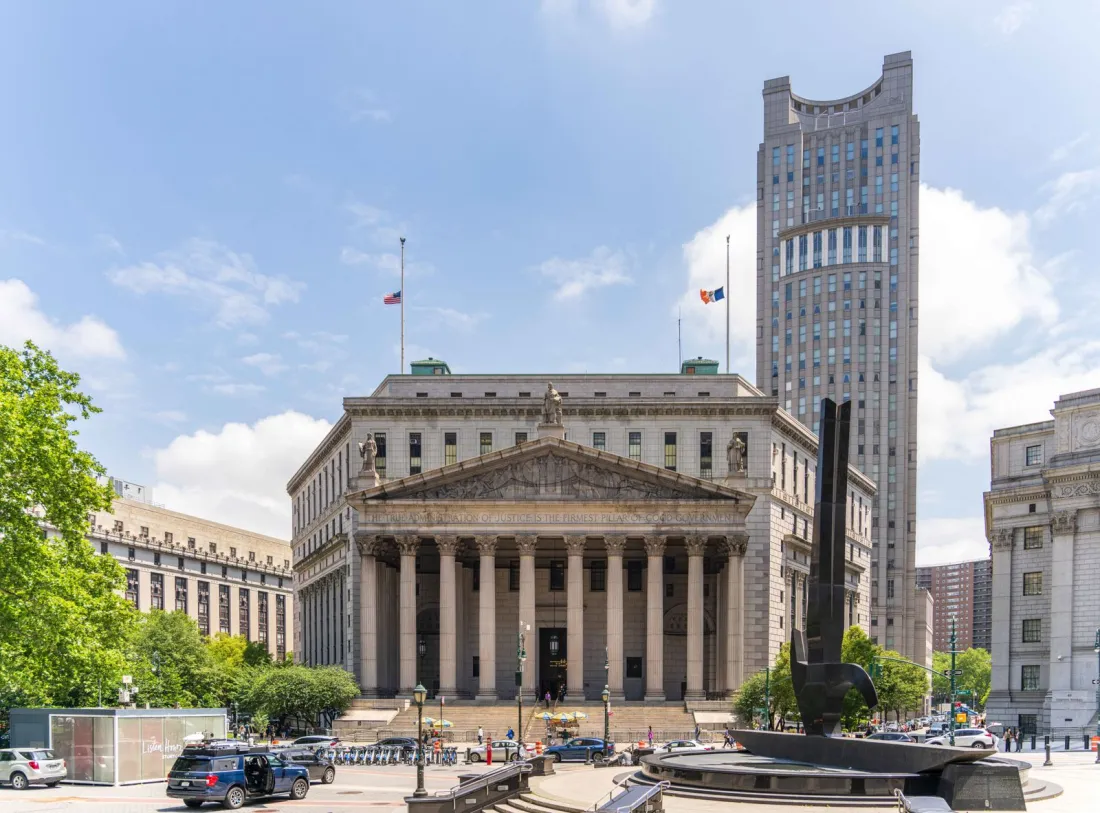
The short answer: nothing has been ordered yet. New York says it is not trying to close Kalshi nationwide and that lawful futures and swaps could continue. But the case is now back in a state court that Kalshi fought to avoid. It follows the criminal case filed against Kalshi and its founders in October, covered in our report on the Kalshi Utah lawsuit, and it tests the question set out in our explainer, are prediction markets legal.
Kalshi New York lawsuit: who sued, where and under which laws
The People of the State of New York, acting through the Attorney General, filed a verified petition against KalshiEX LLC on 31 July 2026. The Attorney General's press release called Kalshi "an illegal, unlicensed gambling operation" and said its markets are open to users aged 18 to 20, although New York requires mobile sports bettors to be 21. The State Gaming Commission had already sent Kalshi a cease-and-desist demand in October 2025.
| Point | What the petition says |
|---|---|
| Court | Supreme Court of the State of New York, County of New York (venue based on Kalshi's Manhattan headquarters) |
| Procedure | Special proceeding under Executive Law § 63(12), which lets the Attorney General act against repeated illegality in business |
| Laws said to be broken | New York Constitution Article I, § 9; Penal Law §§ 225.05, 225.10 and 225.20; Racing, Pari-Mutuel Wagering and Breeding Law §§ 1367(16)(a), 1367-a(2)(a) and 1367-a(4)(b); the federal Wire Act, 18 U.S.C. § 1084(a) |
| Relief sought | Permanent injunction against operating an unlicensed gambling business in New York; an accounting of all bets; restitution, disgorgement and damages |
| Penalties sought | Three times Kalshi's gain under Penal Law § 80.10, plus $100,000 for each unauthorised offer of sports wagering under the Racing Law |
| Kalshi's scale | The petition cites Kalshi's own figures: a $22 billion valuation and $178 billion in annualised transaction volume |
The verified petition relies on the Penal Law definition of gambling: staking something of value on a contest of chance or a future contingent event outside the bettor's control. Some press reports have put the possible bill at about $36 billion; the petition itself sets no total.
How the case came back to state court
Kalshi removed the case to the US District Court for the Southern District of New York on the day it was filed. The Attorney General moved to send it back on 7 August. On 19 November Judge Vernon S. Broderick granted that motion, according to the federal docket. He refused the state's request for fees and, lacking jurisdiction, left Kalshi's challenge to an Attorney General subpoena undecided. The file went back to Manhattan's state court the next day.
As in the case behind the Roundup settlement approval, a defendant sent back to state court loses the federal forum it chose and faces state judges and state remedies.

Why Kalshi says a New York order would bite nationwide
According to The Block, James's proposed order would bar Kalshi from running an unlicensed gambling business "within or from New York or to persons in New York". It would cover contracts on sports, culture, elections and "other events", stop users under 21 from trading and ban advertising on college campuses.
The words "from New York" are the problem for Kalshi. In a letter to Justice Crane on Thursday night, Kalshi's lawyer Sean Murphy of Milbank wrote that, because Kalshi is headquartered in the state, the order "would shut down a federally regulated exchange for every customer, everywhere" and "would likely force the liquidation of all open positions". He also argued it would clash with a CFTC emergency order of 11 August directing Kalshi to keep operating.
The Attorney General's office replied on Friday that it "does not seek to 'shut down a federally regulated exchange for every customer, everywhere'" and that Kalshi could still offer lawful futures or swaps. It cited a 10 November ruling by Judge Colleen McMahon in Ludlow Exchange v. James, which said the CFTC order "smacks of a collusive effort between a regulator and regulatee to generate a claim for conflict preemption", The Block reported.
How the federal government tried to intervene
The United States and the CFTC sued New York on 24 April 2026 in the Southern District of New York, seeking a declaration that federal law gives the agency exclusive authority over event contracts and an injunction against state enforcement. "New York is the latest state to ignore federal law," Chairman Michael S. Selig said in the CFTC's announcement. Its motion for a preliminary injunction has been pending since May.
The agency has twice tried to stop the state case. The docket in United States v. State of New York shows Judge Jed S. Rakoff, sitting in Part I, refused its first emergency motion from the bench at the end of July. On 20 November the CFTC filed a renewed emergency motion and Judge Lorna G. Schofield held a telephone conference at 5 p.m.
CFTC lawyer Andrew Weisberg told her the order "would completely shut down Kalshi's operations nationwide", ABC News reported. For the state, Kate Rhodes Janofsky said: "There has been no evidence of market disruption." The judge's ruling was brief: "The requested application is denied." In its letter to the state court, the Attorney General's office said Schofield found the CFTC "was unable to show a likelihood of success on the merits that the CEA preempted state gaming laws".
The circuit split as of 23 November 2026
The core legal question is whether the Commodity Exchange Act (CEA), which gives the CFTC exclusive jurisdiction over swaps traded on a designated contract market (DCM), displaces state gambling law. The federal appeals courts disagree, as the Fourth Circuit's opinion in KalshiEX LLC v. Martin records.
| Court | Case and date | Outcome |
|---|---|---|
| Third Circuit | KalshiEX v. Flaherty (New Jersey), 6 April 2026 | For Kalshi: sports contracts are swaps on a DCM, so the CFTC's jurisdiction is exclusive; Judge Roth dissented |
| Ninth Circuit | KalshiEX v. Assad (Nevada), 28 August 2026 | For the state: sports event contracts are likely not swaps |
| Sixth Circuit | KalshiEX v. Schuler (Ohio and Tennessee), 25 September 2026 | For the states: no preemption |
| Fourth Circuit | KalshiEX v. Martin (Maryland), 18 November 2026 | For the state, 2 to 1; Judges Gregory and Thacker agreed on the result for different reasons; Judge Benjamin dissented |
| S.D.N.Y. | KalshiEX v. Williams (New York), July 2026 | For the state: Judge Analisa Torres found no preemption |
In Maryland, Judge Gregory held that even if the contracts are swaps, Congress did not clearly displace the state's gaming laws. Judge Thacker held they are not swaps at all. Judge Benjamin would have found preemption. Regulators abroad take a similar line, as our reports on the Dutch online gambling fine and India's ban on online money games show.

What comes next
Justice Crane can grant the order as drafted, narrow it to New York residents, set a fuller briefing schedule or refuse it. Kalshi has asked to be heard before any emergency restraint. Either way, the CFTC's own injunction motion is still before Judge Schofield.
The bigger decision may come from Washington. New Jersey's petition in Flaherty v. KalshiEX, No. 26-299, was filed on 2 September 2026. The Supreme Court docket shows amicus briefs from Ohio and other states, the NFL and the American Gaming Association, and Kalshi's response is due on 7 December 2026. The Court has not yet acted.
Lessons for fintech and platform operators
- A federal licence is not a shield on its own. Four of the five appellate and district rulings in the table went against preemption.
- Headquarters is a risk factor. An order framed as covering activity "from New York" can reach a whole business. Where staff and the operating entity sit matters.
- Age and marketing controls are easy targets. Under-21 access and campus advertising feature in New York's proposed order.
- Plan for conflicting regimes. Firms working across markets face the same tension in the EU, as our guide to MiCA licence requirements shows. Specialist gaming lawyers, US regulatory advisers and US litigators in our directory, including firms in New York, can help map that exposure.
Frequently asked questions
Why is New York suing Kalshi?
The Attorney General says Kalshi runs an unlicensed gambling business in New York, in breach of the state constitution, the Penal Law and the Racing Law, and lets 18 to 20 year olds bet on sports. Kalshi says its contracts are federal derivatives.
Is Kalshi shutting down?
No order has been made. Justice Melissa Crane is due to hear New York's request for a temporary restraining order on 23 November 2026. Kalshi says the order as drafted would shut its exchange for all customers; New York says it does not seek that.
What did the federal judges decide?
On 19 November Judge Vernon Broderick sent the case back to state court. On 20 November Judge Lorna Schofield refused the CFTC's renewed emergency request to stop the state from seeking its order.
What penalties does New York want?
An injunction, an accounting of bets, restitution and disgorgement, a penalty of three times Kalshi's gains and $100,000 for each unauthorised offer of sports wagering.
Is Kalshi legal in New York?
That is the disputed question. A federal judge in Manhattan ruled against Kalshi in its own challenge to New York's regulators in July 2026, and four federal appeals courts have split on whether federal law overrides state gambling law.
Will the Supreme Court decide the issue?
It may. New Jersey's petition, No. 26-299, is pending, with Kalshi's response due on 7 December 2026. The Court has not yet decided whether to hear it.
Sources
- New York Attorney General: Governor Hochul and Attorney General James announce New York has sued Kalshi (31 July 2026)
- People of the State of New York v. KalshiEX LLC: verified petition, Supreme Court, New York County
- CourtListener: People of the State of New York v. KalshiEX LLC, No. 1:26-cv-06550 (S.D.N.Y.), remand order of 19 November 2026
- CourtListener: United States v. State of New York, No. 1:26-cv-03404 (S.D.N.Y.)
- CFTC: CFTC sues New York over prediction markets (24 April 2026)
- ABC News: Administration tries to intervene after Kalshi is threatened with restraining order (20 November 2026)
- The Block: Kalshi faces Monday hearing on New York order it says would shut down its exchange nationwide (21 November 2026)
- US Court of Appeals for the Fourth Circuit: KalshiEX LLC v. Martin, No. 25-1892 (18 November 2026)
- Supreme Court of the United States: docket for Flaherty v. KalshiEX, LLC, No. 26-299
About this article
This analysis was researched and written by The Corporate INTL Newsroom, which covers cross-border legal, regulatory and business developments for lawyers, professional advisers and financiers in over 150 jurisdictions. It was checked against the New York petition and press release, federal court dockets, the Fourth Circuit opinion, the Supreme Court docket and press reports of the hearings. It was written before the 23 November hearing and is general information, not legal advice; for advice on a specific matter, consult a qualified adviser. Last reviewed 23 November 2026. More analysis is available in our newsroom, and you can subscribe for updates.
Looking for legal or business advice?
Tell us what you need and the Corporate INTL team will help you find the right lawyer or adviser from our members in 150+ jurisdictions.
1What you need2Your details
More from the newsroom
All latest news → Related stories

Regulatory & Public
Is Online Gambling Legal in the Netherlands? The Ksa's Record €37m EOD Code Fine
Regulatory & Public
Are Prediction Markets Legal? The Kalshi Rulings, State Gaming Law and Global Bans

Regulatory & Public