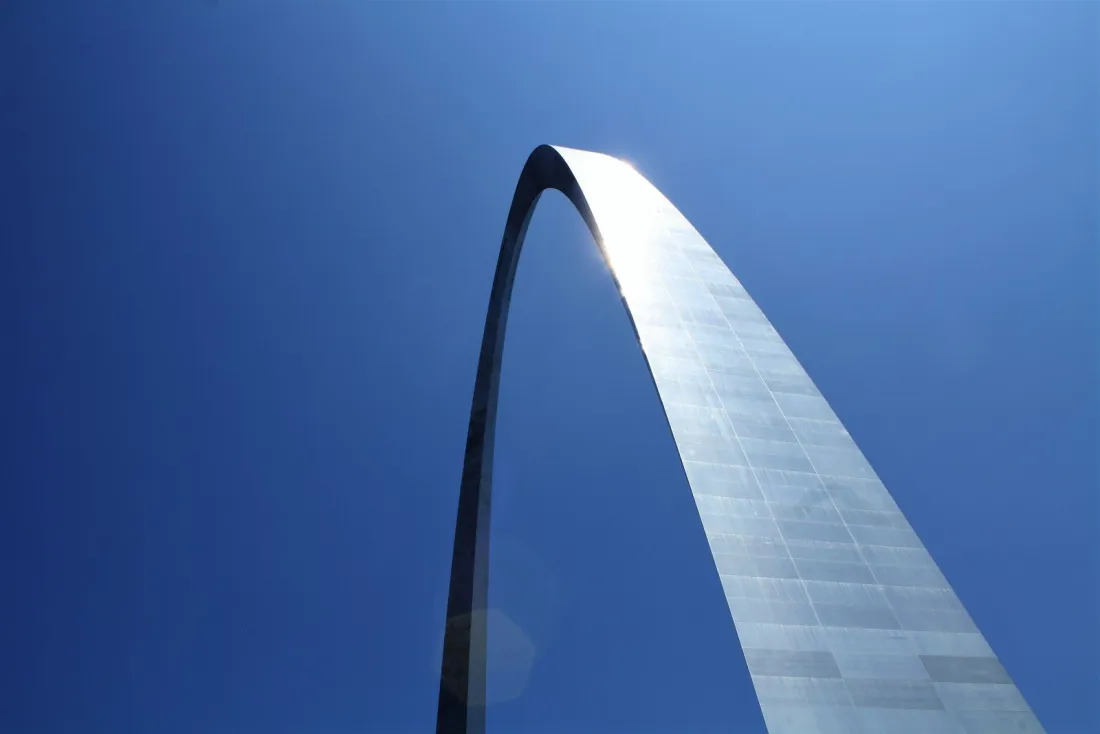
The Roundup settlement approval came on Friday 20 November 2026, when Judge Timothy J. Boyer of the Circuit Court of the City of St. Louis gave final approval to the nationwide class settlement in Randall King et al. v. Monsanto Company, No. 2622-CC00325. Bayer's Monsanto unit will pay up to $7.25 billion over as long as 21 years to resolve current and future claims that exposure to Roundup weed killer caused non-Hodgkin lymphoma (NHL). Bayer confirmed the ruling the same day and stressed that the order is subject to appeal.
Corporate INTL Newsroom · Dispute Resolution & Litigation
Roundup Settlement Approval: Who Gets Paid From Bayer's $7.25 Billion Deal
By The Corporate INTL Newsroom · 22 November 2026
Average awards run from $10,000 to $165,000 depending on exposure, age at diagnosis and the type of NHL. People who are not yet ill but were exposed before 17 February 2026 are also bound, which is what makes this deal unusual. The opt-out deadline passed on 4 June 2026.
Roundup settlement approval: what the court decided
The judge found the terms fair to the class. In a written judgment quoted by the Associated Press, he called the average individual payouts "fair and adequate" and the total "among the largest in the history of mass tort personal-injury class action settlements".
| Point | What the record shows |
|---|---|
| Court and judge | 22nd Judicial Circuit Court, City of St. Louis, Missouri; Judge Timothy J. Boyer |
| Case | Randall King et al. v. Monsanto Company, No. 2622-CC00325 |
| Key dates | Filed 17 February 2026; preliminary approval 4 March 2026; opt-out and objection deadline 4 June 2026; fairness hearing 14 September 2026; final approval 20 November 2026 |
| Total | Up to $7.25 billion, including payments already made |
| Duration | 17 to 21 years of funding |
| Safety net | A separate $1 billion security fund in escrow |
| Liability | No admission of liability or wrongdoing |
The route was not smooth. On 17 June 2026 a federal judge in the Eastern District of Missouri sent the case back to state court, and on 27 August 2026 the Eighth Circuit dismissed objectors' attempt to move the decision to a federal court, according to Bayer's litigation timeline.
Who is covered by the Roundup settlement
The class covers anyone exposed to Roundup products in the United States before 17 February 2026 who was a US citizen or living in the US on 4 March 2026. The official settlement website splits members into two subclasses.
- Subclass 1. People diagnosed with NHL by 4 March 2026. They must register within 180 days of final approval and file a claim package within 180 days of the date the settlement becomes final.
- Subclass 2. Exposed people not yet diagnosed. They need not register now, but must claim within six years of a diagnosis and before the 16th annual payment date.
- Excluded. Claimants with cases pending in the federal multidistrict litigation in California (MDL No. 2741) on 17 February 2026, unless they dismiss that claim and ask to join, plus those who already settled or had claims dismissed with prejudice.
Family members can claim derivatively, but receive 1% of the primary award, deducted from it. Members who stayed in give up claims against Monsanto, Bayer AG and related parties, including punitive damages. Anyone not diagnosed by the 16th annual payment date recovers the full right to sue.
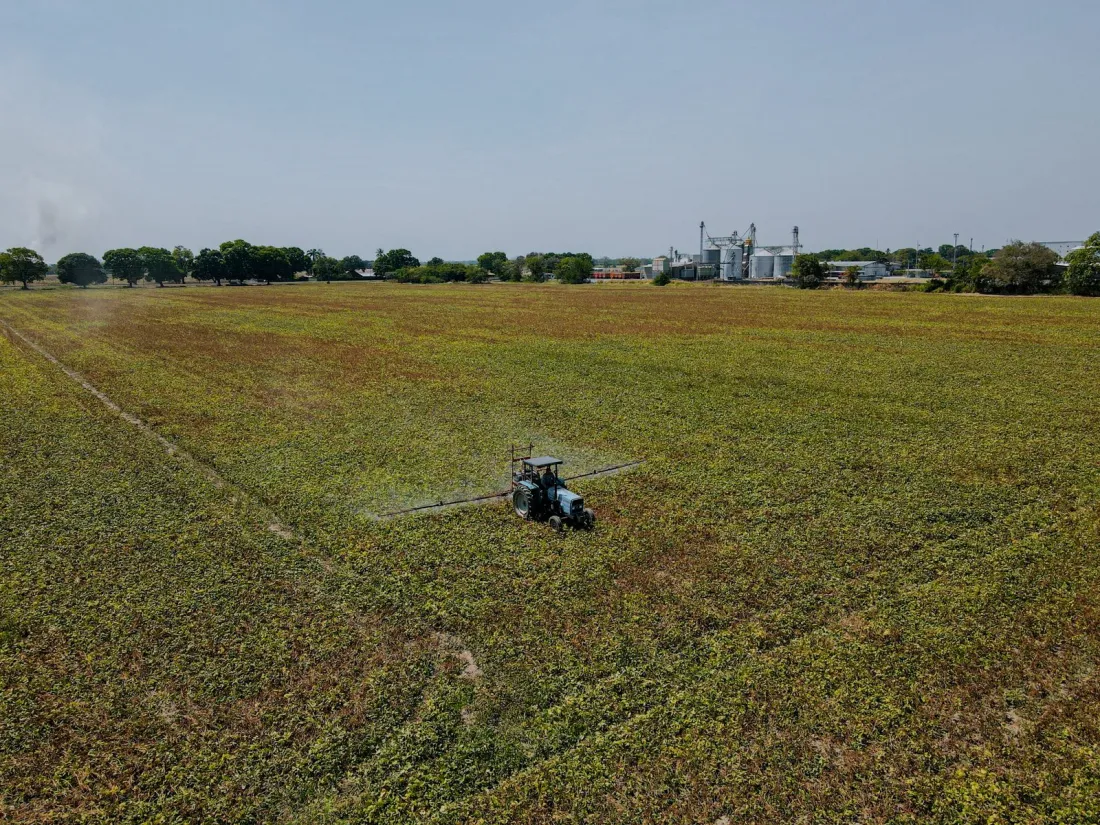
Roundup settlement amount per person: the nine tiers
Each claimant is placed in one of nine tiers, then scored within the tier, so the actual award is 80% to 120% of the tier average. Scoring weighs treatment intensity, proof of exposure, duration of exposure and medical history.
| Tier | Exposure | Age at diagnosis | NHL type | Average award | Quick-Pay |
|---|---|---|---|---|---|
| 1 | Occupational | Under 60 | Aggressive | $165,000 | None |
| 2 | Occupational | 60 to 77 | Aggressive | $105,000 | None |
| 3 | Occupational | Under 60 | Indolent | $85,000 | None |
| 4 | Occupational | 60 to 77 | Indolent | $60,000 | None |
| 5 | Residential | Under 60 | Aggressive | $40,000 | $14,500 |
| 6 | Residential | 60 to 77 | Aggressive | $30,000 | $11,000 |
| 7 | Residential | Under 60 | Indolent | $25,000 | $10,500 |
| 8 | Residential | 60 to 77 | Indolent | $20,000 | $7,700 |
| 9 | Any | 78 or older | Any | $10,000 | $6,000 |
Occupational status needs over 80 hours of work exposure and proof of income from that job. Fixed Quick-Pay awards are open only to tiers 5 to 9 claimants who sued or signed a tolling agreement before 13 February 2026. Extra funds cover extraordinary circumstances, such as death before 78, and heavy residential exposure; St. Louis Public Radio reports more than $400 million is earmarked for these special circumstances. From the fifth year, awards may rise by up to 2.5% a year for inflation.
When will the money be paid?
Most payments wait until the settlement becomes final, which means after any appeals are resolved or the time to appeal runs out. Bayer says any appeal of the final approval order "would pause further Monsanto payments until such appeals are exhausted".
- Initial payments. $1 billion, funding administration, Quick-Pay and Exigency awards.
- Annual payments. $250 million to $550 million a year for 16 years, starting on the first anniversary of the effective date.
- Security fund. $1 billion placed in escrow within 30 days of the effective date, available if Monsanto defaults in bankruptcy.
- Extended funding. Up to $250 million a year for up to four more years if occupational claims remain unpaid.
The settlement website says registration for already diagnosed members opens after final approval and runs for 180 days; on a plain count from 20 November 2026 that window closes in mid-May 2027, and the site says it will post exact dates. For another large US mass-harm outcome this month, see our report on the $900 million Albertsons opioid judgment.
Bayer Roundup settlement objections and the Durnell ruling
Objectors argued the payouts are too small and the terms too restrictive. At the September fairness hearing, attorney Gerson Smoger called it "the scariest, worst future settlement that's ever been contemplated", AP reported, saying it locks in future claimants for decades without punitive damages while the product stays on sale.
The balance shifted on 25 June 2026. In Monsanto Co. v. Durnell, the US Supreme Court held 7 to 2 that the Federal Insecticide, Fungicide, and Rodenticide Act (FIFRA) expressly preempts a state failure-to-warn claim that would require a cancer warning on Roundup's EPA-approved label. Justice Kavanaugh wrote for the Court; Justice Jackson dissented, joined by Justice Gorsuch. The settlement notice had flagged exactly this "preemption risk" as a reason to settle.
Durnell does not end every theory: design defect, negligence and fraud claims can still be tried. But on 29 October 2026 a Missouri jury returned a unanimous defence verdict in Aretino, the first trial since the ruling. Bayer calls the deal and Durnell "mutually reinforcing pillars". Opt-outs who litigate face both hurdles, a point familiar from collective cases such as the dismissed PlayStation class action in the UK.
Why Bayer chose a class deal, and what it means for investors
Bayer inherited the litigation when it bought Monsanto in 2018, and its shares fell about 80% in the following years, Bloomberg reported. In June 2020 Bayer agreed to pay $10.1 billion to $10.9 billion to resolve about 75% of roughly 125,000 claims, including $1.25 billion for a future-claims class. That 2021 class proposal was withdrawn after the federal court denied preliminary approval.
The 2026 deal solves the future-claims problem in a state court instead. About 200,000 Roundup claims have been made, and Bayer had already set aside $16 billion, AP reports; the new settlement is on top of that. Bayer says it expects opt-outs to be "manageable" and believes it is adequately provisioned. If more than 650 qualifying opt-outs sue, Monsanto earns credits against its payments (litigation multipliers are capped at $400 million), and the capped annual schedule turns an open-ended tail into a forecastable liability. Funders backing opt-out claimants face the same arithmetic; our guide to litigation funding in the UK explains how that market works.
Outside the US, and the lessons for acquirers
The class covers only US exposure. In the EU, glyphosate remains approved until 15 December 2033 after a 2019 to 2023 review by member states, EFSA and ECHA; ECHA concluded in 2017 and 2022 that no carcinogenicity classification was warranted. The WHO's cancer agency IARC classified glyphosate as "probably carcinogenic" in 2015, while the US EPA considers it not likely to cause cancer when used as directed. Europe's rules are also changing under the new EU Product Liability Directive.
For boards and deal teams, the Monsanto purchase is the textbook case of acquired tort exposure. Practical points:
- Price the tail. Latency matters: the settlement notes NHL can take 10 to 15 years or more to develop, so diligence must model future claimants, not just filed cases. Our explainer on deal structures covers where liabilities land.
- Choose the structure. Depending on local successor-liability rules, an asset purchase can leave legacy claims with the seller in a way a share deal cannot; see share sale vs asset sale.
- Use specialist counsel early. Our directory lists product liability advisers and US litigation lawyers; for German acquirers, see setting up a company in Germany.
Frequently asked questions
Was the Roundup settlement approved?
Yes. On 20 November 2026 Judge Timothy J. Boyer of the Circuit Court of the City of St. Louis granted final approval to the $7.25 billion class settlement in King v. Monsanto. The order is subject to appeal.
How much is the Roundup settlement per person?
Average awards range from $10,000 (diagnosis at 78 or older) to $165,000 (occupational exposure, aggressive NHL, diagnosed under 60). Actual awards are 80% to 120% of the tier average, with extra funds for extraordinary circumstances.
Who qualifies for the Roundup settlement?
People exposed to Roundup products in the US before 17 February 2026 who were US citizens or living in the US on 4 March 2026, whether diagnosed with NHL now or in the future. Plaintiffs with claims pending in the federal MDL on 17 February 2026 are excluded unless they dismiss and opt in.
When will Roundup settlement payments start?
Most payments start after the settlement becomes final, once appeals are resolved or the time to appeal passes. Annual payments begin on the first anniversary of that date. Bayer says an appeal would pause further payments.
Can I still opt out of the Roundup settlement?
No. The opt-out and objection deadline was 4 June 2026. Members who stayed in can sue only in limited cases, and never for punitive damages.
How does Monsanto v. Durnell affect Roundup claims?
The Supreme Court held on 25 June 2026 that FIFRA preempts state failure-to-warn claims seeking a cancer warning on Roundup's label. Other theories survive, but Durnell weakens opt-out claimants' main argument.
Sources
- Bayer: Court grants final approval to Roundup class settlement (20 November 2026)
- Weed Killer Class Settlement (official settlement website, BrownGreer): Frequently asked questions
- Supreme Court of the United States: Monsanto Co. v. Durnell, No. 24-1068 (25 June 2026)
- AP via PBS News: Court approves $7.25 billion Bayer settlement over claims Roundup weed killer caused cancer
- St. Louis Public Radio: St. Louis judge gives final approval to $7.25 billion Roundup settlement
- Bloomberg via Yahoo Finance: Bayer's $7.25 billion Roundup settlement approved by US judge
- Bayer: Managing the Roundup litigation (litigation updates)
- Bayer: Bayer announces agreements to resolve major legacy Monsanto litigation (24 June 2020)
- European Commission: Glyphosate renewal of approval
About this article
This analysis was researched and written by The Corporate INTL Newsroom, which covers cross-border legal, regulatory and business developments for lawyers, professional advisers and financiers in over 150 jurisdictions. It was checked against the settlement website, Bayer's statements, the Durnell opinion and press reports of the judgment. It is general information, not legal or medical advice; for advice on a specific matter, consult a qualified adviser. Last reviewed 22 November 2026. More analysis is available in our newsroom, and you can subscribe for updates.
Looking for legal or business advice?
Tell us what you need and the Corporate INTL team will help you find the right lawyer or adviser from our members in 150+ jurisdictions.
1What you need2Your details
More from the newsroom
All latest news → Related stories
Dispute Resolution & Litigation
Defamation Lawyers UK: How to Choose and What to Expect

Dispute Resolution & Litigation
Trump New York Times Lawsuit: Why a Judge Let the $15bn Defamation Claim Proceed

Dispute Resolution & Litigation