Can oil companies be sued for climate change under state law? That is the question the US Supreme Court takes up on Monday 5 October 2026, when it opens its new term by hearing Suncor Energy (U.S.A.) Inc. v County Commissioners of Boulder County, No. 25-170, the bid by Suncor Energy and ExxonMobil to end a Colorado lawsuit that seeks damages for local climate harms. The city and county of Boulder say the companies knew their products would alter the climate, misled the public and should share the cost of adapting to heat, wildfire and drought; the companies, backed by the Trump administration and a coalition of states, say only federal law can govern claims about global greenhouse-gas emissions. Only eight justices will sit, because Justice Samuel Alito withdrew from the case a week ago. This analysis explains what the court has been asked to decide, the arguments on each side, why a tie is possible, which other climate change lawsuits against oil companies depend on the result, and how the case compares with climate litigation against companies in Europe.
Can Oil Companies Be Sued for Climate Change? Suncor v Boulder Reaches the US Supreme Court
By The Corporate INTL Newsroom · 5 October 2026
What the Supreme Court is being asked to decide in Suncor v Boulder
The short answer is whether federal law shuts the door on state-law damages claims over climate change. The question presented by the companies is "whether federal law precludes state law claims seeking relief for injuries allegedly caused by the effects of interstate and international greenhouse-gas emissions on the global climate." When the court agreed to hear the case on 23 February 2026, it added a second question of its own, directing the parties to brief and argue "whether this Court has statutory and Article III jurisdiction to hear this case."
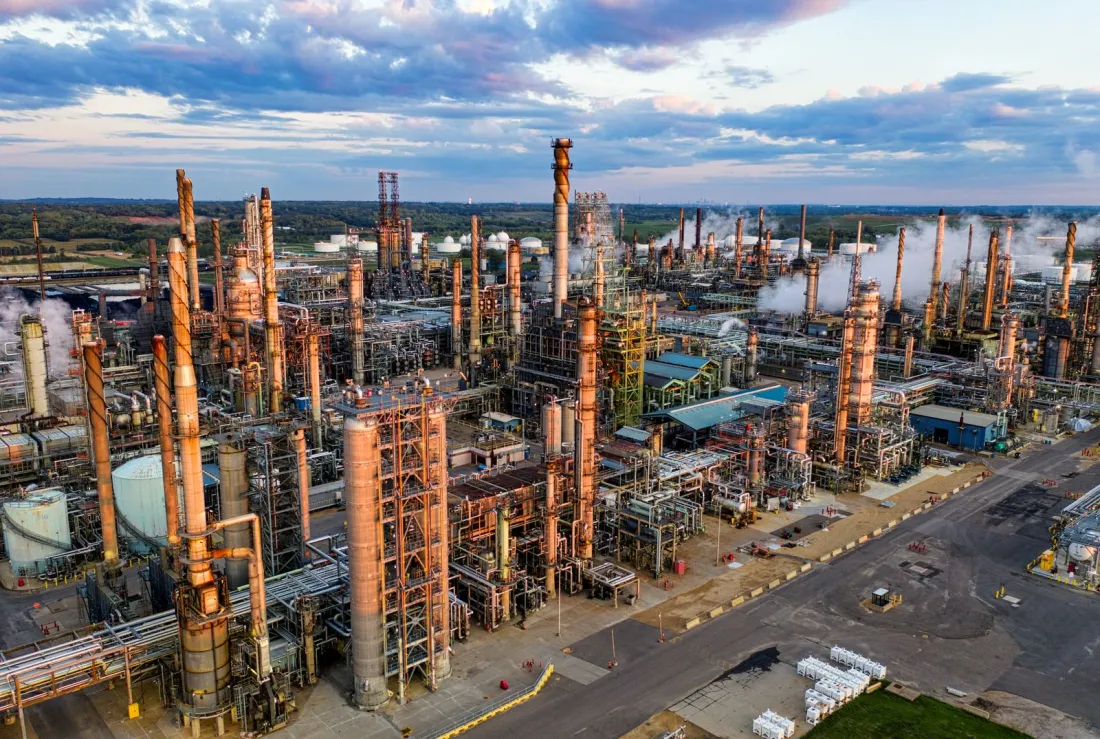
The petitioners are Suncor Energy (U.S.A.) Inc., the US subsidiary of one of Canada's largest energy companies, which operates the only two oil refineries in Colorado, and Exxon Mobil Corporation. The respondents are the Board of County Commissioners of Boulder County and the City of Boulder. The docket lists Kannon Shanmugam of Davis Polk & Wardwell as counsel of record for the companies and Kevin Russell of Russell & Woofter for Boulder, and Boulder County has confirmed that Russell will present its argument, which was scheduled to begin at 10 a.m. Eastern time. The court also granted the Solicitor General's motion to take part in the argument as a friend of the court, splitting the time on the companies' side.
It is important to be clear about what the case is not. The justices will not decide whether ExxonMobil or Suncor caused Boulder's losses, or whether they misled anyone. Boulder's case has not been tried. The court is deciding a threshold question: whether a claim of this kind can exist under state law at all. That makes it one of the most consequential business cases of the term, alongside a docket that, like the US Supreme Court's last term, is heavy with disputes over the reach of government power. Companies with exposure should be speaking now to energy, environment and resources advisers about what each possible ruling would mean for them.
How Boulder's lawsuit reached the Supreme Court
Boulder's case has taken more than eight years to reach this point, and almost all of that time has been spent on where and whether it can be heard, not on its merits. The city and county first sued on 17 April 2018, pleading claims under Colorado law for public nuisance, private nuisance, trespass, unjust enrichment, violation of the Colorado Consumer Protection Act and civil conspiracy. They seek money for past and future costs of adapting to climate change, not an order to cut production or emissions.
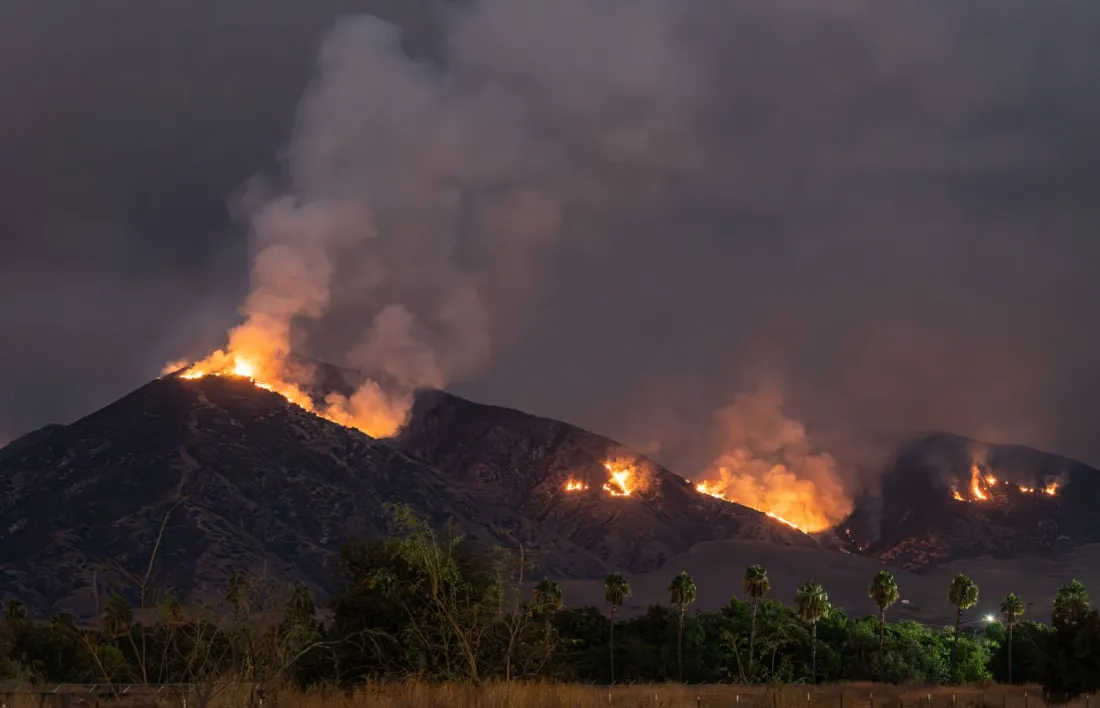
The companies first tried to move the case to federal court. That effort failed after a long detour through the federal appeals court and the Supreme Court itself, which in 2023 declined to review the removal rulings. Back in state court, the Boulder County District Court refused to dismiss the claims. The companies then asked the Colorado Supreme Court to intervene, and on 12 May 2025 it ruled 5 to 2 for Boulder, concluding, in the words Boulder County has quoted, that "federal law did not preempt Boulder's claims and that those claims could therefore proceed under state law." The state court acknowledged that the case raises "substantial issues of global import", but stressed that the question before it was narrow, and it expressed no opinion on the ultimate merits.
| Date | Step |
|---|---|
| 17 April 2018 | Boulder County and the City of Boulder sue Suncor and ExxonMobil in Colorado state court |
| 2018 to 2023 | Companies' attempt to move the case to federal court fails; Supreme Court declines review of the removal rulings in 2023 |
| 12 May 2025 | Colorado Supreme Court rules 5 to 2 that federal law does not pre-empt Boulder's claims |
| 8 August 2025 | Suncor and ExxonMobil petition the US Supreme Court |
| 23 February 2026 | Petition granted, with an added question on the court's jurisdiction |
| 4 September 2026 | Solicitor General given leave to argue as a friend of the court, sharing the companies' time |
| 28 September 2026 | Clerk informs counsel that Justice Alito will not participate |
| 5 October 2026 | Oral argument, the first case of the October 2026 term |
The oil companies' case: the Constitution, foreign affairs and the Clean Air Act
The companies' answer to whether oil companies can be sued for climate change under state law is a firm no, built on three separate arguments. The first is structural. According to SCOTUSblog's summary of the briefs, they argue that by joining the Union the states gave up any power to regulate "inherently transboundary issues such as global climate change", and that the Supreme Court has held that "federal law governs disputes over the regulation of air and water in their ambient or interstate aspects." Because emissions from every state and country mix in the atmosphere, they say, only a "neutral, uniform federal law" can resolve such disputes.
The second argument concerns foreign affairs. Because Boulder seeks compensation for harm partly caused by emissions abroad, the companies say such suits "interfere with the federal government's extensive diplomatic efforts" on climate change. The third is statutory: the Clean Air Act sets up a comprehensive scheme giving the Environmental Protection Agency primary responsibility for emissions standards, and the companies argue that if Congress wanted state law to apply to interstate pollution, it had to say so clearly.
The companies lean heavily on the consequences. If the Colorado ruling stands, their lawyers have told the court, it "would authorize all fifty States, the tens of thousands of municipalities, and even the hundreds of millions of individuals in our country to ask local courts to establish countless, conflicting climate policies for the Nation." Their brief also warns that "Giving even a single jury the power to impose ruinous liability on selected members of the energy industry is a recipe for chaos." Large jury awards can be cut down later, as recent disputes over whether a jury verdict can be reversed show, but the companies want the claims stopped before any jury is empanelled.
The background is a 2011 precedent. In American Electric Power Co. v Connecticut, the Supreme Court held that the Clean Air Act and the EPA action it authorises displace any federal common-law right to seek abatement of carbon-dioxide emissions from power plants. Crucially, the court left open whether state-law claims survive, because the parties had not briefed pre-emption. Suncor v Boulder is, in effect, the sequel the justices declined to write fifteen years ago.
Boulder's answer: deception, damages and the limits of pre-emption
Boulder's position is that nothing in the Constitution or any federal statute bars its claims, and that the companies are asking the court to invent an immunity Congress never enacted. "This litigation is not an attempt to solve climate change," Boulder has told the justices. "It merely asks that petitioners bear their fair share of local costs incurred in part because of their tortious conduct."
On the Constitution, Boulder argues that environmental harms have crossed state lines throughout American history and that courts have long applied state law to them, which in its words "forecloses any claim that the Constitution silently forbids the practice." On foreign affairs, it says the companies must show a clear conflict with an express federal policy in a statute, treaty or executive agreement, not "generalized diplomatic concerns". On the Clean Air Act, it says the statute regulates emissions from sources, not the production and marketing of fossil fuels by upstream companies, and that its claims centre on alleged deception. According to Boulder's filing, avoiding liability would not require cutting emissions at all, "only telling the truth, so the public can make informed consumption decisions".
Boulder also turns the federal government's recent regulatory position against the companies. SCOTUSblog notes Boulder's argument that because the EPA has recently said it lacks power under the Clean Air Act to directly regulate some, perhaps any, greenhouse-gas emissions, the companies cannot now claim the same statute forbids state claims that relate to those emissions only indirectly. And if Congress thinks these matters belong at federal or international level, Boulder says, it can legislate; legislation offering the companies the immunity they seek is, Boulder notes, already before Congress.
The framing matters well beyond climate. State and local governments increasingly use consumer-protection and nuisance law against national companies, from the New Mexico remedy ordering Meta to fund child mental health services to the Tennessee jury trial over Instagram. A broad ruling for the companies on the limits of state power could be cited in all of those fields, a point Deepak Gupta, a frequent Supreme Court advocate, made when he told a Georgetown briefing that forever-chemical pollution, AI data-centre nuisance suits and opioids litigation all concern the local effects of conduct that crosses borders.
Where the US government stands
The federal government is firmly on the companies' side, a reversal of the position it took at an earlier stage of this litigation wave. In its merits brief the Trump administration argues that suits like Boulder's seek "to address a global problem caused by global conduct with global effects" through open-ended state liability, and that "[t]he Constitution rejects that butterfly-effect theory of state authority." At the petition stage it told the court that, if Colorado's ruling stood, "every locality in the country could sue essentially anyone in the world for contributing to global climate change." Solicitor General D. John Sauer has also backed the companies' Clean Air Act argument, according to Bloomberg's preview of the case.
The contrast with January 2025 is stark. When the Supreme Court refused to hear a similar challenge to Honolulu's climate deception suit, the Biden administration's Justice Department had urged denial and agreed with the Hawaii Supreme Court that "the Clean Air Act does not categorically preempt respondents' claims". Within months the new administration had changed course. President Trump's Executive Order 14260 of 8 April 2025, Protecting American Energy From State Overreach, directed the Attorney General to identify state laws and causes of action addressing climate change and to take action to stop those deemed unlawful. The Justice Department then sued Hawaii and Michigan to block planned climate suits, and New York and Vermont over their climate superfund laws.
The government's position carries its own tension. Bloomberg reports that the EPA said in a February rulemaking that it lacked Clean Air Act authority to regulate vehicle greenhouse-gas emissions, and in September proposed that another part of the Act does not authorise limits on power-plant emissions, even as the Justice Department tells the court the Act displaces state climate claims. Bloomberg also reported that some EPA officials were caught off guard by that stance; the EPA said in a statement that it "strongly supports" the administration's position. The administration's appetite for testing executive and federal power in the courts is visible elsewhere too, as the continuing IEEPA tariff refund litigation shows.
The jurisdiction question that could end the case early
Before reaching the merits, the court must decide whether it has the power to hear the case now, and the answer could make the whole argument moot for the time being. The Supreme Court normally reviews only final state-court judgments, and Boulder's case is still at the pleading stage.
The companies offer two routes. They argue that the Colorado Supreme Court proceeding was a separate original proceeding that ended in a final judgment, and alternatively that the case fits an exception recognised in Cox Broadcasting Corp. v Cohn, because the state court has finally decided the federal question and reversal would end the litigation. Boulder replies that labels do not matter: the companies simply asked the Colorado Supreme Court to review and reverse the trial court, and they still hold other federal defences, including constitutional ones, that they could raise later. If the justices agree with Boulder, the case goes back to Colorado without any ruling on pre-emption.
Jurisdictional rulings can look technical, but here the stakes are practical. A dismissal would leave the Colorado decision intact and the national question unanswered, and it could return to the court only after a trial and appeals. Questions about when federal courts may review state proceedings sit at the intersection of procedure and constitutional law, and they often decide high-profile cases quietly.
Justice Alito's recusal and the possibility of a 4-4 tie
Justice Alito's withdrawal means a split court is now a real possibility, and a tie would favour Boulder. On 28 September the Clerk of the Court, Scott Harris, wrote to counsel: "I am writing to inform the parties that Justice Alito has determined that he will not continue to participate in this case." No reason was given. Justice Alito's 2025 financial disclosure shows individual holdings in ConocoPhillips and Phillips 66, which are defendants in other climate suits, though not in ExxonMobil or Suncor. He later told Bloomberg News he considered stepping aside "prudent", and Bloomberg reported that the court's legal office had advised that recusal was not required.
When the Supreme Court divides evenly, the lower court's judgment is affirmed but no national precedent is set. Here that would leave the Colorado Supreme Court's ruling in place and Boulder's case free to proceed, while every other state court would remain free to reach its own view. As NPR noted, the jurisdiction question offers the court another way to avoid a deadlock.
There is a striking precedent. Justice Sonia Sotomayor took no part in American Electric Power v Connecticut in 2011, and the eight remaining justices divided evenly on one of the threshold questions, affirming the lower court's jurisdiction by an equally divided vote while deciding the main displacement question unanimously. Justice Alito has also stepped back from related cases: he did not take part in the Honolulu petitions decided in January 2025, and he took no part in Chevron USA Inc. v Plaquemines Parish, decided in April 2026. Five justices appointed by Republican presidents remain on the case, but commentators including MS NOW's legal writer have noted that federalism questions of this kind do not necessarily divide the court along familiar lines.
Can cities and counties sue oil companies over climate change? The suits that depend on the outcome
Dozens of state, city, county and tribal governments have filed climate change lawsuits against oil companies, and most would be directly affected by a broad ruling in Suncor v Boulder. According to the Center for Climate Integrity, which supports the plaintiffs, by January 2025 eleven attorneys general, in California, Connecticut, Delaware, Maine, Massachusetts, Minnesota, New Jersey, Rhode Island, Vermont, the District of Columbia and Puerto Rico, had sued, alongside local and tribal governments in a dozen states and territories. Hawaii filed its own suit against seven fuel companies on the same day the Justice Department sued to stop it. Bloomberg reports that similar suits name BP, Chevron, ConocoPhillips, Shell and Phillips 66 as well as ExxonMobil.
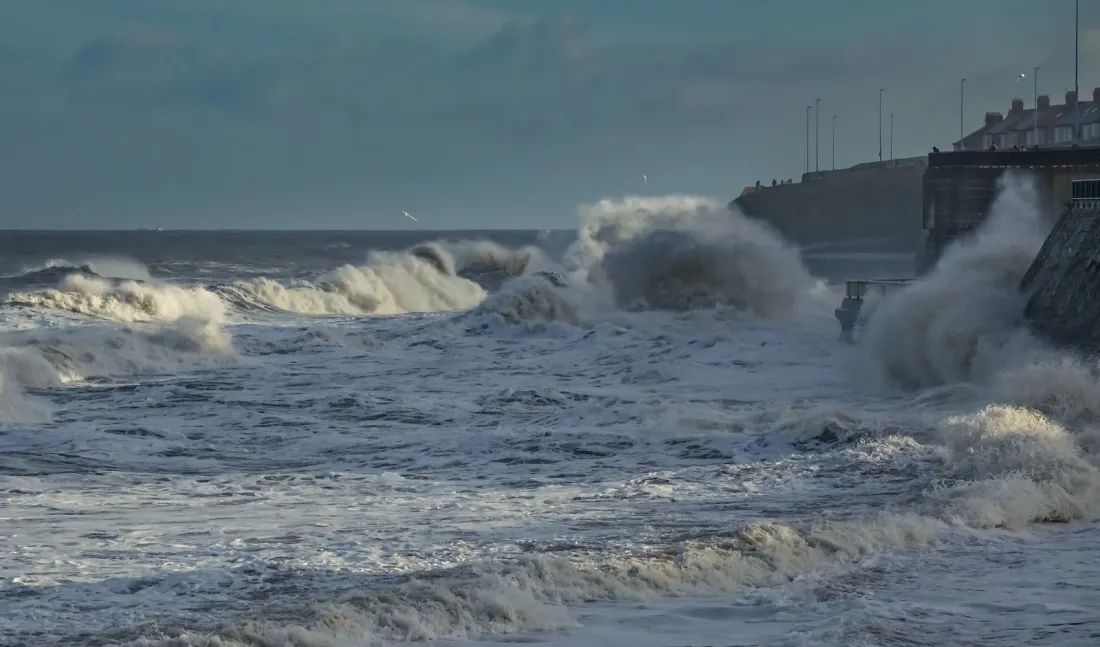
Honolulu's case is the furthest advanced. On 13 January 2025 the Supreme Court declined to review the Hawaii Supreme Court's ruling allowing Honolulu's claims against companies including ExxonMobil, Chevron, Shell and BP to proceed, which the Center for Climate Integrity described as the fourth time since 2023 that the justices had turned away such an appeal. Suncor v Boulder is the first in which the court has agreed to decide the pre-emption question itself.
Not every recent ruling has gone the plaintiffs' way. In April 2026 the court decided unanimously in Chevron v Plaquemines Parish that Chevron could move a Louisiana coastal-damage suit, one of 42 filed by parishes under a state coastal-management law, to federal court because it related to wartime oil production under federal direction. That case concerned the federal officer removal statute rather than climate pre-emption, but it shows the court's willingness to look closely at where energy litigation should be heard. In 2021, as JURIST noted, a federal appeals court in New York held that municipalities could not use state tort law to hold multinational companies liable for greenhouse-gas damage, describing global warming as "a uniquely international concern".
Where these cases are tried matters as much as whether they survive. State-court juries, such as the California jury hearing the Tesla race discrimination case, are where corporate defendants often feel most exposed, which is why the companies have fought so hard to keep climate claims out of them.
Possible outcomes and what each would mean
The case could end in several different places, and the narrowest outcome is not the least likely. UCLA's Alejandro Camacho, writing for Legal Planet, identifies outcomes ranging from a jurisdictional dismissal to a broad pre-emption holding. The table below sets out the main possibilities, drawing on that analysis and other commentary; it is an analytical guide, not a prediction.
| Outcome | Effect on Boulder | Effect on other suits |
|---|---|---|
| Dismissal for lack of jurisdiction | Case returns to Colorado state court and proceeds | No national rule; question could return after a trial |
| 4-4 tie | Colorado ruling affirmed; case proceeds | No precedent; each state court decides for itself |
| Broad pre-emption ruling for the companies | Claims dismissed | Similar suits likely to face quick dismissal |
| Narrow ruling for the companies (for example, limited to emissions-based claims) | Some claims survive, others fall | Deception and consumer-protection theories may survive in other cases |
| Ruling for Boulder on the merits | Case proceeds to discovery and trial | Pending suits strengthened; companies retain other defences |
Even a win for Boulder would not decide liability. As William & Mary professor Jonathan Adler, who filed a brief supporting Boulder on pre-emption, told CBS News, the ruling is "a judgment about whether folks get to make their case", and the scope of what plaintiffs can pursue might well be narrowed significantly. Causation, attribution science and damages would all remain to be fought over. Companies and public bodies following the case should plan for each branch with dispute resolution and litigation advisers, because the procedural posture after the ruling will differ sharply between them.
The international dimension: climate liability litigation beyond the US
Courts outside the US have already accepted, in principle, that large emitters can face civil liability for climate harm, although claimants have struggled to convert principle into damages. The most direct comparison is Lliuya v RWE. On 28 May 2025 the Higher Regional Court of Hamm, hearing a claim by a Peruvian mountain guide against the German energy company RWE, accepted that a major emitter could in principle be liable under German civil law for climate-related risks, including abroad. The court nonetheless dismissed the claim: according to an analysis for the European Association of Private International Law, it put the chance of glacial-lake flood water reaching his house within 30 years at about one per cent, too low to support a claim under Section 1004 of the German Civil Code. The case was funded by a foundation, a reminder of how litigation funding shapes which claims reach court.
In the Netherlands, the Hague Court of Appeal ruled on 12 November 2024 that Shell has an obligation to reduce its CO2 emissions but that it could not set a specific percentage, overturning a first-instance order requiring a 45% cut by 2030 against 2019 levels. Milieudefensie took the case to the Dutch Supreme Court, which heard argument in May 2026. At the level of states rather than companies, the International Court of Justice delivered its Advisory Opinion on the Obligations of States in respect of Climate Change on 23 July 2025.
The European cases differ from Boulder's in an important way. They turn on national civil-law duties, with no federal pre-emption question, while Boulder's turns on the American division of power between states and the federal government. For multinational groups the cumulative picture still matters: a narrowing of US exposure would not remove claims in Europe, where consumer-protection rules are also tightening, as the EU's greenwashing ban under the Empowering Consumers Directive shows, and where emissions-related mass claims such as the Mercedes-Benz diesel litigation in England continue.
What the case means for energy companies, insurers and investors
For the energy sector the case is about contingent liability measured, by the companies' own account, in billions of dollars. The companies have warned the court that "the energy industry is facing the threat of damages awards that could run into the billions of dollars." A broad ruling for the companies would sharply reduce that exposure in the US; a ruling for Boulder would leave it in place and send dozens of cases towards discovery, where internal documents become the battleground.
Insurers are watching closely. The docket shows a brief supporting the companies from the American Property Casualty Insurance Association, the Complex Insurance Claims Litigation Association and the Reinsurance Association of America. On the other side, former California Insurance Commissioner Dave Jones argued in a brief supporting Boulder that "the biggest threat to insurance and the hundreds of millions who depend on it isn't from climate accountability lawsuits, but from climate change itself." Questions about whether liability policies respond to climate claims would follow any ruling that lets the suits proceed, and insurance advisers will be reviewing wordings, just as the market has had to revisit what war risk insurance covers as geopolitical risk has grown.
Investors and boards face a disclosure question as well. Germanwatch has said that more than 60 cases worldwide seek to hold polluters responsible for their role in climate change, more than half of them against fossil fuel companies. Whatever happens in Washington, the trend in litigation risk will need to be explained to shareholders.
When will the Supreme Court decide, and what to watch
A decision is expected by the end of the term, which usually means by the end of June 2027; Bloomberg reports the court is scheduled to rule by the end of June, while MS NOW has said a ruling is expected by July. The court can rule sooner, and a jurisdictional dismissal in particular could come earlier.
Observers will be looking for three signals in the argument transcript and audio, which the court publishes. The first is how much time the justices spend on jurisdiction, which would hint at an exit route. The second is whether a majority treats the case as one about emissions, which favours the companies, or about deception and marketing, which favours Boulder. The third is whether any justice suggests a middle path, such as allowing consumer-protection claims while barring nuisance claims premised on global emissions. Some commentators are sceptical of Boulder's prospects: Deepak Gupta told a Georgetown panel in September that the decision to hear the case suggested the court was inclined to see the suits as "a problem". That is commentary, not a forecast; with eight justices and an untested legal theory, the outcome remains open.
When to take specialist advice
Anyone with exposure to climate liability litigation, whether as a defendant, an insurer, a lender or a public body considering a claim, should take advice before the ruling rather than after it. The questions are concrete: which claims in pending cases rely on emissions and which on alleged deception, how a jurisdictional dismissal would change timing, and how US and European exposure interact. The Corporate INTL directory lists advisers across the US and specialists in regulatory and public law.
Frequently asked questions
Can oil companies be sued for climate change?
In the US, dozens of states and local governments have sued oil companies under state law for climate-related costs, and several state courts, including Colorado's and Hawaii's, have let such claims proceed. Suncor v Boulder will decide whether federal law bars these claims. In Germany, a court accepted in 2025 that large emitters can be liable in principle.
What is Suncor v Boulder about?
Boulder County and the City of Boulder sued Suncor Energy and ExxonMobil in 2018 under Colorado law, alleging the companies contributed to climate change and misled the public. The Supreme Court is deciding whether federal law precludes such state-law claims, and whether it has jurisdiction to hear the case at this early stage.
Why did Justice Alito recuse himself from the climate case?
The clerk's letter of 28 September 2026 gave no reason. Justice Alito's 2025 financial disclosure shows holdings in ConocoPhillips and Phillips 66, which face other climate suits, and he later told Bloomberg News that stepping aside was "prudent". Bloomberg reported that the court's legal office had said recusal was not required.
What happens if there is a tie in a Supreme Court case?
An evenly divided Supreme Court affirms the lower court's judgment without setting a national precedent. In Suncor v Boulder, a 4-4 split would leave the Colorado Supreme Court's ruling in place, allowing Boulder's lawsuit to continue, while courts in other states would remain free to decide the question differently.
What is the US government's position in Suncor v Boulder?
The Trump administration supports the oil companies, arguing that the Constitution does not allow one state to impose liability for a global problem, and that the Clean Air Act displaces such claims. The Solicitor General was given time to argue. In January 2025 the previous administration had taken a different view in the Honolulu case.
Does the Clean Air Act preempt state climate lawsuits?
That is a central question in the case. In 2011 the Supreme Court held that the Clean Air Act displaces federal common-law claims to abate power-plant emissions, but left state-law claims open. The companies say the Act also bars state claims; Boulder says it regulates source emissions, not deceptive marketing, and does not.
When will the Supreme Court decide Suncor v Boulder?
The case was argued on 5 October 2026, the first day of the term. A decision is expected by the end of the term, usually the end of June, with some reports suggesting July 2027. A ruling that the court lacks jurisdiction could come sooner and would send the case back to Colorado.
Which other climate lawsuits depend on the outcome?
Suits brought by attorneys general including California, Connecticut, Massachusetts, Minnesota and New Jersey, cities and counties in a dozen states and territories, and Honolulu's case against companies including ExxonMobil, Chevron, Shell and BP could all be affected. A broad ruling for the companies would likely end many of them.
Have courts outside the US held companies liable for climate change?
Not in damages so far. In May 2025 a German appeal court accepted that RWE could in principle be liable for climate risks but dismissed the specific claim. In November 2024 a Dutch appeal court held Shell must cut emissions but refused to set a percentage; the Dutch Supreme Court heard the appeal in 2026.
Sources
- Supreme Court of the United States: Docket No. 25-170, Suncor Energy (U.S.A.) Inc. v County Commissioners of Boulder County
- SCOTUSblog: Supreme Court to consider whether suit may go forward seeking to hold energy companies liable for climate change (1 October 2026)
- SCOTUSblog: Supreme Court agrees to hear case on Colorado dispute over climate change (23 February 2026)
- Legal Planet: The Legal Planet Guide to Suncor Energy v County Commissioners of Boulder County (September 2026)
- Boulder County: U.S. Supreme Court to Hear Boulder Climate Case Monday
- NPR: Supreme Court's new term kicks off with blockbuster climate change case (5 October 2026)
- CNN: An 8-justice Supreme Court to decide whether cities can sue oil companies for climate change impacts (5 October 2026)
- CBS News: Supreme Court to weigh energy companies' bid to end Boulder climate-change lawsuit
- Claims Journal (Bloomberg): Exxon, Suncor Bid to Block Climate Suits at US Supreme Court (2 October 2026)
- MS NOW: Supreme Court term starts with hearing on climate change
- PBS News (AP): Supreme Court agrees to hear arguments from oil and gas companies trying to block climate change lawsuits (February 2026)
- Center for Climate Integrity: Supreme Court Denies Big Oil Request to Review Climate Lawsuit (January 2025)
- The White House: Executive Order 14260, Protecting American Energy From State Overreach (8 April 2025)
- JURIST: US Justice Department sues four states over climate initiatives (May 2025)
- Cornell Legal Information Institute: American Electric Power Co. v Connecticut, 564 U.S. 410 (2011)
- Supreme Court of the United States: Chevron USA Inc. v Plaquemines Parish, No. 24-813 (17 April 2026)
- Germanwatch: Groundbreaking climate ruling against RWE (28 May 2025)
- EAPIL: The Regional Court of Hamm Rules on Saul Luciano Lliuya v RWE (5 June 2025)
- Erasmus University Rotterdam: Shell wins appeal proceedings, but what now?
- Milieudefensie: Milieudefensie and Shell meet at the Supreme Court for hearing in Climate Case (20 May 2026)
- International Court of Justice: Obligations of States in respect of Climate Change (Advisory Opinion of 23 July 2025)
About this article
This analysis was researched and written by The Corporate INTL Newsroom, which covers cross-border legal, regulatory and business developments for lawyers, professional advisers and financiers in over 150 jurisdictions. It has been checked against the Supreme Court docket and opinions, the parties' positions as reported from their briefs, the Colorado and federal government material cited and primary reporting. It was written as a preview on the day of argument; reports of the oral argument itself were not available at the time of writing. This article is general information, not legal advice; for advice on a specific matter, consult a qualified adviser. Last reviewed 5 October 2026. For more analysis like this, visit the Corporate INTL newsroom or subscribe to Corporate INTL.
Looking for legal or business advice?
Tell us what you need and the Corporate INTL team will help you find the right lawyer or adviser from our members in 150+ jurisdictions.
Related stories

What Is the Empowering Consumers Directive? The EU Greenwashing Ban That Applies From 27 September
Offshore Wind Reaches Crossroads, As Spiraling Costs and Supply Chain Issues Force Developers to Reassess Projects - EY Research